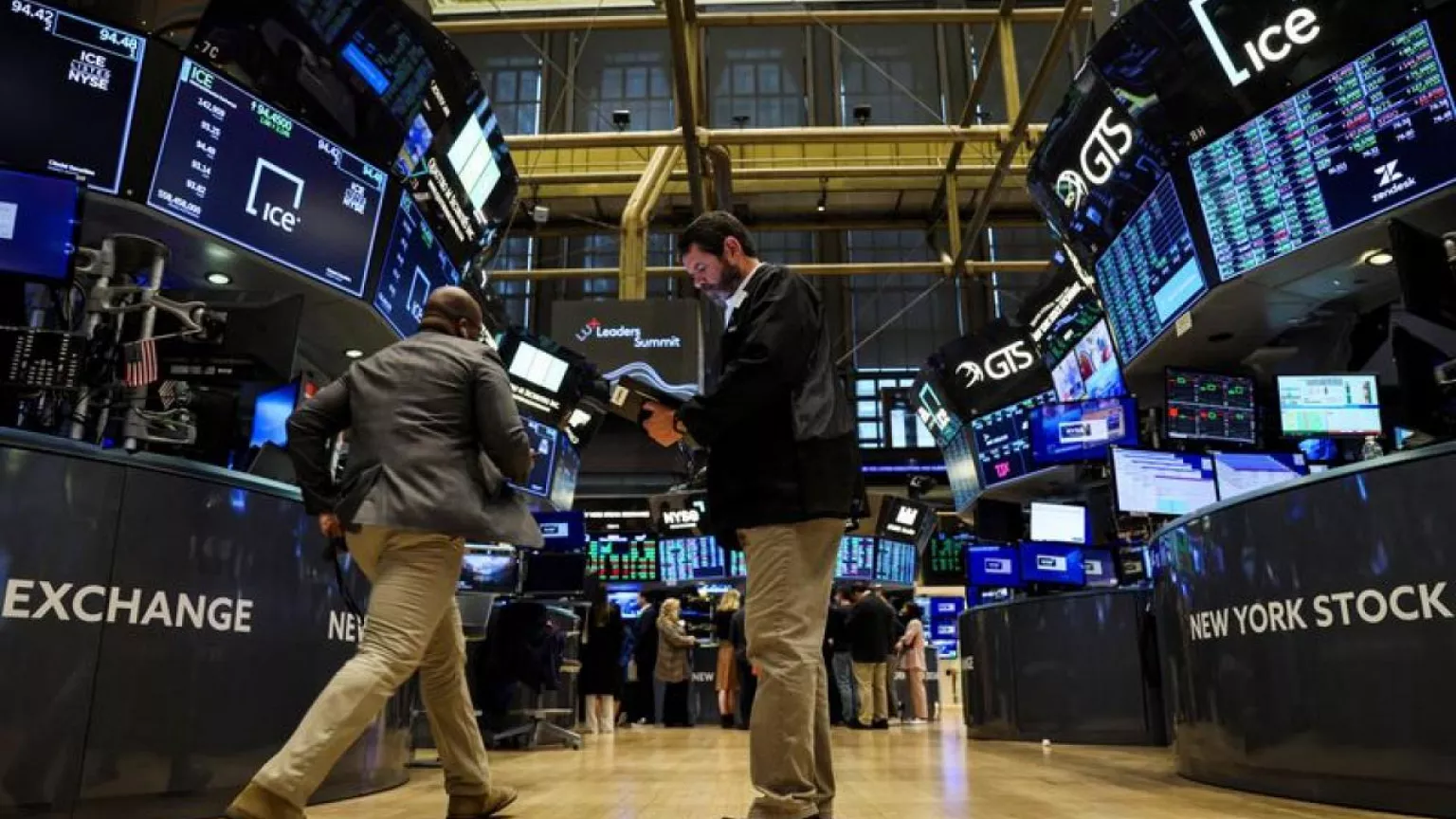
Wall Street is heading into the final trading session of September with investors increasingly focused on the pressure coming from the U.S. Treasury market, inflation and signs of cooling confidence among households and businesses. The latest completed session, on Tuesday, September 29, ended with all three major U.S. stock indexes slightly lower after long-term Treasury yields reached multi-year highs. With the September 30 session still underway, the market is entering the close of the month against a backdrop that has become substantially more complicated than the strong equity performance seen earlier in the year.
On September 29, the Dow Jones Industrial Average fell 131.59 points, or 0.26%, to 51,349.92. The S&P 500 slipped 0.17% to 7,670.84, while the Nasdaq Composite declined 0.08% to 26,797.54. The modest declines came despite periods of support from technology stocks, showing how strongly rising borrowing costs are beginning to compete with optimism surrounding artificial intelligence and corporate earnings.
The biggest source of pressure has been the Treasury market. The yield on the benchmark 10-year Treasury note reached 5.293% on Tuesday, its highest level since June 2007, while the 30-year Treasury yield climbed to 5.6206%, the highest level since June 2002. Treasury yields later eased from their session highs, but remained elevated enough to keep investors cautious about the outlook for equities and other risk-sensitive assets.
The rise in long-term yields has become particularly important because government bond rates influence borrowing costs throughout the economy. Higher Treasury yields can feed into corporate financing costs, mortgage rates and other lending rates while also changing the relative appeal of bonds compared with stocks. Reuters reported that the benchmark 10-year yield was on course to gain more than 47 basis points during September, which would represent its largest monthly increase in about two years.
The bond selloff has been driven by several forces rather than one isolated event. Investors have been concerned about government borrowing and debt issuance, while elevated energy prices have increased expectations that inflation could remain persistent. The ongoing conflict involving Iran has also kept oil markets highly sensitive to disruptions around the Middle East, adding another source of uncertainty for fixed-income investors.
At the same time, the U.S. economy is producing mixed signals. A revised government estimate released September 30 showed real GDP grew at a 2.2% annual rate in the second quarter, up from the previous 1.5% estimate. The stronger figure indicated that consumer spending and business investment were more resilient than earlier estimates had suggested. Business investment outside housing increased sharply, with artificial-intelligence-related spending contributing to the strength of the quarter.
That economic resilience is complicated for monetary policymakers because strong demand can make it harder for inflation to return quickly to the Federal Reserve's target. The Fed raised its benchmark federal funds target by a quarter percentage point on September 16 to a range of 3.75% to 4%, saying economic activity was expanding at a solid pace while inflation remained elevated. The central bank also pointed to continued uncertainty surrounding geopolitical developments.
Yet other economic indicators are pointing in the opposite direction. The number of U.S. job openings fell by 256,000 in August to 7.079 million, below economists' expectations. At the same time, the Conference Board's consumer-confidence index dropped 6.7 points in September to 81.9, the lowest reading since 2014. The survey showed households becoming more concerned about future business conditions and the labor market.
That divergence has made the Federal Reserve's next steps harder for investors to assess. Some policymakers have maintained a cautious approach to additional increases, while others have argued that inflation remains too high to leave policy unchanged for long. New York Fed President John Williams said the central bank has time to evaluate incoming information before deciding on another hike, helping reduce some expectations for an immediate October move.
The latest inflation data released on September 30 provided some relief. The August Personal Consumption Expenditures price index rose 0.3% from the previous month and 3.4% from a year earlier. Core PCE, which excludes food and energy, increased 0.2% monthly and 3% annually, below economists' expectations cited by Reuters. The softer reading reduced market expectations for an October rate increase, with the probability falling to about 37% in morning trading according to LSEG data.
However, the cooler inflation numbers have not eliminated the Treasury-market problem. The 10-year yield eased to around 5.22% early Wednesday after reaching its highest level since 2007 on Tuesday, but long-term borrowing costs remained historically high. Reuters reported that the 30-year yield was still above 5.5%, illustrating how investors continue to demand higher returns for holding longer-duration government debt.
Oil remains another variable. Although crude prices declined at points during the week on signs of recovering Middle Eastern exports, renewed uncertainty around the conflict has repeatedly pushed prices higher. On Wednesday, Brent crude moved back toward the mid-$90s per barrel range, while U.S. crude remained around $90. Higher energy prices matter for markets because they can increase transportation and production costs and reinforce inflation concerns at a time when central banks are already dealing with above-target price growth.
Technology and artificial intelligence stocks have provided an important source of support for Wall Street throughout the period. AI investment remains strong, and companies tied to chips, cloud computing and software continue to command significant investor attention. Anthropic's pursuit of a potential valuation above $2 trillion has become one example of how aggressively the market continues to price the future growth of AI companies, even as investors also examine rising losses and the enormous capital requirements of the industry.
Still, the rally in technology shares has not completely shielded the broader market from higher interest rates. Reuters noted that equity markets have generally been more resilient than bonds, supported by earnings growth and enthusiasm for AI, but the increase in yields is becoming a more significant consideration when investors assess the valuation of growth companies. Higher rates can raise the cost of capital and reduce the present value assigned to future cash flows, creating an additional challenge for expensive growth stocks.
September has consequently become a month of sharply different performances across asset classes. The Dow was on track for its first monthly decline since March, while the S&P 500 had been broadly flat for the month and the Nasdaq was still supported by technology strength entering the final session. The S&P 500 was also about 1.9% below its August 13 record high at Tuesday's close, reflecting the consolidation that has followed the summer rally.
The contrast between stocks and bonds is one of the defining features of the current market. Global bonds have endured one of their most difficult months in years as investors respond to government financing needs, inflation risks and geopolitical uncertainty. Equities, meanwhile, have remained comparatively resilient because corporate earnings and AI investment continue to support expectations for economic growth.
The final trading day of September will therefore be closely watched even though the market entered it under pressure. Softer inflation data and lower near-term expectations for a Federal Reserve rate hike could provide support to stocks, while any renewed increase in oil prices or long-term Treasury yields could quickly reverse that sentiment. Investors are also looking ahead to employment data and corporate earnings for evidence about whether the U.S. economy can continue growing while inflation remains above the Fed's 2% objective.
Wall Street's September performance ultimately reflects a market caught between strong corporate and AI-driven growth on one side and increasingly expensive capital on the other. The stock market has demonstrated resilience despite the bond-market selloff, but the continued rise in Treasury yields is becoming harder for investors to ignore. As the third quarter ends and markets move into October, the direction of interest rates, energy prices, inflation and employment will remain central to whether that resilience continues.
Original references
Sources & further reading
- Reuters — U.S. stocks and Treasury yields on September 29 ↗www.reuters.com
- Reuters — September bond-market pressures and global stocks ↗www.reuters.com
- Reuters — U.S. inflation data and September 30 market outlook ↗www.reuters.com
- Federal Reserve — September 16, 2026 FOMC statement ↗www.federalreserve.gov
- AP News — September 29 U.S. stock-index performance ↗apnews.com
- Reuters — U.S. consumer confidence and labor-market data ↗www.reuters.com