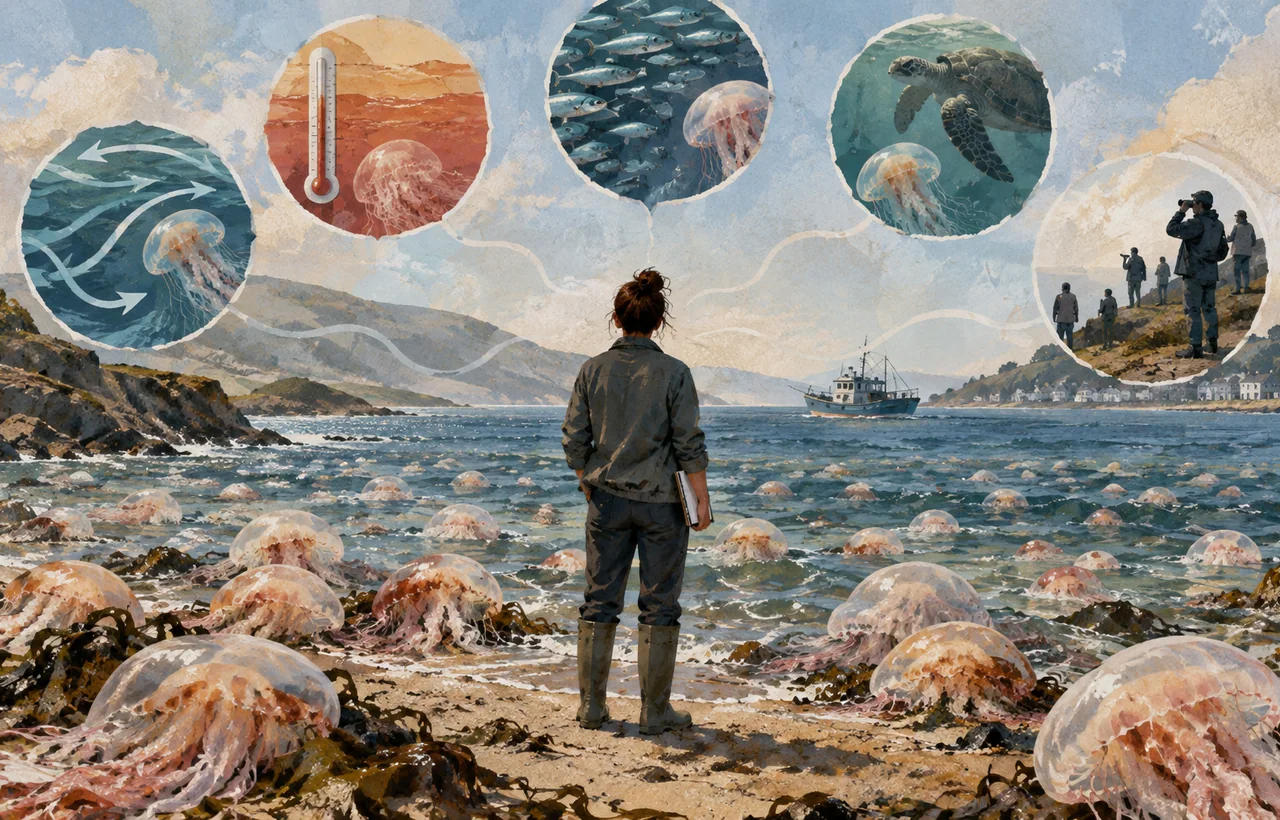
Reports of a jellyfish bloom often trigger a simple explanation. Marine systems rarely offer one: local weather, currents, food supply, fishing pressure and long-term warming can interact.
What counts as a bloom
A bloom is a sharp increase in jellyfish abundance in a place and period. Wind and currents can concentrate animals near shore, making a population look larger without a comparable regional increase.
Different species also respond to different conditions, so a single count cannot represent “jellyfish” as a whole.
Why the data are uneven
Systematic long-term monitoring is limited in many regions. Beach reports and fishing encounters are valuable, but changes in tourism, reporting or gear can alter what people observe.
Researchers look for repeated measurements, species identification and environmental data before attributing a trend to climate or ecosystem change.
What a useful local report includes
Readers need the species, location, dates, sampling method and comparison with past seasons. Water temperature, currents and predator or prey changes can help explain the event.
The responsible conclusion may be narrow: a bloom occurred here, under these conditions. That precision is more useful than turning every crowded beach into a planetary signal.