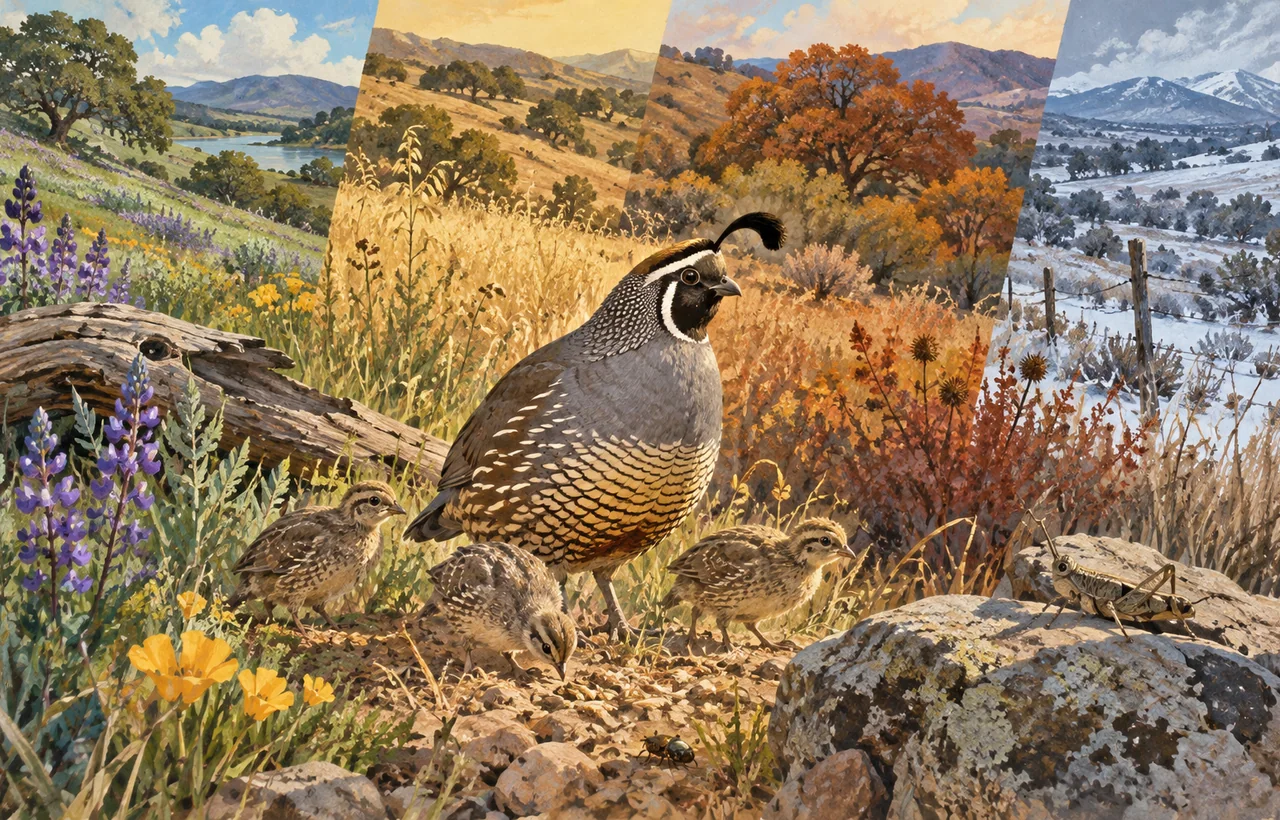
Quail are often described as birds of fields, but a uniform field is rarely enough. They rely on nearby patches that serve different needs as seasons and life stages change.
A habitat mosaic
Nesting requires concealed ground cover, while chicks need insect-rich areas with enough open space to move. Adults also use shrubs or dense vegetation for escape and protection from weather.
Food availability changes through the year, so seed-producing plants and healthy insect populations both matter.
Why timing matters
Mowing, grazing, burning and herbicide use can improve or damage habitat depending on season, intensity and scale. Treating every patch at once removes the variety that quail need.
Rotating management and leaving refuges can preserve cover while allowing renewal elsewhere.
Measure response, not appearance
Good habitat can look untidy to people. Monitoring should track bird use, nesting success, plant structure and food availability rather than relying on a neat visual standard.
The broader lesson is practical: wildlife management works through connected needs over time, not a single feature installed once.