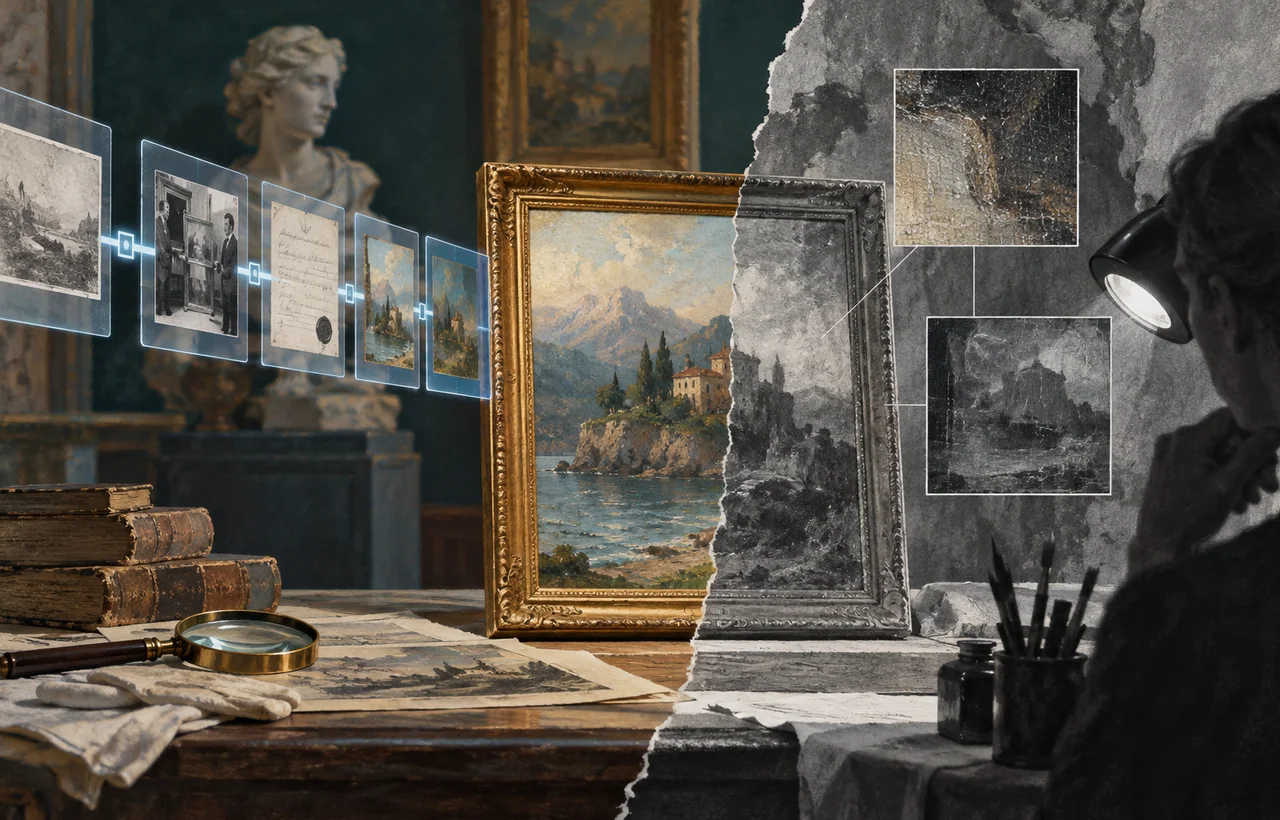
Digital provenance systems promise a clearer record of ownership, condition and movement. Their value is real when institutions agree on identifiers and keep the record current, but a tamper-resistant ledger is not the same as a truthful history.
The first record is the weak point
A database can preserve an entry without alteration; it cannot independently confirm that the person creating the entry had good title or that the photographed object is the work described. False or incomplete information becomes durable too.
Physical inspection, archival research, export records and seller identification therefore remain essential. For older works, gaps may reflect war, forced sale, colonial removal or illicit excavation rather than ordinary paperwork loss.
Interoperability matters more than novelty
A provenance record is useful when museums, insurers, conservators, auction houses and owners can read it over decades. Closed platforms and abandoned products can make a supposedly permanent record difficult to access.
Good systems publish their governance: who may add or correct information, how disputes are recorded, what evidence supports each claim and how the record is exported if the service closes.
A better due-diligence standard
Buyers should compare the digital record with invoices, collection history, condition reports, sanctions checks and relevant stolen-art or cultural-property databases. A token or certificate should be treated as one document among several.
Digital tools can reduce friction and make alterations visible. They improve provenance when they preserve accountable research; they do not replace the research itself.
Original references
Sources & further reading
- UNESCO: due diligence for cultural objects offered online ↗www.unesco.org
- SEC investor resources ↗www.investor.gov
- Federal Reserve economic data ↗fred.stlouisfed.org