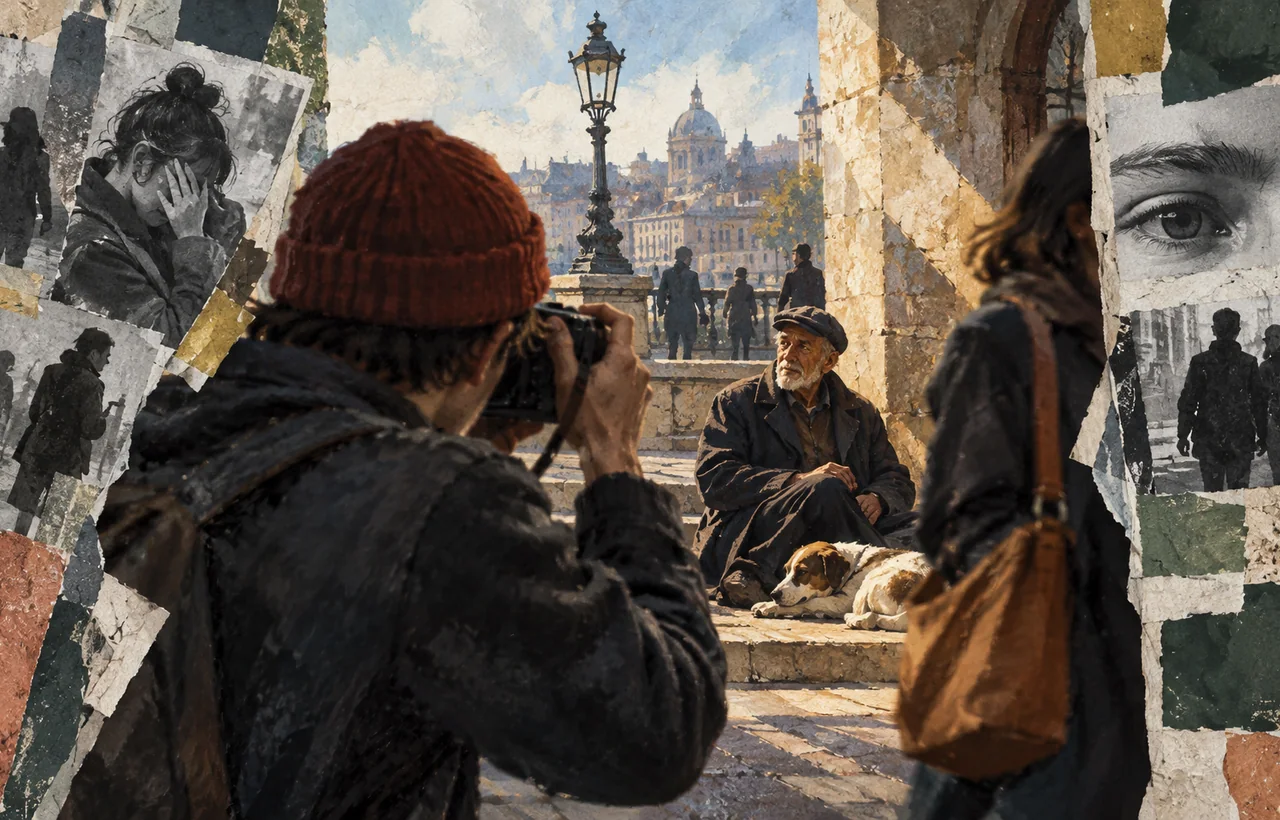
Street photography turns ordinary public life into a record of gesture, light and social change. The camera's access to a public scene does not remove the photographer's responsibility to the people inside it.
The decisive moment is edited, not found
Timing matters, but every image is also a set of choices about position, framing and what happens before and after the shutter. A photograph can suggest a relationship or conflict that the wider scene would complicate.
Captions and sequencing therefore matter. They should distinguish what the photographer observed from what they inferred, and they should not invent motives for a person who cannot answer back.
Public visibility is not unlimited consent
Laws on photographing in public differ by jurisdiction, while ethical judgment depends on circumstance. Children, medical distress, grief and economic vulnerability require more care than a general crowd scene.
When an identifiable subject carries the meaning of the image, a conversation can improve accuracy as well as consent. There are exceptions for fleeting public events, but “it was legal” is an incomplete editorial test.
Build a trustworthy practice
Keep accurate notes, avoid staging documentary scenes without disclosure and explain meaningful digital manipulation. When safety permits, give subjects a way to see the work and raise concerns.
The strongest street photographs do more than surprise. They preserve a specific encounter without flattening the person photographed into a symbol for someone else's argument.