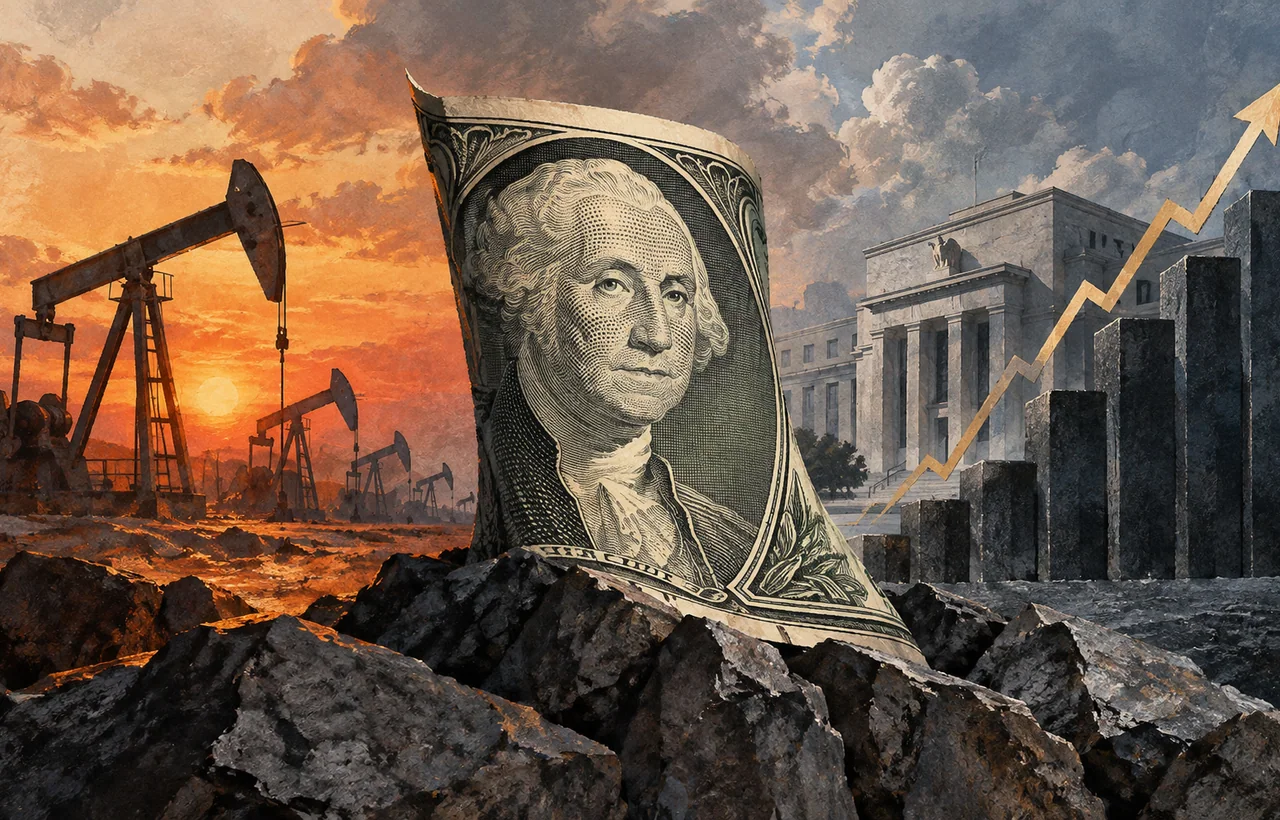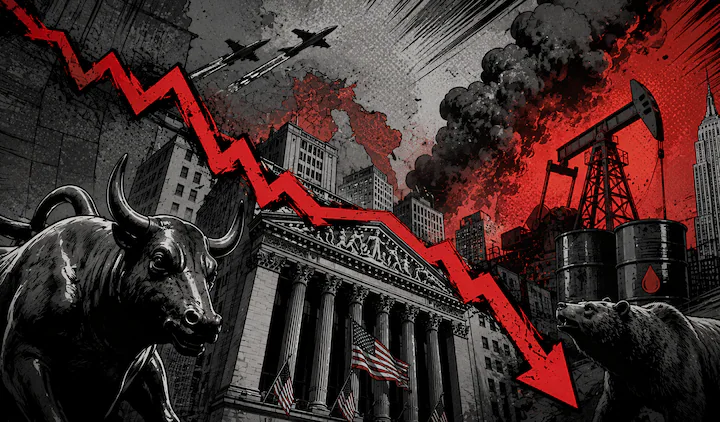
Wall Street is heading into the final trading session of the week with investors balancing a modest recovery in US stock futures against continuing pressure from oil prices and elevated Treasury yields. On Friday, September 25, Dow futures were up about 0.31%, S&P 500 futures gained 0.31% and Nasdaq 100 futures rose 0.61% in early trading. The move followed a turbulent Thursday session in which the major indexes finished close to unchanged. The rebound in futures shows that investors are still willing to buy technology and growth stocks, but the broader market remains highly sensitive to energy prices, interest-rate expectations and geopolitical developments.
Thursday's session highlighted just how quickly sentiment can change. The S&P 500 slipped 0.02% to 7,704.13, while the Dow fell 0.31% to 51,349.98. The Nasdaq managed a fractional gain of 0.01%, ending at 26,939.37. The nearly flat headline performance concealed a weaker underlying market, with eight of the S&P 500's 11 sectors finishing lower and declining stocks outnumbering advancing issues by roughly 1.9 to 1. The Dow's decline was its third consecutive losing session, underscoring the pressure beneath the major indexes.
Oil remains one of the biggest drivers of that pressure. Brent crude settled Thursday at $106.60 a barrel after rising 3.4%, while West Texas Intermediate gained 2.7% to $94.61. Both benchmarks briefly climbed about 5% during the session before retreating. The initial jump followed a Houthi missile attack on Saudi Arabia that renewed concerns about potential disruption to global supplies. Prices later eased after reports that US and Iranian negotiators were exploring a possible phased path that could eventually include reopening the Strait of Hormuz.
Friday brought some relief, with Brent falling about 1.4% to around $98.83 and US crude declining to about $92.97 as traders looked for signs that the Strait of Hormuz could reopen. Even after that decline, crude remains far above the roughly $72 a barrel level seen before the current war began. The persistent gap means energy is still a major source of inflation risk for the global economy and a central variable for financial markets.
The bond market is adding another layer of uncertainty. The US 10-year Treasury yield reached around 5.20% on Thursday, its highest level since 2007, before easing slightly to roughly 5.18% on Friday. It has risen more than 40 basis points during September. The 30-year Treasury yield has also moved sharply higher, reaching levels not seen since 2004. Higher yields increase borrowing costs for households and companies and can pressure equity valuations, especially for growth businesses whose expected earnings lie further in the future.
The latest bond-market move reflects more than just the Federal Reserve. Investors are also demanding greater compensation because of inflation uncertainty, geopolitical risk and the scale of US government borrowing. The combination creates a difficult environment for stocks: rising yields make bonds more competitive with equities while simultaneously increasing the discount rate used to value future corporate earnings. The effect is particularly important for technology companies, which have been a major source of the market's gains this year.
The Federal Reserve is central to the market's next move. The Fed raised its benchmark interest rate by 25 basis points last week, taking the target range to 3.75%-4.00%. Investors have since increased their expectations for another increase in October. Reuters reported on Friday that traders saw a 71% chance of at least a 25-basis-point hike in October, up from roughly 50% earlier in the week. That repricing has helped keep short-term and longer-term Treasury yields elevated.
The problem for the Fed is that much of the inflation risk is being created by events outside the US economy. A higher oil price can push up gasoline, diesel, shipping, aviation and manufacturing costs, but an interest-rate increase cannot directly add new oil supply or reopen a blocked shipping route. Policymakers must therefore decide how much of the energy shock could become embedded in broader inflation expectations and whether tighter monetary policy is necessary to prevent secondary effects.
Recent economic data are giving policymakers room to remain restrictive. Weekly US jobless claims fell to 197,000 for the week ended September 19, while new-home sales increased to an annualized rate of 684,000 in August from 643,000 in July. The Kansas City Federal Reserve's manufacturing index also rose to 14 in September from 10 in August. Those figures indicate that parts of the economy remain resilient, potentially making it easier for the Fed to focus on inflation rather than immediately responding to signs of weaker growth.
Yet Wall Street has also demonstrated that strong economic conditions can coexist with market pressure. Earlier this week, stocks rallied sharply when oil prices fell and Treasury yields retreated. On Monday, the S&P 500 rose 1.49%, the Dow gained 0.71% and the Nasdaq climbed 2.3% to a record close. Semiconductor stocks led the move, with AMD, Intel and Arm among the strongest performers. The improvement showed how quickly risk appetite can return when investors receive relief on energy and bond-market pressures.
Artificial intelligence remains one of the strongest sources of support for technology stocks. On Friday, chipmakers AMD, Marvell, Cerebras and Intel were each around 2% higher in premarket trading. Nvidia and Tesla were also marginally higher. Akamai Technologies surged about 21% after announcing an $11.6 billion cloud-services agreement with Anthropic, providing another example of how AI-related corporate activity can counter broader macroeconomic concerns.
Meta has also contributed to the week's AI enthusiasm. Reuters reported that optimism around the company's Muse AI application and its associated hardware helped support the technology sector. Meta was heading toward its fifth consecutive weekly gain and was approaching a $2 trillion market capitalization. The strength of major technology companies has helped the Nasdaq remain relatively resilient even as the Dow has struggled.
The divergence between the Nasdaq and the Dow is an important feature of the current market. Technology-heavy indexes have benefited from enthusiasm around AI, semiconductor demand and cloud investment. More economically sensitive companies have been more exposed to higher borrowing costs, energy prices and concerns about consumer spending. The result is a market in which index-level performance can appear stable even while individual sectors experience significantly different conditions.
Energy companies are among the clearest beneficiaries of expensive crude. Higher oil prices generally improve revenue expectations for producers, although geopolitical risks can complicate operations and raise costs elsewhere in the supply chain. Investors have consequently been rotating between technology and energy depending on whether markets focus more on AI growth or the energy shock. On Thursday, energy was one of the few areas showing resilience while several other sectors declined.
For consumers and businesses, however, high oil prices remain a significant concern. The increase in crude costs can affect transportation, logistics, chemicals, construction and food distribution. Fuel surcharges may rise, airlines can face higher operating expenses and manufacturers may have to absorb larger input costs. If those costs are passed through to consumers, they can reinforce inflation at a time when central banks are already trying to prevent another wave of price increases.
The international backdrop adds to the uncertainty. The Middle East conflict continues to influence energy markets, while US-China discussions are another focus for investors. Reuters reported that President Donald Trump and Chinese President Xi Jinping were meeting during the week, with trade, artificial intelligence and the Middle East among the topics under discussion. Any meaningful progress on trade or geopolitical tensions could support risk sentiment, while renewed confrontation could quickly reverse recent gains.
Currency markets are reacting to the same forces. The US dollar was lower against the yen on Friday, while the euro strengthened slightly. A stronger dollar can provide some relief by reducing the domestic cost of imported goods, but it can also create pressure for multinational companies that earn significant revenue outside the United States. Changes in US yields therefore have consequences well beyond the Treasury market itself.
Gold has benefited from some of the uncertainty. Gold futures were around $4,345 an ounce in Friday trading, while silver also gained. Precious metals can attract demand during periods of geopolitical stress and market uncertainty, although higher interest rates can work in the opposite direction because gold does not generate interest income. The competing forces are producing significant volatility across the commodities market.
The key issue for Wall Street heading into the final session is whether the latest futures gains can survive the combination of high oil prices and elevated bond yields. Friday's early rise suggests investors remain prepared to buy technology and other growth shares, particularly as AI-related news continues to support the sector. But Brent remaining near or above $100 and the 10-year yield near 5.2% mean the macroeconomic backdrop remains unusually demanding.
The market is also approaching the end of a week that has repeatedly changed direction. On Monday, stocks surged as oil and yields fell. Thursday brought another energy-driven sell-off and a renewed increase in Treasury yields. By Friday morning, oil had retreated and AI optimism was once again lifting futures. That sequence shows why investors are describing the current environment as highly sensitive to individual headlines.
For the broader economy, the relationship between oil and interest rates remains the most important theme. If crude prices stabilize below recent highs, some inflation pressure could ease and Treasury yields could retreat. If energy prices rise again because of new attacks or shipping disruptions, investors may increase bets on further Fed tightening. That would raise borrowing costs and could create another round of pressure on stocks.
The Fed's next decisions will therefore depend heavily on how persistent the inflation shock becomes. Officials have emphasized that future moves will remain data-dependent, while several policymakers have recently indicated that another increase could be appropriate later this year. The market's 71% October probability is a current pricing measure, not a commitment from the central bank.
Wall Street is consequently entering the final hours of the week with several competing forces in play. AI enthusiasm is supporting technology shares and lifting futures, while oil above $100 and Treasury yields around 5.2% are limiting the broader risk appetite. Economic data remain relatively resilient, but that resilience can itself reinforce expectations of tighter monetary policy.
The result is a market that can change direction quickly. A new development around the Strait of Hormuz, a sharp move in Treasury yields or a major AI-related announcement could all influence trading sentiment within hours. For investors, the volatility is being driven not by a single economic problem but by the interaction of geopolitics, inflation, interest rates, technology spending and government debt.
**What to Watch Next:**
The main signals for the next trading session will be Brent crude, the US 10-year Treasury yield and market pricing for an October Federal Reserve hike. Investors will also watch developments in US-Iran negotiations, especially any progress toward reopening the Strait of Hormuz, while AI-linked stocks such as Nvidia, AMD and Meta remain important drivers of Nasdaq sentiment.