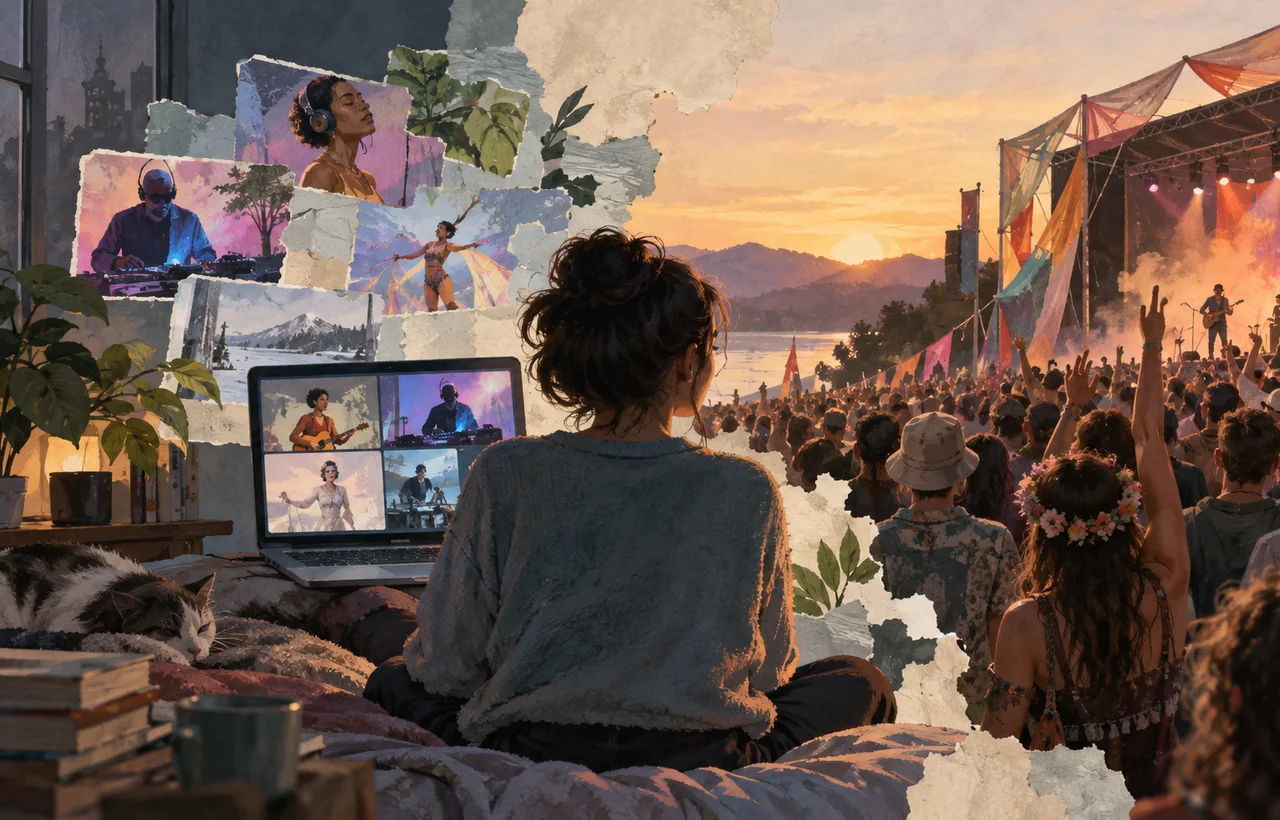
Digital festivals work best as their own format, not as a lower-cost imitation of a physical event. Their strengths are reach, experimentation and participation across distance.
Where the format adds value
Online stages can add captions, translation, flexible viewing, audience tools and experiences that would be impossible in a venue. They can also serve people limited by geography, disability, cost or caregiving responsibilities.
The experience still depends on bandwidth, device access and interface design. A claim of global access should disclose those practical barriers.
The economics are different
A virtual ticket may reduce travel and venue costs, but production, moderation, licensing, platform fees and artist compensation remain significant. Attendance figures should separate unique people from visits, replays and free sampling.
Organizers also need clear rules for ownership, recording, data collection and harassment. A technically impressive space can still fail performers and audiences if governance is weak.
Hybrid is a design choice, not a compromise
The most durable model may combine a strong local event with a deliberately different online program. Success should be judged through accessibility, audience satisfaction, artist outcomes and repeat participation—not novelty alone.
Digital festivals can extend culture. They are most credible when they state which forms of connection they enable and which they cannot reproduce.