Deep-sea expeditions routinely encounter unfamiliar organisms, but “never seen before” does not automatically mean “new species.” Formal identification is a careful, reviewable process.
From observation to description
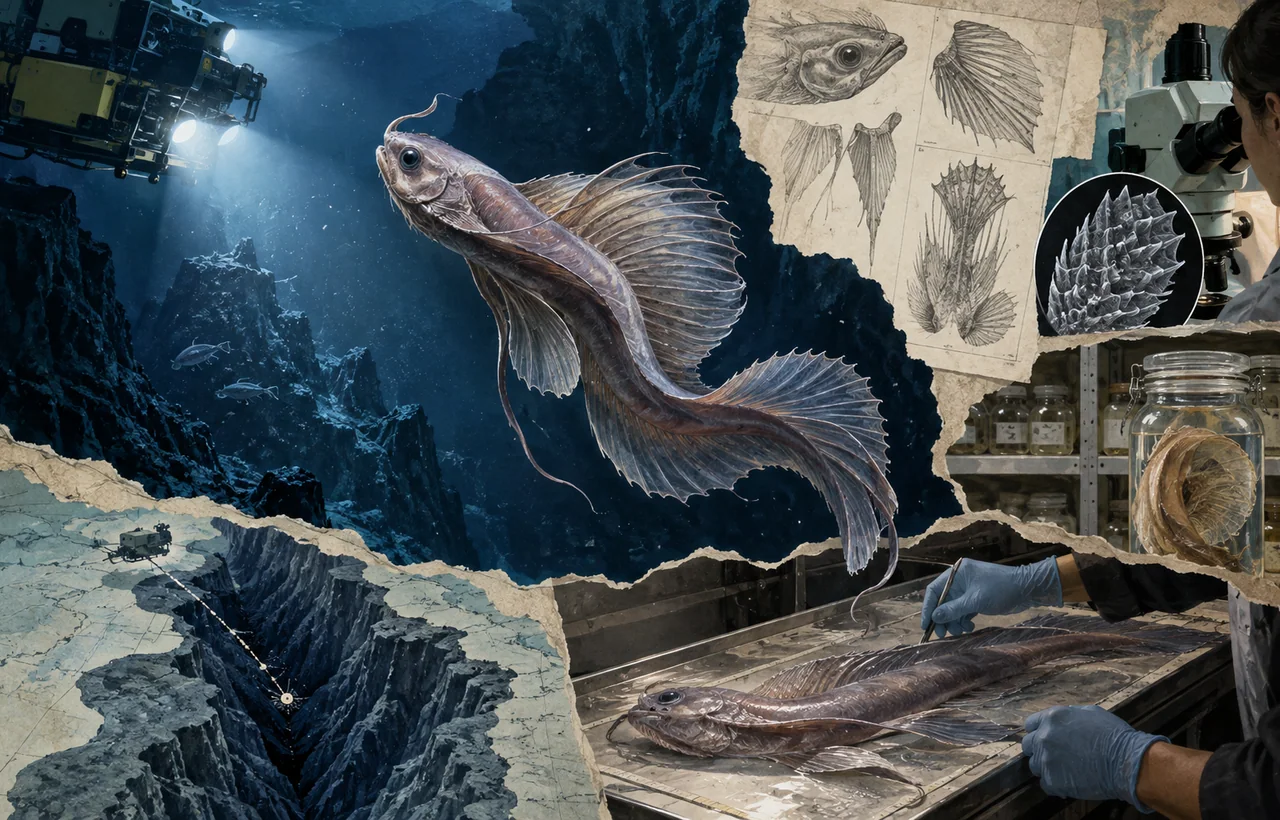
Researchers document location, depth, habitat and behavior, then compare physical features with museum collections and published descriptions. Genetic evidence can strengthen the case, especially when closely related species look similar.
A formal description designates a type specimen, explains the diagnostic differences and places the material in a recognized collection so other scientists can inspect it.
Why the deep sea complicates the work
Sampling at extreme depth is expensive and can damage fragile organisms. A remotely operated vehicle may record excellent video without collecting the anatomical material needed for taxonomy.
Environmental DNA can reveal that an organism is present, but a sequence alone may not provide enough information to describe its form, ecology or relationship to known species.
How to read discovery headlines
Look for a peer-reviewed description, the name of the collection holding the specimen, diagnostic evidence and a clear distinction between an observation and a confirmed species.
The time between expedition and publication is a feature of careful science, not a delay to be hidden. Verification gives a discovery lasting value.