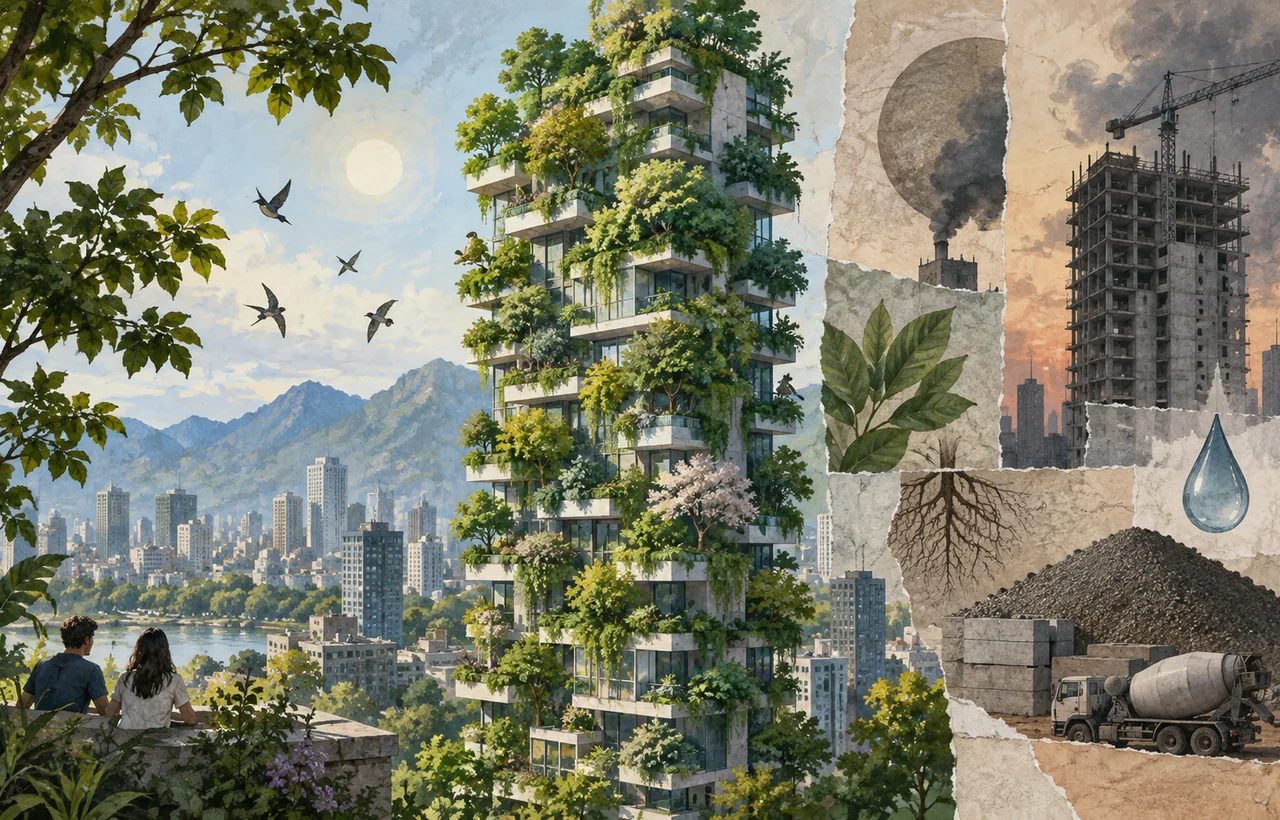
A planted facade is visible evidence of biophilic design, but a photograph cannot show whether the system delivers durable environmental benefits.
Measure the building as a system
Useful assessment includes shade, surface temperature, habitat, irrigation demand, plant survival and maintenance. It also accounts for the structural material and equipment required to support soil, water and safe access at height.
The relevant comparison is not a bare tower. It may be a lower-carbon building paired with street trees, parks or restored ground-level habitat.
Maintenance determines performance
Species need to suit sun, wind, rainfall and root volume at each elevation. Irrigation failures, disease or inaccessible planters can turn a living facade into a costly replacement cycle.
A credible plan identifies who maintains the planting, where water comes from, how runoff is handled and how performance will be reported after the launch photographs.
Where the idea is strongest
Vertical planting can add value on dense sites with little ground space, particularly when it improves shade, resident comfort and habitat connectivity. It should complement, not displace, broader urban greening.
The test is measured performance over time. Green appearance is a design feature; ecological benefit is an evidence claim.