
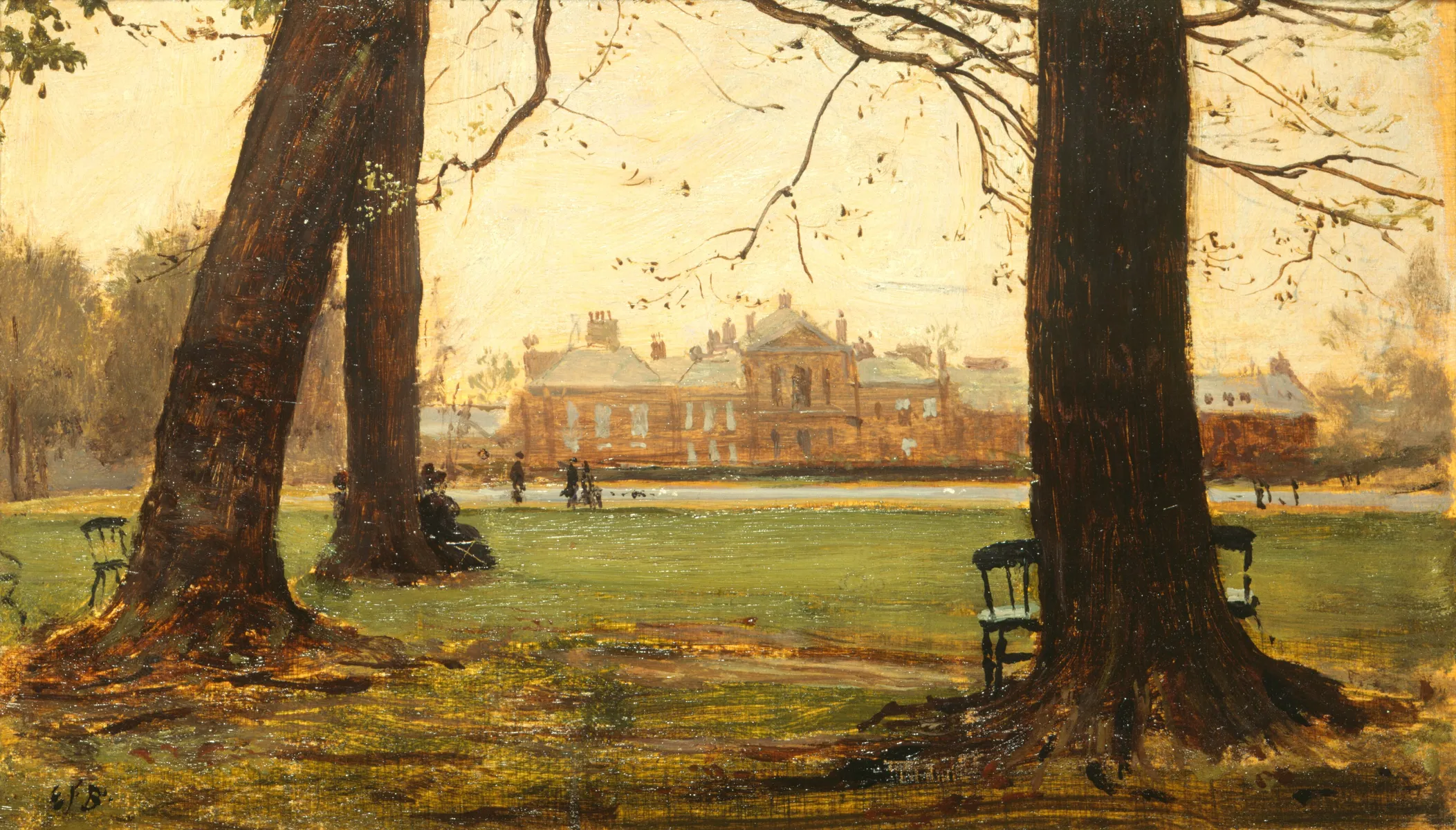
Kensington Gardens is taking on an especially prominent cultural role in London in 2026, combining its historic royal landscape with a major programme of contemporary art, architecture, public events and wildlife activities. The 265-acre Royal Park, next to Kensington Palace and Hyde Park, is currently hosting the 25th Serpentine Pavilion as well as Jesús Rafael Soto's immersive *Pénétrable BBL Jaune*, while Serpentine's galleries continue to stage exhibitions and events within the gardens. The combination has turned the park into more than a green space for recreation: it has become an important setting for London's summer and early-autumn cultural programme.
The most visible new architectural addition is the 2026 Serpentine Pavilion, designed by Mexico City-based LANZA atelier, founded by architects Isabel Abascal and Alessandro Arienzo. Titled *a serpentine*, the pavilion opened on June 6 and is scheduled to remain in Kensington Gardens until October 25. Its design takes inspiration from the traditional English crinkle-crankle wall, using curving brickwork to create a long, undulating structure across the lawn. The pavilion also serves as a venue for Serpentine's public programme and a café, making it an active part of the park rather than simply an architectural object to view from outside.
The pavilion is significant beyond its appearance because it marks the 25th edition of one of the United Kingdom's best-known temporary architecture programmes. Since 2000, Serpentine has invited architects who had not previously built in the UK to create a temporary pavilion beside the gallery. Over the years, the programme has become a regular part of London's architectural calendar, bringing experimental structures into a public landscape for a limited period. The 2026 edition continues that tradition while drawing on a building technique with a long history in British landscape architecture.
Architecture is only one part of Kensington Gardens' current cultural identity. Serpentine's public-art programme is also putting the park at the centre of a major presentation by Venezuelan kinetic artist Jesús Rafael Soto. His *Pénétrable BBL Jaune* is on view from June 16 through October 25 beside Serpentine South. The work consists of thousands of suspended yellow tubes that visitors can physically walk through, making movement and participation central to the experience.
The Soto installation is particularly striking because it changes according to the visitor. From outside, the yellow strands create a dense visual field. Once a person enters, the tubes move around the body and alter the appearance of the sculpture. Serpentine describes the work as part of Soto's celebrated *Pénétrable* series, in which the traditional distinction between artwork and viewer is deliberately reduced. The garden setting adds another layer because the surrounding trees, paths and changing daylight become part of what visitors see through the installation.
That emphasis on interaction reflects the wider direction of Serpentine's programme. The institution has described its 2026 schedule as bringing together artists whose practices expand the boundaries between media, technology and audience experience. Within Kensington Gardens, the Pavilion, public sculpture, talks, performances and exhibitions form a connected cultural environment rather than separate attractions. The park effectively becomes an extension of the gallery, with visitors moving between art, architecture and landscape.
The wider gallery programme is also changing as the year moves into autumn. Serpentine's Cecily Brown exhibition at Serpentine South ended on September 6, while the new Amar Kanwar exhibition opened at Serpentine North on September 23 and will continue through January 31, 2027. The exhibition transforms the North Gallery into a site-specific environment combining new and existing films, creating a quieter, more meditative experience within the wider park landscape.
The connection between Kensington Gardens and contemporary art is not new. Serpentine South opened in the park in 1970 and has since presented the work of more than 1,600 artists, according to the Royal Parks. Serpentine North, which opened in 2013, occupies a former 1805 gunpowder store known as The Magazine and was redesigned by Zaha Hadid Architects. Together, the two galleries have created a major contemporary-art destination inside a historic royal park.
Yet Kensington Gardens itself predates the galleries by centuries. The Royal Parks traces the land back to the 16th century, when it formed part of Henry VIII's hunting grounds. In 1689, William III and Mary II created Kensington Gardens as a private garden for Kensington Palace after separating the land from Hyde Park. Queen Caroline and landscape designer Charles Bridgeman later transformed the landscape in the 1720s, establishing the Serpentine and the informal style that influenced the garden visitors see today.
The park's royal history is visible throughout its landscape. Kensington Palace remains one of its defining landmarks, while the Italian Gardens and Albert Memorial reflect the Victorian era. Queen Victoria was born at Kensington Palace and lived there until she became queen in 1837. The Italian Gardens were commissioned during her reign, while the Albert Memorial was created in memory of Prince Albert after his death in 1861. These historic features coexist with the much newer architecture and public art being presented by Serpentine.
Kensington Gardens is also closely connected with one of London's most famous literary figures. In the early 20th century, J. M. Barrie was inspired by visits to the park when developing the world of Peter Pan. A bronze statue of Peter Pan, funded by Barrie and installed in 1912, remains one of the park's most recognizable attractions. The nearby Elfin Oak, carved from an ancient tree stump in 1930, adds another layer to the park's long association with children's stories and imaginative landscapes.
The landscape itself remains an important part of the park's appeal. Kensington Gardens covers approximately 107 hectares, or 265 acres, with a mixture of formal avenues, meadow, woodland and water. At its centre is the Round Pond, around which avenues spread outward, while the Long Water and surrounding habitats support a range of birds, insects and other wildlife. The Royal Parks classifies the gardens as a Grade I listed landscape as well as a wildlife haven.
That ecological role is increasingly visible in the park's public programme. The Royal Parks has scheduled bat walks across Kensington Gardens and Hyde Park in September and October 2026, allowing visitors to learn about bats and urban wildlife after sunset. Several of those events are taking place around the current cultural programme, showing how the park's natural environment is being used as an educational resource alongside its art and architecture.
The mix of activities also makes Kensington Gardens unusually broad in its appeal. Visitors can encounter contemporary sculpture, attend an architectural event, explore Kensington Palace, walk through historic gardens, observe wildlife or spend time in the park's open landscape. The Royal Parks describes the site as a destination for art lovers, music lovers, nature enthusiasts and families, reflecting the range of uses that have developed around the historic landscape.
Access remains another important feature. Kensington Gardens itself is free to enter, and the Royal Parks currently lists pedestrian gate hours as 6am to 7:30pm. Serpentine's exhibitions and the 2026 Pavilion are also listed as free during public opening periods, making a substantial portion of the current cultural programme accessible without an admission charge. Some talks, performances and special events carry separate ticket prices.
The park's location makes this combination especially significant. Situated between Bayswater and Kensington, Kensington Gardens is close to some of London's most visited cultural institutions and landmarks. Yet its large landscape creates a sense of separation from the surrounding city. The result is an environment in which architecture and contemporary art can be experienced differently from how they might be in a conventional urban gallery or museum.
The 2026 Serpentine Pavilion demonstrates that relationship particularly well. Its winding walls are shaped by the landscape rather than imposed on it, while its open structure allows visitors to move through the space and see the surrounding trees. The architecture is therefore connected directly to the park, continuing a longstanding tradition of temporary structures that treat Kensington Gardens as an active design environment.
The park's history also creates an unusual contrast with the temporary nature of many of these projects. Kensington Gardens has existed in recognizable form for centuries, while the Serpentine Pavilion and Soto sculpture are deliberately temporary. Their limited lifespan encourages visitors to experience them while they are present, adding a sense of change to a landscape normally associated with permanence and tradition.
That temporary quality is one reason Kensington Gardens remains a useful setting for experimentation. Artists and architects can create works that respond to the landscape without becoming permanent features of the Royal Parks. Audiences, meanwhile, encounter the same historic trees, paths and monuments alongside a changing sequence of contemporary projects from different generations and artistic traditions.
This year's programme also reflects the international character of London’s cultural sector. Soto was born in Venezuela and developed much of his career in Paris, while LANZA atelier is based in Mexico City. Amar Kanwar is an Indian artist whose current Serpentine exhibition explores film, memory and history. Their presence in Kensington Gardens demonstrates how the park operates as a meeting point for different artistic cultures rather than simply a showcase for British heritage.
The cultural activity also has a wider economic and tourism dimension. Major exhibitions and the Pavilion attract visitors to Kensington Gardens who may spend time not just at Serpentine but at nearby restaurants, museums, shops and other attractions. Because much of the park's programme is free, the garden can function as an informal gateway into London's wider arts scene, allowing visitors to combine public space with cultural experiences.
At the same time, the Royal Parks must balance that popularity with conservation. A historic landscape receives heavy pedestrian use, while large temporary installations and events bring additional visitors. Managing lawns, trees, wildlife habitats, water features and heritage structures alongside a busy cultural calendar requires careful planning. The park's protected landscape status makes that balance especially important.
As September progresses, Kensington Gardens is entering the final phase of several major 2026 projects. The Serpentine Pavilion and Soto's *Pénétrable BBL Jaune* are both scheduled to remain until October 25. David Hockney's public mural presentation has just concluded on September 20, while Amar Kanwar's exhibition has opened and the park continues to host events including wildlife walks and Pavilion programming.
Looking ahead, the end of October will bring another transition. The temporary Pavilion and Soto installation will leave the gardens, allowing the park to return to a different visual landscape while Serpentine's indoor exhibition programme continues into the winter. Justin Caguiat's *Change Ringing* is scheduled to open at Serpentine South on October 8 and run until January 10, 2027, providing the next major chapter in the galleries' seasonal programme.
That cycle of change is now one of Kensington Gardens' defining characteristics. The park carries centuries of royal and cultural history, but it is not frozen in the past. Temporary architecture, contemporary sculpture, film, performance and environmental programming continue to alter how visitors experience the landscape.
For 2026, that transformation is especially visible. The historic gardens are hosting a landmark architectural commission, an immersive kinetic sculpture and a new generation of exhibitions while continuing to function as a major London green space. Kensington Gardens is therefore not simply the backdrop to these cultural projects. It is an active participant in them, shaping how art, architecture, history and nature are encountered together.
As autumn approaches, visitors have only a limited window to see some of the year's most distinctive additions. By October 25, both the 2026 Serpentine Pavilion and Jesús Rafael Soto's *Pénétrable BBL Jaune* are due to close. Until then, Kensington Gardens offers a rare combination of permanent London history and temporary international creativity — a landscape where a royal palace, a 21st-century pavilion, kinetic art and urban wildlife can all exist within the same walk.
**What to Watch Next:**
The main dates to watch are October 25, when both the Serpentine Pavilion 2026 and Soto's *Pénétrable BBL Jaune* are scheduled to close. Before then, visitors can follow the final Pavilion events and the autumn programme, while Amar Kanwar's Serpentine North exhibition continues through January 31, 2027. The arrival of Justin Caguiat's *Change Ringing* at Serpentine South on October 8 will mark the next major transition in Kensington Gardens' 2026 cultural calendar.