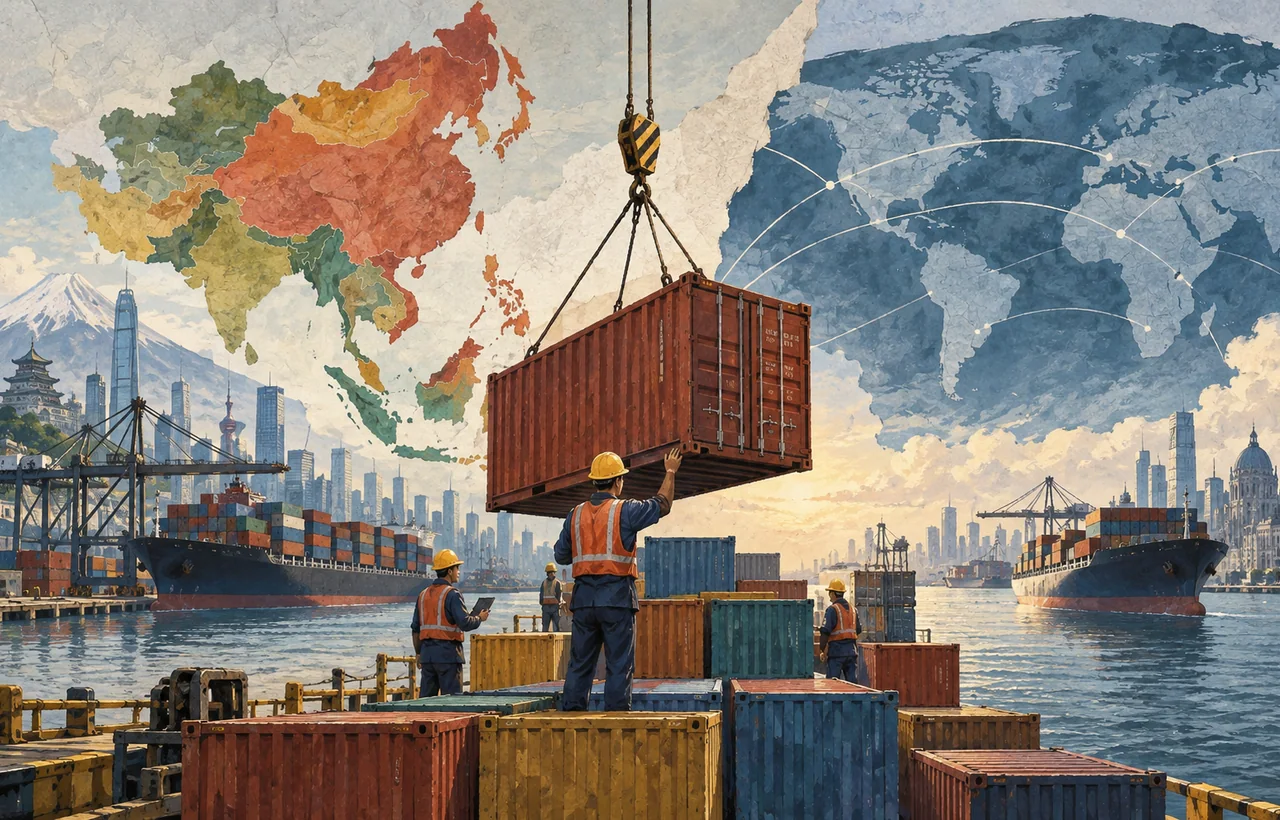
Trade policy in Asia is increasingly shaped by resilience: firms and governments want alternatives when tariffs, conflict or transport disruption affect a critical supplier. The result is a more complex network, not a simple move from globalisation to self-sufficiency.
Diversification is not decoupling
A company can add suppliers in India, Vietnam or Mexico while keeping substantial production in China. That strategy reduces dependence on one location without rebuilding every stage of a value chain at home.
OECD trade-in-value-added data shows stronger regional sourcing in parts of Asia alongside continued reliance on inputs and services from outside the region. The pattern varies sharply by sector, especially between strategic goods and ordinary consumer products.
Policy changes the cost of each route
Tariffs, export controls, investment screening and local-content rules influence where firms place production. Infrastructure, customs efficiency, energy reliability and skills often matter just as much as headline labour costs.
Regional agreements can lower friction, but rules of origin and overlapping standards also add administrative work. A new trade corridor is valuable only when firms can use it predictably at commercial scale.
What to measure
Announcements about friend-shoring should be tested against actual investment, intermediate-goods trade, delivery times and supplier concentration. A factory opening may shift final assembly while leaving upstream dependencies unchanged.
Asia’s trade map is becoming more deliberate and more regional in selected areas. It remains deeply global, which means resilience comes from workable alternatives rather than the promise of complete independence.