Nvidia CEO Jensen Huang Says Markets Are Wrong About AI Threat to Software Companies
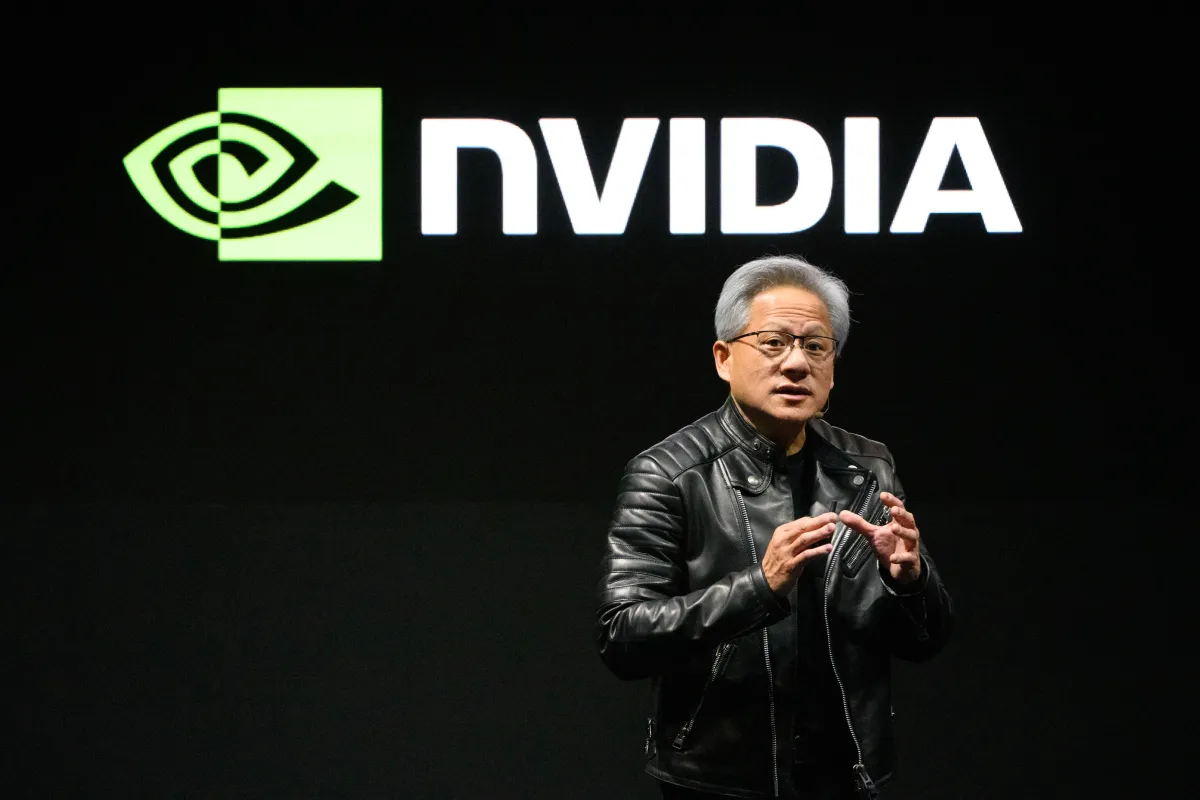
Nvidia CEO Jensen Huang said Wednesday that markets misjudged the AI threat to software businesses, just hours after the chip powerhouse gave an optimistic sales outlook citing strong AI demand.
"I think the markets got it wrong," Huang told CNBC's Becky Quick, dismissing concerns that AI agents will cannibalize the corporate software industry. Instead, he expects a large number of software companies to adopt agentic AI to develop software and increase efficiency. Huang stated, in what he termed as "counterintuitive," that AI bots will not replace, but rather employ, these software tools. "That's the reason why we also say agents are tool users," according to him.
He mentioned the internet browser and Microsoft Excel as examples of technologies that AI bots will employ. "All of the technologies that we use today, whether they're Cadence, Synopsys, ServiceNow, or SAP, exist for a very good purpose. "Agentic AI will be intelligent software that uses these tools on our behalf and helps us be more productive," Huang explained. "Nobody's going to service better than ServiceNow, and they're going to come up with agents that are really fine-tuned and optimized for the work that uses the tools that they have." "In the end, we need the tools to finish their work and put the information back in a way that we can understand."
The software business has faced significant challenges in recent weeks. Anthropic, the business behind Claude Cowork, has roiled the fortunes of various SaaS firms, including TCS and Infosys. Investors appear to be concerned that technologies like Claude Cowork would eventually completely replace such enterprises. However, Jensen Huang believes that the stock market has misinterpreted the overall picture. Earlier this month, he stated that the idea of the software sector being displaced by AI was the "most illogical thing in the world, and time will prove itself."
Why This News Matters
The story goes against a common fear in the market that AI will take over software companies. Jensen Huang of Nvidia says that AI will depend on existing tools instead of getting rid of them. This means that the recent drop in software prices may be more about fear than reality. Nvidia's strong results, on the other hand, show that AI spending is still going up and becoming a long-term business goal.
Nvidia’s Blockbuster Results and Surging AI Demand
The comments come after Nvidia disclosed that its fiscal fourth-quarter revenue increased 73% to $68.13 billion from the previous year, exceeding analysts' expectations of $66.21 billion. The company also provided positive expectations, estimating revenue for the fiscal first quarter to reach $78 billion, plus or minus 2%, considerably above analysts' forecast of $72.6 billion. Nvidia had absolutely blockbuster results in the last three months of 2025, as demand for its AI chips skyrocketed. The company's annual revenue totaled $215.9 billion.
Our customers are racing to invest in AI compute - the factories powering the AI industrial revolution and their future growth.
Nvidia is the world's most valuable publicly traded business, with a market capitalization of $4.8 trillion. Nvidia's stock jumped as much as 2% in extended trade following the quarterly earnings report. Huang's message to investors was clear: Big Tech's big investment in AI technologies, notably Nvidia chips, is far from completed. "This new way of doing computing is not going to go back," he added. He further stated that companies were "going to be building out this capacity from this point forward and continue to expand from here." He also stated that agentic AI has hit a tipping point in the last two or three months, and that physical AI integrated into robots and manufacturing will follow.
Market Reaction, Software Selloff, and Diverging Expert Views
Investors had been concerned that the large increase in expenditure on AI gear would not be sustainable, fueling fears of a bubble in the sector. Shares of software service companies have fallen in recent months, weighing on the S&P 500 software and services index, which had lost about 23% as of Wednesday's market close. Following Huang's comments, software stocks traded neutral after hours. Synopsys dropped 3.6% after the market closed, while Cadence fell 0.9%. ServiceNow showed little change, while SAP rose 0.3%.
According to Dan Niles, founder and portfolio manager at Niles Investment Management, not all companies will survive as AI threatens to automate workflows, pressure prices, and remove barriers to new competitors entering the market. "There are some real companies that will go to zero in the software space," Niles said, adding that the most durable players will be in the database and cybersecurity industries. He also mentioned that traditionally, technologies like railroads, canals, and the internet are overbuilt before winners and losers emerge. CNBC's Jim Cramer disputed the doomsday scenario, claiming that software businesses are adaptive. "Software firms are survivors. They are capable of merging. They can adapt. "They can do whatever it takes to stay in business," he said, warning that many are now priced for perfection.
The AI Infrastructure Boom and Questions About Sustainability
Over half of Nvidia's earnings are generated by five major hyperscalers. These are the big players, the Googles, Amazons, and Metas of the world, who buy enormous quantities of GPUs to fuel their AI data centers. A number of these hyperscalers are looking to substantially increase their capital expenditures. Meta, for instance, shelled out $72 billion on capex in 2025. This year, they're aiming for as much as $135 billion. Google, meanwhile, could spend up to $185 billion, a significant jump from the $91 billion they spent the year before. The major hyperscalers are budgeting about $700 billion in capital expenditures this year.
The main concern for investors is how long this spending increase can last. Some hyperscalers are already overspending their free cash flow and incurring debt to fund AI infrastructure. If capital expenditures double annually, they might total $2.8 trillion by 2028 and $5.6 trillion by 2029.
Addressing ecological issues, Huang claimed that the world previously invested $300 to $400 billion per year in traditional computing, while AI needed significantly more computer power. Because the quantity of computing required grows exponentially, global investment in compute capacity will continue to increase. "AI is here. AI will not go back. "AI is only going to improve from here," he stated. Some analysts, however, believe that these words will be remembered as the apex of the AI bubble, depending on whether the projected economic development occurs.
What to Watch Next
Think about whether Big Tech can keep spending so much on AI. Also, keep an eye on which software companies are able to successfully add AI to their products. Early signs of real productivity gains will show whether the current AI boom continues or slows down.

Robert Miller
Robert Miller tracks corporate consolidations and industrial trends.
Related Post

Trump’s 15% Tariff Shock Sends U.S. Stock Futures Lower, Fuels Inflation Fears

AI-Augmented Innovation: How Corporations are Rewriting the R&D Playbook

The Circular Economy Mandate: Retail's 2026 Sustainability Pivot

Is the Startup Funding Winter Finally Thawing?
RECENT POST
- »Emerging Markets 2026: The Rise of the 'Digital Tiger' Economies
- »Family Offices in 2026: Shifting from Preservation to Planetary Impact
- »The 2026 Midterm Shift: A Deep Dive into the Battle for the House
- »Trump’s 15% Tariff Shock Sends U.S. Stock Futures Lower, Fuels Inflation Fears
- »Alzheimer’s Prediction Tool: Blood Test Estimates Symptom Onset Within 3–4 Years