Trump’s 15% Tariff Shock Sends U.S. Stock Futures Lower, Fuels Inflation Fears
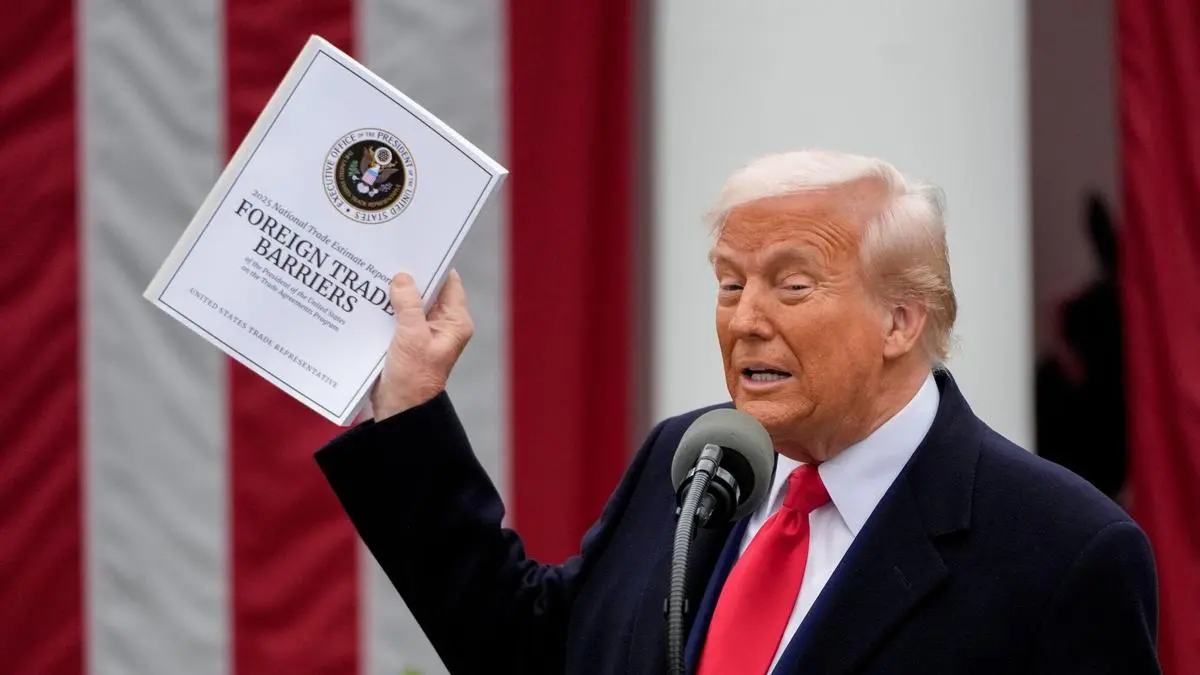
U.S. stock futures fell on Sunday night after President Donald Trump said that tariffs around the world would go up from 10% to 15%. This was after the Supreme Court threw out the president's "reciprocal" tariff policy. The new tariffs have made people more worried about the future of inflation and global growth. Futures for the Dow Jones Industrial Average fell 300 points, or 0.6%. The S&P 500 and Nasdaq 100 futures dropped 0.7% and almost 1%, respectively. Wall Street had a rough day of trading.
Stocks went up at first on Friday when the Supreme Court overturned a big part of Trump's trade policy. Then they went back down and eventually came back up. The Dow Jones Industrial Average went up more than 230 points, or 0.5%, after going down 200 points earlier in the session. The S&P 500 rose by 0.7%, and the Nasdaq Composite rose by 0.9%. Investors thought the Supreme Court's decision would ease tensions between the US and its trading partners and possibly lead to refunds for companies hurt by the tariffs. However, they are still waiting for more information from the White House. Tim Holland tweeted, "It looks like Wall Street and Main Street are going to have to deal with trade and tariffs for a while."
Why This News Matters
The most recent change in tariffs is a reminder that trade policy is once again a major factor in the market. Higher tariffs make inflation more likely to stay high, global growth slower, and tensions with trading partners rise again. These are all things that directly affect interest rates, corporate profits, and consumer prices. Investors are becoming more cautious, as shown by the immediate reaction in stocks, currencies, commodities, and crypto. The main point for both everyday investors and businesses is that there is a lot of uncertainty. Companies might put off making investments, supply chains might change again, and markets might stay volatile until the policy direction becomes clear.
Global Markets, Currencies and Rates Reaction
Wall Street futures and the dollar fell in Asia on Monday as uncertainties over US tariffs reignited the "sell America" trade, as uncertainty loomed after Trump raised his new 10% worldwide tariff to 15%, surprising some authorities. "The tariff landscape is now more uncertain than before," said NAB's Rodrigo Catril. Asian markets were mixed, with MSCI's Asia-Pacific ex-Japan index rising 0.9% amid sluggish trading.
Japan's Nikkei was closed for a holiday, but futures traded down. South Korea jumped 0.5% following previous record gains, while Taiwan climbed 1.2% to a high. European futures were down, with the EUROSTOXX 50 and DAX falling 0.5% and the FTSE dropping 0.2%. The Treasury market was also hurt by tariff uncertainties, raising the likelihood that the government may have to repay approximately $170 billion in revenue, potentially extending the fiscal deficit to around 6.6% of GDP. Mixed growth and inflation figures reduced the likelihood of a June Federal Reserve rate drop to approximately 52%. The dollar later weakened versus the yen, euro, and Swiss franc.
Commodities, Crypto and Safe-Haven Flows
Oil prices fell after the tariff announcement and because people were still worried about world politics. Brent crude prices fell to around $71 per barrel, while US crude prices fell to the mid-$65 range. Overall, oil prices were unstable. They lost some of the gains they made the week before when Trump said the US military could hit targets in Iran as tensions rose in the region.
As fears about trade policy and world events grew, gold became a more valuable safe haven, and silver kept going up. Before the US and Iran had more nuclear talks in Geneva, people were careful in the markets. If diplomacy doesn't work, the military might have to step in. The overall mood of not taking risks hurt the cryptocurrency markets as well.
Bitcoin fell sharply, dropping about 5% to less than $65,000. This was part of its recent sell-off. The drop happened when risk assets were already weak and the currency was under pressure in global trading. The changes in commodities and cryptocurrencies were part of a bigger shift by investors to protect themselves. This was because trade problems, threats to world peace, and policy chaos made all asset classes more volatile.
Policy Moves and Tariff Uncertainty
Trump stated the 15% tariff rise would go into effect immediately, although it was unclear whether legal documentation had been finalized. "Effective immediately, I will raise the 10% Worldwide Tariff to the fully allowed 15% level," he stated. Additional tariffs may follow in the coming months. It was unclear when the tariffs would be implemented, whether products or countries would be excluded, and whether all trading partners would suffer the entire amount.
Some countries formerly had lower tariffs, whereas many Asian economies suffered higher rates. Analysts observed that recent legal changes could temporarily cut effective US tariff rates for some economies, with China projected to witness the most significant drop. Treasury Secretary Scott Bessent stated that the duties will be transitory and act as a five-month bridge under Section 122 of the Trade Act, while longer-term measures under other authorities are being developed. He said the measure will keep tariff revenue coming and hailed the authority as strong.
Economic Outlook, Earnings and Key Events
There are a number of important events that are likely to affect the market this week. Trump will give his State of the Union speech on Tuesday. Investors are still very worried about Iran after President Trump told the country to make a nuclear deal and warned that "bad things" could happen if they didn't.
A lot of people will be watching Nvidia's earnings report on Wednesday because the company is expected to grow quickly and could make big changes after the report comes out. People see the results as a big test of faith in artificial intelligence as a whole, especially since the company is well-known in major indices.
On Monday, we will get information about orders for long-lasting items and orders for making things. This might help us figure out how the economy is doing. A week of events that could make current volatility go up or down is coming up. These include important changes in government, threats to world peace, important earnings reports, and new economic data.
Debate Over Balance-of-Payments Justification
Trump claimed that the increased tariffs were required because the United States has a significant balance-of-payments deficit. He also cited Section 122, which allows the government to apply temporary levies for up to 150 days if there are significant international payments imbalances or the currency is poised to lose value. An executive order cited the trade deficit and a negative net international investment position of around $26 trillion as proof.
Many analysts disagreed with the assessment, citing substantial capital inflows and a relatively strong dollar. Gita Gopinath stated that the United States does not have a basic payment problem and cautioned that tariffs will primarily cause trade patterns to shift. Jay Shambaugh, a former Treasury official, said there was no evidence of a crisis, which would normally cause the dollar to fall sharply.
Critics further claimed that the argument is based on outdated beliefs about the global financial system, and that the larger issue is the long-term budget outlook, which predicts deficits close to 6% of GDP. Legal experts have cautioned that the tariffs may face additional legal challenges, scrutiny from other countries, and lawsuits that might go longer than the 150-day policy frame.
What to Watch Next

Michael Chen
Michael specializes in Asian markets and global trade dynamics, providing insights into the shifting economic landscape of the 21st century.
Related Post
Gold Hits $3500: The Safe-Haven Rally of 2026
Emerging Markets 2026: The Rise of the 'Digital Tiger' Economies
Copper: The New Oil of the Electrification Era

Netflix Walks Away as Paramount’s $111B Bid for Warner Bros Discovery Wins
RECENT POST
- »Emerging Markets 2026: The Rise of the 'Digital Tiger' Economies
- »Family Offices in 2026: Shifting from Preservation to Planetary Impact
- »The 2026 Midterm Shift: A Deep Dive into the Battle for the House
- »Trump’s 15% Tariff Shock Sends U.S. Stock Futures Lower, Fuels Inflation Fears
- »Alzheimer’s Prediction Tool: Blood Test Estimates Symptom Onset Within 3–4 Years