Trump Threatens 100% Tariffs on Europe Over Digital Tech Taxes
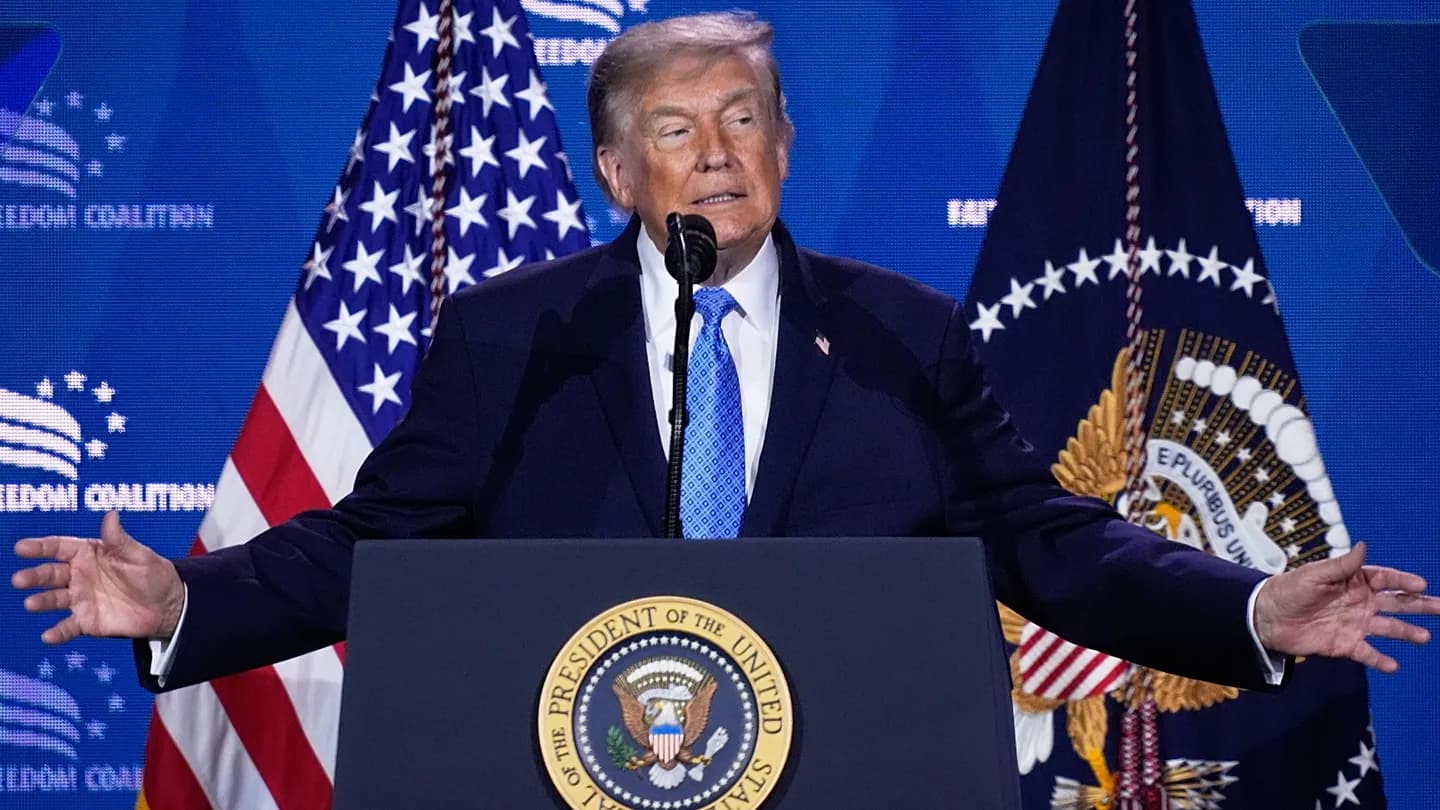
President Donald Trump has sharply escalated trade tensions with Europe by threatening to impose a 100% tariff on imports from any country that introduces or maintains digital services taxes targeting American technology companies. In a post on Truth Social, Trump declared that any nation imposing such taxes would face immediate tariffs on all goods exported to the United States, adding that the measure would override existing or future trade agreements.
Although the warning applies broadly to any country adopting digital services taxes, it is widely seen as being directed primarily at several European nations that either already levy such taxes or are considering expanding them. The announcement has reopened one of the most contentious issues in transatlantic trade relations and could reignite a broader economic dispute between the United States and the European Union.
Digital services taxes have become increasingly popular among governments seeking to ensure that large multinational technology companies pay taxes where they generate revenue rather than solely where they are headquartered. Several European countries, including France, Italy, Spain, and the United Kingdom, have introduced or maintained taxes on revenues generated by large digital platforms such as online marketplaces, social media companies, and search engines.
European policymakers argue that many global technology firms earn billions of dollars from users across Europe while paying relatively little corporate tax within those countries because profits are booked elsewhere. The taxes are intended to address what governments see as an imbalance in the international tax system while broader global tax reforms continue to evolve.
The United States has long opposed these digital taxes, arguing that they disproportionately target American technology giants including Apple, Google, Meta, Amazon, and Microsoft. Successive U.S. administrations have maintained that the taxes unfairly discriminate against U.S.-based businesses and violate principles of international trade. Trump's latest warning represents the strongest response yet, with the proposed 100% tariff significantly exceeding many previous retaliatory measures considered during earlier disputes.
In his statement, Trump insisted that countries choosing to tax American technology companies should expect severe economic consequences, framing the issue as protecting U.S. innovation and competitiveness.
European Officials Respond Cautiously but Firmly
European officials responded cautiously but firmly to the announcement. The European Commission defended digital services taxes as legitimate fiscal measures applied according to national tax laws rather than discriminatory actions against American companies. EU representatives emphasized that taxation policy remains a sovereign matter and warned that unilateral tariff increases could violate international trade commitments.
Officials also signaled that the European Union would be prepared to respond if the United States imposed sweeping tariffs on European exports. The comments suggest that both sides remain far apart on an issue that has repeatedly complicated broader trade negotiations over the past several years.
The dispute arrives shortly after the United States and the European Union had taken steps to ease broader trade tensions through agreements covering tariffs on industrial goods and other products. Those negotiations helped reduce uncertainty for manufacturers and exporters on both sides of the Atlantic. However, digital taxation remained largely outside those agreements, leaving it unresolved despite progress in other areas. Trump's latest threat therefore introduces fresh uncertainty into the trading relationship and raises concerns that previous agreements could come under renewed pressure if negotiations deteriorate further.
Economic Consequences and Business Concerns
Economists warn that imposing 100% tariffs would have significant consequences for businesses and consumers in both regions. European exporters could face dramatically reduced access to one of their largest overseas markets, while American importers and consumers could experience higher prices on a wide range of products. Industries including automotive manufacturing, luxury goods, food and beverages, pharmaceuticals, machinery, and consumer products could all be affected if tariffs were implemented.
Businesses operating across international supply chains also fear increased uncertainty, which can discourage investment and disrupt long-term planning. While the tariffs remain a threat rather than an implemented policy, financial markets are closely monitoring developments for signs of further escalation.
The disagreement also reflects a broader global debate over how multinational technology companies should be taxed in an increasingly digital economy. Traditional corporate tax rules were largely designed for businesses with substantial physical operations, making it difficult for governments to tax companies whose services are delivered digitally across borders. International efforts led by the Organisation for Economic Co-operation and Development (OECD) have sought to establish a coordinated global framework for taxing multinational corporations more fairly. However, progress has been slow, prompting several countries to introduce their own digital services taxes while negotiations continue.
Tech Industry and Trade Analysts Weigh In
Technology companies themselves have largely opposed national digital services taxes, arguing that multiple overlapping tax systems increase complexity, create uncertainty, and discourage innovation. Many firms have called instead for a globally coordinated framework that provides consistent rules across different jurisdictions. Business groups on both sides of the Atlantic have similarly warned that escalating trade disputes over taxation could damage economic growth at a time when governments are already managing geopolitical tensions, inflationary pressures, and slowing global demand.
Whether Trump's proposed tariffs are ultimately implemented remains uncertain, but the announcement has clearly raised the stakes in an already sensitive area of international economic policy. Trade analysts note that similar tariff threats have previously been used as negotiating tools to encourage governments to reconsider digital tax policies or engage in broader trade discussions. Even so, the scale of the proposed 100% tariff represents one of the strongest warnings issued in the ongoing dispute.
As governments continue negotiating the future of digital taxation and international trade rules, businesses, investors, and policymakers will be watching closely to see whether diplomacy prevails or whether the latest confrontation develops into another major transatlantic trade conflict.

Business Desk
Business Desk covers global trade, corporate news, and economic policy.
Related Post

Meta Whistleblower Sues Company Over Alleged Attempt to Silence Memoir ‘Careless People’

Oracle Beats Revenue Estimates as AI-Driven Cloud Growth Accelerates

Ryanair CEO Michael O'Leary Signs New Contract With Potential £130M Payout

Nvidia Expands AI Infrastructure Partnerships in South Korea
RECENT POST
- »Asian Markets Rally as United States and Iran Move Closer to Possible Deal
- »Family Offices in 2026: Shifting from Preservation to Planetary Impact
- »Trump-Backed Moore Captures Alabama GOP Senate Nomination
- »Meta Whistleblower Sues Company Over Alleged Attempt to Silence Memoir ‘Careless People’
- »Former Israeli PM Claims Starlink Receivers Were Secretly Moved Into Iran