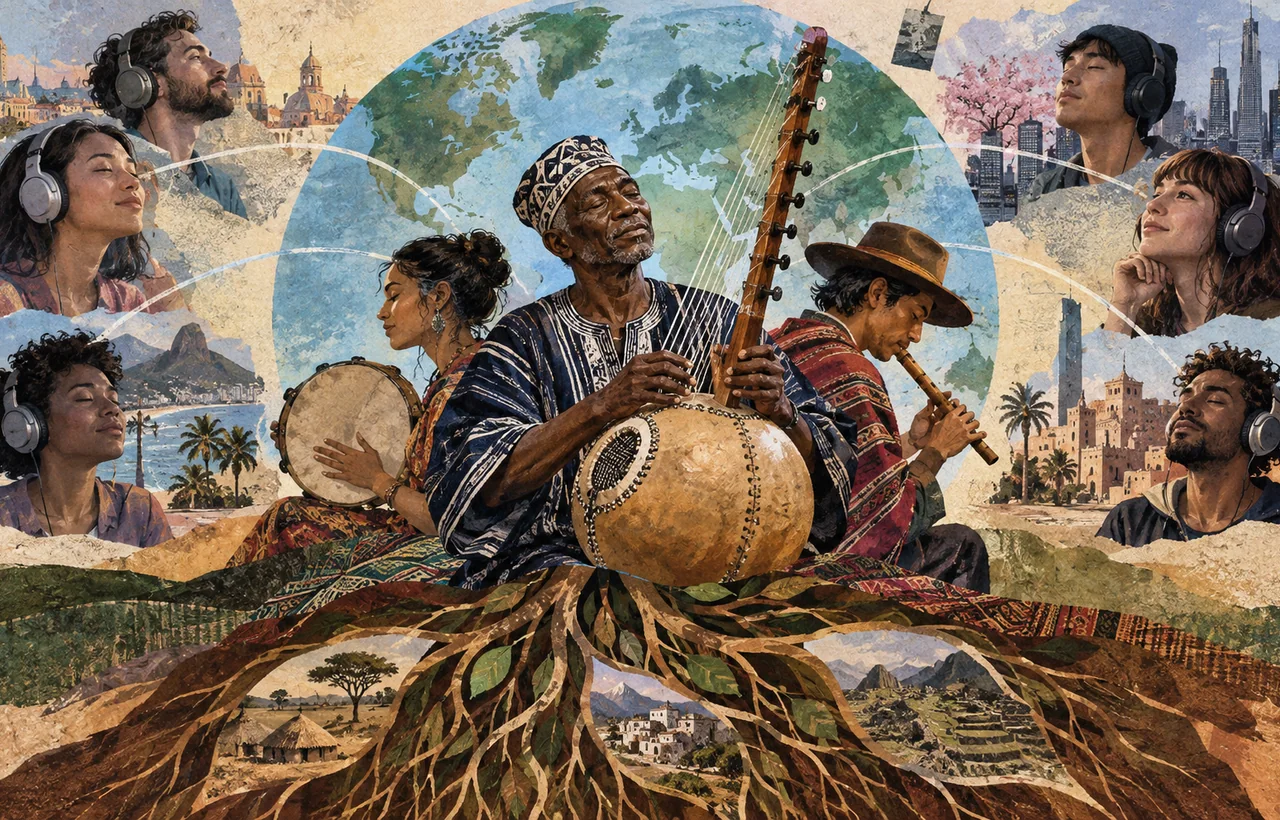
Traditional music has never been completely static or isolated. Musicians borrow instruments, rhythms and stories across borders; the challenge is ensuring that wider circulation does not erase the people and places that gave the music meaning.
Reach is not the same as recognition
Streaming and short-form video can introduce a regional style to millions of listeners. The same systems can detach a sound from its language, ceremony or community and reward the account that repackages it most effectively.
Useful credits name performers, composers, communities, languages and source recordings. Vague labels such as “tribal” or “world music” conceal history and make it harder for listeners to follow the work back to its creators.
Collaboration needs more than permission
A legal licence may cover a recording without addressing the cultural authority to reuse it. Musicians working with sacred, ceremonial or collectively held material may need consent that ordinary copyright does not capture.
Fair collaboration also means transparent payment, shared decision-making and an agreement about how the work will be described. A prominent feature credit is useful, but it does not replace control over context.
What listeners and institutions can do
Listeners can seek original performers, liner notes and local archives rather than stopping at a viral sample. Festivals and labels can fund documentation, translation and touring relationships that last beyond one release.
Music can travel widely without becoming anonymous. The test is whether circulation strengthens the people who carry the tradition or merely extracts a recognisable sound from them.