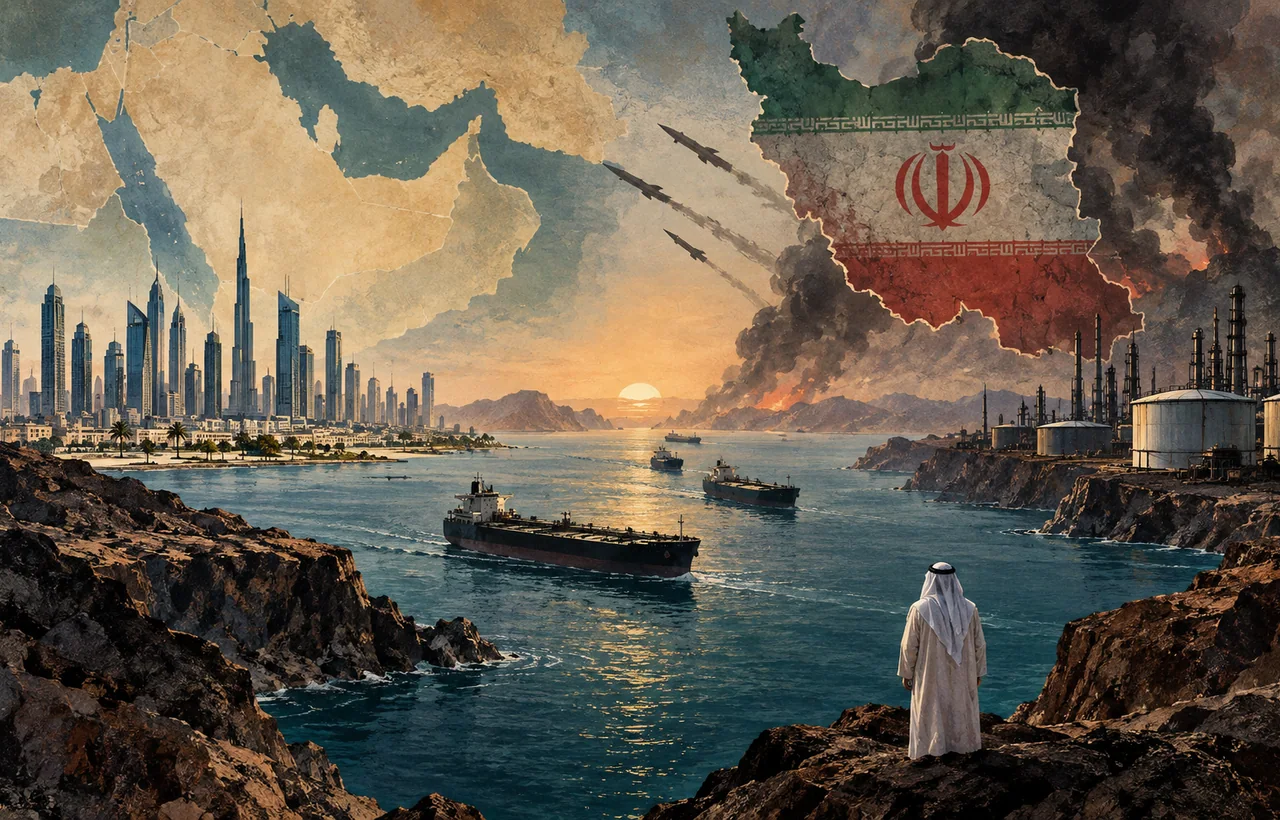
Escalating tensions involving Iran are creating growing concerns about the long-term economic future of Gulf nations, with analysts warning that prolonged instability in the region could affect everything from oil exports and foreign investment to tourism, infrastructure development, and economic diversification strategies.
Over the last decade, major Gulf countries including Saudi Arabia, United Arab Emirates, Qatar, and Bahrain have invested hundreds of billions of dollars into transforming their economies away from heavy dependence on oil revenues. These countries have focused on attracting international investors, multinational corporations, tourists, sporting events, and technology companies in an effort to create more sustainable long-term economic growth.
However, rising geopolitical tensions involving Iran are threatening to slow or even reverse some of that progress by increasing uncertainty across the region. Investors and global financial institutions often view the Gulf as highly sensitive to political and military instability, and even the possibility of wider conflict can quickly affect market confidence, oil prices, insurance costs, and business activity.
While some Gulf economies may experience short-term gains from higher oil prices during periods of instability, economists warn that prolonged conflict creates broader economic risks that can weaken growth prospects over time.
Oil Markets and Shipping Concerns
One of the biggest concerns surrounding the Iran conflict is the security of the Strait of Hormuz, one of the most strategically important shipping routes in the world. A massive share of global oil and liquefied natural gas exports passes through this narrow waterway every single day, making it essential not only to Gulf economies but also to global energy markets.
Any military escalation, disruption, or threat to shipping activity in the Strait of Hormuz could immediately send global oil prices sharply higher and increase fears of supply shortages. Countries around the world, including India, China, and many nations across Europe, rely heavily on Gulf energy supplies to power industries, transportation, and electricity generation.
Rising tensions could therefore create global inflationary pressure by increasing fuel prices and transportation costs worldwide. Although Gulf governments may temporarily benefit from stronger oil revenues during periods of high prices, long-term instability often discourages broader economic activity and creates uncertainty for foreign investors who prefer stable business environments.
Tourism and Business Confidence at Risk
The tourism and business sectors across the Gulf are also facing increasing vulnerability as tensions rise in the region. Cities such as Dubai, Abu Dhabi, and Riyadh have worked aggressively to establish themselves as major global destinations for tourism, finance, luxury real estate, entertainment, and international business.
Massive investments in airports, hotels, sporting events, cultural festivals, and modern infrastructure have helped attract millions of visitors and billions in foreign capital. However, geopolitical instability can quickly affect the perception of safety and stability that these economies depend on.
Airlines, hotel operators, multinational corporations, and international investors closely monitor regional tensions when making decisions about travel, expansion, or investment. Even if Gulf countries themselves remain relatively stable internally, nearby military conflict or fears of escalation involving Iran can reduce tourism demand, increase travel insurance costs, and weaken consumer confidence.
Economic Diversification Faces New Challenges
At the same time, the conflict involving Iran poses a major challenge to the long-term economic diversification plans that many Gulf governments see as essential for their future survival. Countries like Saudi Arabia have launched ambitious transformation programs such as Vision 2030, which aims to reduce dependence on oil by expanding sectors like tourism, entertainment, renewable energy, artificial intelligence, sports, and manufacturing.
Political instability and fears of regional conflict can make investors more cautious and slow the flow of international capital into large development projects. Some experts believe Gulf nations have enough financial reserves to absorb short-term economic shocks, but prolonged geopolitical instability could eventually place greater pressure on government spending and economic growth.
Governments may be forced to increase military and security expenditures while facing reduced foreign investment and slower private-sector expansion. This combination could make it harder for Gulf economies to create jobs, attract talent, and maintain ambitious development timelines.
Global Impact Beyond the Middle East
The broader global economy could also feel the effects of prolonged tensions involving Iran and the Gulf region. Rising oil prices caused by geopolitical uncertainty often contribute to inflation across global markets, increasing costs for transportation, food production, manufacturing, and consumer goods.
International investors generally avoid uncertainty, meaning continued instability in the Middle East could create volatility in stock markets and weaken confidence in global economic growth. Governments and central banks around the world are already facing pressure from inflation, supply chain disruptions, and slowing economic conditions, and any major disruption in Gulf energy exports could worsen those challenges significantly.