Goldman Sachs Now Expects September Fed Rate Hike as Inflation Fears Rise
Goldman Sachs has abruptly shifted its forecast for US monetary policy and now expects the Federal Reserve to raise interest rates by 25 basis points at its September 15-16 meeting, reversing its earlier call for the central bank to remain on hold. The change comes after stronger-than-expected inflation data and a sharp rise in oil prices pushed markets toward a much more hawkish view of the Federal Reserve. Goldman is now joining a growing group of major financial institutions, including JPMorgan, HSBC and Deutsche Bank, that expect a quarter-point increase this week. Financial markets are already pricing the move with a very high probability, reflecting a rapid reassessment of the US inflation and interest-rate outlook.
Goldman's change of view is particularly significant because the bank had previously been among the firms expecting the Fed to avoid further tightening during 2026. The shift does not necessarily mean Goldman believes the US economy has suddenly become dramatically stronger. Instead, analysts say the latest market pricing and incoming inflation data have changed the probability of a September move enough that maintaining a hold forecast has become increasingly difficult. With investors pricing roughly a 90% chance of a hike, a decision by the Fed to stand still could generate another sell-off in Treasury bonds and push long-term borrowing costs even higher.
The inflation data are at the centre of the revision. August consumer prices came in firmer than economists had anticipated, while core inflation also showed renewed strength. At the same time, wholesale inflation accelerated, reinforcing concerns that companies are facing higher input costs. The latest numbers have weakened the assumption that inflation is steadily moving toward the Federal Reserve's 2% target. Instead, policymakers are increasingly confronting a combination of sticky prices and rising energy costs that could make the disinflation process considerably slower than previously expected.
Oil prices have made the situation even more complicated. Brent crude has surged above $100 a barrel as the continuing Middle East conflict disrupts energy production and shipping. The possibility of prolonged restrictions around the Strait of Hormuz has created additional uncertainty about future supplies, while attacks on regional infrastructure have increased the risk premium in oil markets. Higher crude prices feed directly into gasoline, diesel and transportation costs and can eventually spread to manufacturing, food distribution and other parts of the economy. That gives the Federal Reserve another reason to worry about inflation staying elevated for longer.
The key problem for policymakers is that an oil-driven inflation shock is fundamentally different from inflation caused by excessive domestic demand. Raising interest rates cannot create additional oil or reopen blocked shipping routes. Instead, tighter monetary policy works indirectly by slowing consumption, investment and credit growth. The Fed must therefore decide how aggressively to respond without imposing unnecessary damage on economic activity. Goldman Sachs' forecast reflects a judgment that the risk of allowing current inflation pressures to become more persistent now outweighs the cost of another quarter-point increase.
The expected hike would be the Federal Reserve's first rate increase since July 2023, according to a new Reuters poll of economists. An earlier consensus had leaned toward a rate hold, but stronger recent data have changed that view quickly. In the Reuters survey conducted after the latest inflation report, 85% of economists expected a 25-basis-point hike at the September 15-16 meeting, bringing the federal funds target range to 3.75%-4.00%. More than half of respondents also expected at least one additional increase by the end of March 2027.
That represents a major change in the interest-rate outlook. Just days earlier, a majority of economists still expected rates to remain unchanged through the end of 2026. The shift highlights how rapidly monetary expectations can change when inflation surprises to the upside. It also means that investors are no longer concentrating only on whether the Fed hikes this week. They are trying to determine how many increases could follow and whether policymakers will keep rates elevated into 2027.
Goldman itself remains more cautious about the longer-term path than some market pricing suggests. While the bank now expects a September increase, its baseline does not automatically assume another series of aggressive hikes. The bank still sees room for potential rate cuts in 2027, although those reductions would come later than it had previously anticipated. The distinction is important because investors can interpret a September hike either as a one-time response to an inflation shock or as the beginning of a new tightening cycle. Goldman is leaning toward the former unless incoming data forces another revision.
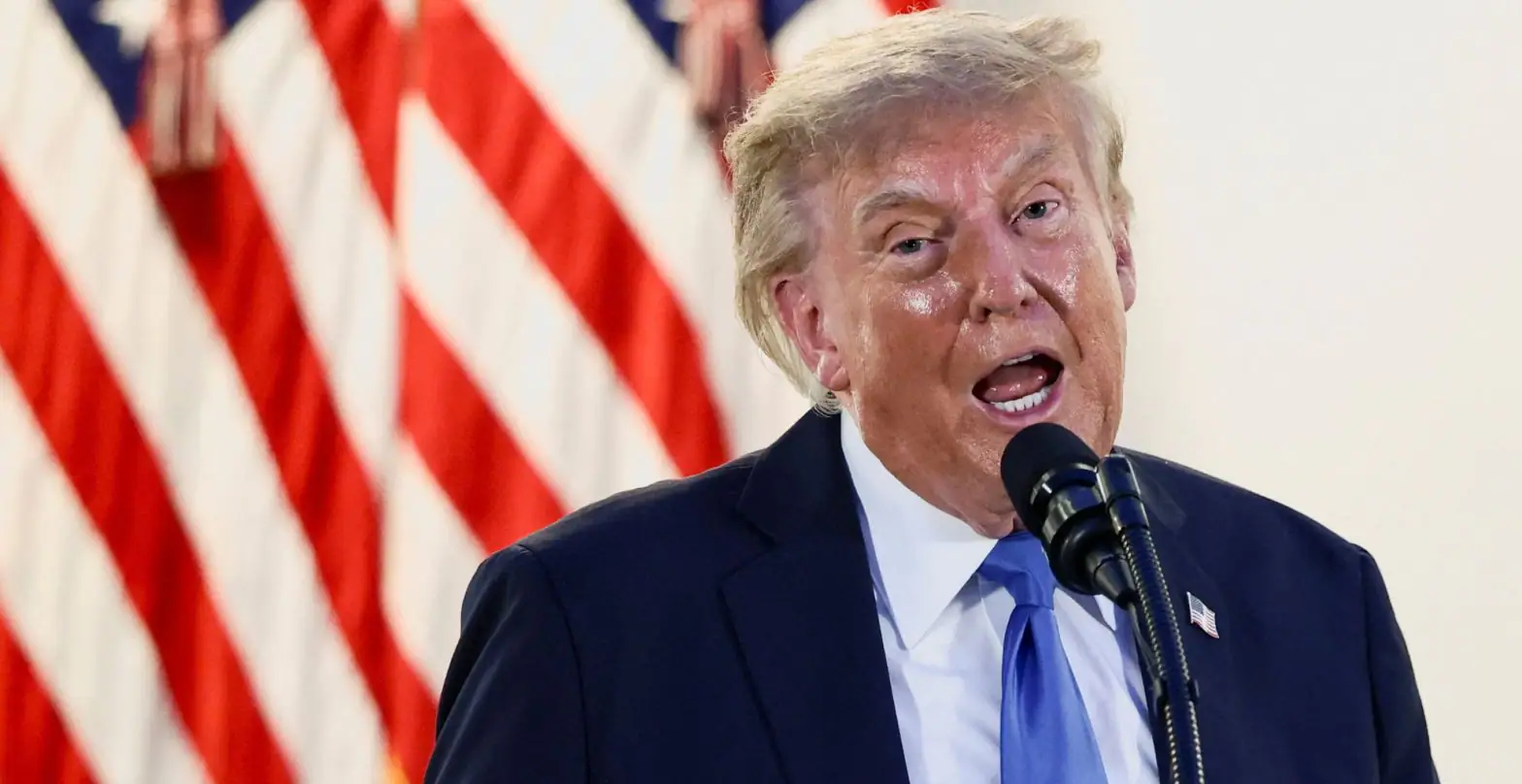
Federal Reserve officials themselves remain divided. Some policymakers have argued for stronger action to prevent inflation expectations from becoming entrenched, while others remain concerned that excessive tightening could weaken employment and economic growth. The central bank has also faced political pressure from President Donald Trump, who has repeatedly advocated for lower interest rates. That adds another layer of uncertainty to an already complicated policy environment, although Fed officials are expected to focus formally on inflation and employment rather than political demands.
The appointment of Kevin Warsh as Fed chair has also changed the tone surrounding monetary policy. Investors have paid close attention to his comments because the central bank has provided less conventional forward guidance than in previous cycles. That makes every inflation report and employment release more important for markets. Instead of relying heavily on explicit guidance about future meetings, investors are increasingly attempting to infer the policy path from economic data and individual remarks from Fed officials.
Bond markets are particularly sensitive to the possibility of further tightening. The benchmark 10-year Treasury yield has moved close to 5%, remaining near multiyear highs. Two-year yields, which are closely linked to expectations for Federal Reserve policy, have also climbed as investors price in more restrictive monetary conditions. If the Fed raises rates this week and signals additional increases, borrowing costs for businesses and households could remain elevated, affecting everything from mortgages to corporate investment.
The consequences extend to Wall Street. Higher interest rates generally put pressure on equity valuations because they increase the return available from relatively safer assets such as government bonds. Growth stocks are particularly exposed because a larger share of their valuation depends on profits expected years in the future. Technology companies and other high-valuation sectors could therefore face additional volatility if investors begin pricing a longer period of restrictive monetary policy. Recent weakness in AI-related shares has already added another source of uncertainty for US equities.
The US dollar is another beneficiary of changing rate expectations. Higher US yields can attract international capital into Treasury securities and other dollar-denominated investments, supporting the currency. The greenback has recently strengthened as investors sought safety amid geopolitical uncertainty and adjusted expectations for Fed policy. However, the dollar's gains could eventually be limited if central banks in Japan and Europe continue tightening as well. Interest-rate differentials, rather than US policy alone, will determine whether dollar strength can persist.
Gold is facing the opposite pressure. Rising interest-rate expectations have weighed on bullion because higher yields increase the opportunity cost of holding an asset that does not generate interest. Gold prices have already moved lower ahead of the Fed meeting. Yet analysts also point out that persistent geopolitical risk, central-bank purchases and strong demand in Asia could limit the downside and provide support once the immediate policy shock passes.
For businesses, the implications are mixed. Higher interest rates increase financing costs, making it more expensive to fund new factories, acquisitions, property projects and working capital. Companies that rely heavily on floating-rate debt could feel the impact quickly. At the same time, tighter financial conditions can help stabilize the currency and limit imported inflation, potentially reducing some of the pressure created by expensive goods and commodities over time.
The larger challenge is that the current inflation shock is being driven partly by events outside the Fed's control. The Middle East conflict has pushed oil prices sharply higher, while supply disruptions have created uncertainty across energy markets. The International Energy Agency has warned that the global oil-supply gap could deepen through 2026 if Gulf energy flows do not return to normal. That means the inflation problem could persist even if domestic demand cools, leaving the Federal Reserve with limited easy options.
This creates the possibility of a difficult policy environment in which rates rise while growth slows. Such a combination can be particularly challenging for businesses and investors because it squeezes profit margins and increases the cost of capital simultaneously. Policymakers will therefore be watching labour-market conditions closely. If employment begins weakening significantly while energy-driven inflation remains elevated, the Fed could eventually face a classic dilemma between fighting inflation and protecting growth.
Financial markets are already preparing for a more restrictive outlook beyond September. Reuters reported that traders are pricing as many as four rate increases through mid-2027, although economists are less aggressive in their forecasts. That gap between market pricing and professional forecasts could become a major source of volatility around the Fed's economic projections and interest-rate path. A central bank that signals fewer hikes than traders expect could trigger a rally in bonds and stocks, while a more hawkish outlook could push yields and the dollar higher.
Goldman Sachs' revision also illustrates how quickly expectations can reverse in a data-dependent monetary system. A month ago, its chief economist had described a September hike as very unlikely. Now the bank is forecasting one. The reversal does not necessarily represent a complete change in its view of the US economy; it reflects a recalculation of the risks created by inflation, oil prices and market positioning. For investors, that distinction is crucial because it suggests policy expectations could change again if the economic data weaken or energy prices fall.
The Fed's decision on September 16 will therefore be closely watched not only for the size of the move but also for the message that accompanies it. Investors will examine the updated economic projections, the internal voting split and any indications about the likely path after September. A clear warning that inflation remains the central concern could reinforce the recent bond sell-off, while a more cautious message could suggest that policymakers view the hike as a limited response to a temporary shock.
For Goldman Sachs, the revised call places it alongside an increasingly broad Wall Street consensus. JPMorgan, HSBC and Deutsche Bank have also moved toward a September increase, suggesting the market is developing a much stronger belief that the Fed will act this week. Yet there is still disagreement over what happens afterward. Some economists expect only one increase, while market pricing points to a potentially longer tightening cycle.
The broader economic story is therefore becoming one of inflation risk colliding with geopolitical risk. Oil prices are rising because of conflict, interest-rate expectations are rising because of inflation, and financial conditions are tightening because of those expectations. Goldman Sachs' forecast is one of the clearest signs that the environment has changed quickly. What had looked like a year of stable or declining US rates is now turning into a potential period of renewed tightening.
For investors, the immediate question is no longer whether the Federal Reserve can cut rates as quickly as previously expected. The focus has shifted to whether inflation can be contained without causing a serious slowdown. If oil prices remain high and inflation continues to surprise on the upside, the Fed may have little choice but to keep policy restrictive. If energy markets stabilize and price pressures ease, the September hike could eventually prove to be a temporary detour rather than the beginning of a long tightening cycle.
1What to Watch Next:
Markets will focus on the Federal Reserve's September 15-16 decision, its new economic projections and the split among policymakers. Investors will also watch oil prices, Treasury yields, wage and inflation data, and comments from Fed officials for clues about whether September's expected 25-basis-point hike is a one-off move or the start of a broader tightening cycle. Goldman Sachs' subsequent forecasts will be closely watched for another adjustment if energy prices or inflation data change materially.

Finance Desk
Reporting on Wall Street, monetary policy, and global markets.
Related Post
Novartis Shares Fall After Muscle Disease Drug Del-desiran Fails Phase 3 Trial

US Diesel Prices Hit Record $5.85 a Gallon as Global Fuel Crisis Deepens

Japanese Companies Expand in India as Businesses Reduce Dependence on China

US-Venezuela Oil Deal Gives American-Led Group 100-Year Access to 65 Billion Barrels
RECENT POST
- »Goldman Sachs Now Expects September Fed Rate Hike as Inflation Fears Rise
- »US Stock Futures Fall as AI Fears and $108 Oil Shake Global Markets
- »US Dollar Holds Gains as Oil Surge Raises Inflation and Fed Rate Hike Bets
- »Trump Escalates Iran Pressure With New Sanctions as Oil Prices Surge
- »Apple iPhone Duo Launches at $1,999 as Samsung Defends Foldable Phone Lead