US-Venezuela Oil Deal Gives American-Led Group 100-Year Access to 65 Billion Barrels
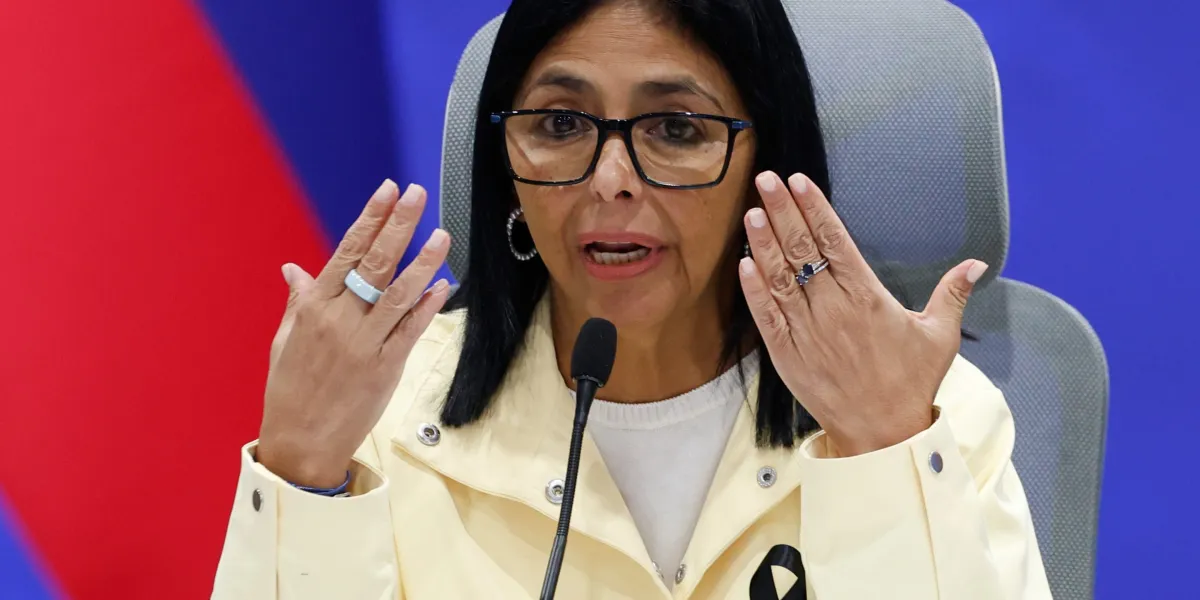
A sweeping new US-Venezuela oil agreement is generating both excitement and controversy after granting a US-led company 100-year concessions over 17 Venezuelan oilfields containing an estimated 65 billion barrels of crude. The deal was presented by US President Donald Trump as a historic economic breakthrough and by Venezuelan interim President Delcy Rodríguez as an opportunity to rebuild the country's devastated energy industry. Yet analysts, Venezuelan opposition figures and former officials have questioned whether the agreement offers a fair return for Venezuela and whether its ambitious production and investment targets can realistically be achieved. The scale of the arrangement is extraordinary: the 65 billion barrels covered by the agreement represent more than a fifth of Venezuela's proven oil reserves, potentially giving US interests an enormous long-term role in one of the world's largest petroleum resources.
The agreement follows a dramatic transformation in US policy toward Venezuela. According to BBC reporting, the Trump administration had made control over Venezuelan oil resources a central objective following the removal of former President Nicolás Maduro earlier this year. Washington has since worked with Rodríguez's interim government to establish a new framework for managing Venezuela's economy and energy sector. The latest agreement appears to be one of the clearest expressions of that strategy, combining American political influence with private-sector investment in Venezuelan oil production. Trump has described the arrangement as the "biggest oil deal in world history", while Rodríguez has argued that it could generate around $100 billion in investment and more than $200 billion in tax revenue for Venezuela.
At the heart of the agreement is a partnership between the US government and North American Blue Energy Partners, a Venezuelan private oil company that the White House identifies as the country's second-largest private producer after Chevron. One of the most unusual elements of the arrangement is the degree of influence Washington would retain over the private company. Under the framework described by the White House, the US government would have veto power over the appointment of board members, while a majority of the company's board would have to be US citizens. That provision has attracted significant attention because it appears to give Washington an unusually direct role in the governance of a commercial company operating inside Venezuela.
Supporters of the deal argue that the unusual structure reflects the extraordinary condition of Venezuela's oil industry. Despite possessing approximately 303 billion barrels of proven reserves, Venezuela has struggled to turn its resource wealth into consistent production. Years of underinvestment, economic crisis, sanctions, operational mismanagement and deteriorating infrastructure have severely reduced the country's ability to extract and process crude. Pipelines, refineries and production facilities require major reconstruction, while the country's heavy crude often needs specialized technology and facilities to be processed efficiently. The new agreement is therefore being promoted as an attempt to bring capital, technology and management expertise into an industry that has suffered from decades of decline.
That argument, however, has not convinced everyone. Former US special representative for Venezuela and Iran Elliott Abrams called the agreement a deeply unfavorable arrangement and questioned why Venezuela would surrender such a large share of its national oil wealth under the proposed terms. His criticism reflects a wider concern that Venezuela may be accepting disproportionately large concessions because of its weakened political and economic position. Some Venezuelan critics say the country needs foreign investment, but argue that long-term development contracts should still guarantee clear economic benefits and national control. The central question is whether the investment promised by Washington and private companies justifies the extraordinary length and scope of the concessions.
The proposed 100-year timeframe is another source of controversy. Trump has suggested that the new arrangement could generate substantial profits and economic benefits within just two or three years. Energy specialists are considerably more cautious. Luis Pacheco of the Baker Institute at Rice University told BBC Mundo that restoring Venezuela's oil production to levels seen roughly three decades ago could require around $100 billion of investment over eight years. That suggests the reconstruction process will be considerably more complex and time-consuming than Trump's optimistic timeline implies. Restoring wells is only one part of the challenge; Venezuela also needs functioning pipelines, export terminals, refineries, electricity supplies and skilled labor to operate the industry at much higher capacity.
The deal is also being closely watched because of the current instability in global energy markets. The ongoing conflict involving Iran has disrupted oil flows and increased concerns about the security of major Middle Eastern shipping routes. US officials see increased Venezuelan production as a way to diversify global supply away from vulnerable energy routes in the Persian Gulf. Interior Secretary Doug Burgum described the agreement as a shift in the geopolitical center of global energy markets away from Middle Eastern "choke points" and toward the Western Hemisphere. From Washington's perspective, Venezuela could therefore become more than an investment opportunity: it could serve as a strategic source of additional oil during a period when energy security has become increasingly important.
For the global oil market, however, the immediate impact is likely to be limited. Venezuela may have enormous reserves underground, but reserve size does not translate directly into production. Developing the 17 fields included in the agreement could take years and require tens of billions of dollars in capital. The country's existing production infrastructure is incapable of instantly handling a dramatic increase in output. Investors will therefore be looking for concrete evidence of new drilling, infrastructure construction, production targets and financing commitments before concluding that the agreement will materially increase global oil supplies. The distinction between theoretical reserves and commercially available production will remain crucial as energy markets assess the deal.
The agreement is also provoking anger among parts of Venezuela's political opposition. Critics argue that Washington has effectively strengthened its relationship with Rodríguez, who previously served as Maduro's vice-president, despite Trump's administration previously condemning Maduro's government as corrupt and authoritarian. For opposition figures who supported US pressure in the hope that it would produce democratic change, the rapid shift toward economic cooperation with Rodríguez has been difficult to accept. Venezuelan economist Ricardo Hausmann accused Washington of choosing an oil agreement over restoring constitutional government, reflecting concerns that energy interests have overtaken political reform in US policy toward Venezuela.
The agreement is generating criticism from the opposite side of Venezuela's political spectrum as well. Socialist figures who spent years opposing US involvement in Venezuelan affairs argue that the deal effectively hands the country's most important natural resource to the same foreign power that the Chavista movement spent decades resisting. Former Venezuelan oil minister and former PDVSA chief Rafael Ramírez described the agreement as opening the door to a new form of US colonialism. That response illustrates the unusual political situation created by the agreement: opposition groups object to the lack of democratic transition, while some government supporters object to the scale of American economic influence.
The arrangement therefore has implications beyond the oil industry itself. Venezuela's petroleum sector has historically been the foundation of its government finances, meaning whoever controls production also holds enormous influence over the country's economic future. If the agreement succeeds, rising oil output could generate tax revenue, employment and infrastructure investment while helping Venezuela stabilize its economy after years of crisis. But if the terms are viewed as excessively generous to American interests, the arrangement could fuel political resentment and become a source of long-term controversy over national sovereignty and resource ownership.
For American oil companies and private investors, the agreement could nonetheless create extraordinary opportunities. Venezuela's enormous reserves are located relatively close to the US Gulf Coast compared with many Middle Eastern suppliers, potentially making Venezuelan crude strategically attractive to American refiners. Companies with experience processing heavy crude could benefit from a significant revival in Venezuelan production. But investment decisions will depend on the legal stability of the concessions, contract enforcement, tax rules, sanctions policy and the political durability of the interim government. Investors are unlikely to commit the enormous sums required to rebuild the industry without confidence that their rights will be protected over decades.
Another major question concerns who will actually benefit from the expected revenues. Rodríguez's government says the agreement could generate more than $200 billion in tax revenue, but analysts caution that Venezuela has a long history of mismanagement of oil wealth. The country experienced one of the world's largest oil booms during the Chávez era but failed to convert that wealth into stable long-term development. Critics of the current agreement want guarantees that future oil income will be transparently managed and directed toward rebuilding infrastructure, public services and the wider economy rather than disappearing through corruption or inefficient government spending.
The debate around the deal ultimately reflects a much larger question about the future of Venezuela's economy. The country possesses extraordinary natural resources but has struggled to convert them into prosperity. Foreign investment could provide the technology and capital necessary to reverse decades of decline, while stronger domestic institutions would be needed to ensure that the resulting wealth is distributed sustainably. The challenge for Venezuela is therefore not simply increasing oil production but building an economic system capable of turning oil revenue into lasting development.
For Washington, the agreement represents an attempt to combine energy security, geopolitical influence and private investment into a single strategy. For Venezuela, it is being presented as a route back to economic growth, but opponents fear it could sacrifice too much national control in exchange for badly needed investment. The sheer scale of the concessions ensures that the agreement will remain under intense scrutiny as implementation begins.
Related Post
Panama Canal to Reduce Daily Ship Traffic as El Niño Drives Drought
Panama Canal to Cut Daily Ship Transits as El Niño Threatens Water Supplies
Shein Sets $27 Billion Valuation Target for Hong Kong IPO as Growth Slows
Japanese Companies Expand in India as Businesses Reduce Dependence on China
RECENT POST
- »Self-Flying Planes Are Coming, but Can Autonomous Aircraft Really Replace Pilots?
- »US-Venezuela Oil Deal Gives American-Led Group 100-Year Access to 65 Billion Barrels
- »Japanese Companies Expand in India as Businesses Reduce Dependence on China
- »Bank of England Chief Warns AI Market Crash Could Spread Across Global Economy
- »US-Canada Trade War Raises Prices and Disrupts Businesses Across Both Countries