Japanese Companies Expand in India as Businesses Reduce Dependence on China
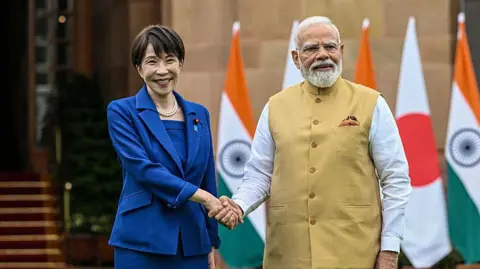
Japanese companies are increasingly turning their attention toward India as the world's third-largest economy becomes a more attractive destination for investment, manufacturing and consumer expansion, while growing geopolitical and economic uncertainty in China encourages businesses to diversify their operations across Asia. The shift does not mean Japanese companies are abandoning China, which remains one of the world's largest consumer and industrial markets, but instead reflects a growing strategy of reducing dependence on a single country. India's expanding middle class, large young population, improving infrastructure and government efforts to attract foreign investment are creating new opportunities for Japanese businesses that are looking for long-term growth outside their traditional markets. The trend was highlighted by Indian Commerce Minister Piyush Goyal, who led what was described as India's largest-ever business delegation to Japan in an effort to strengthen trade and investment ties between the two economies.
The changing relationship can be seen most clearly in India's consumer market. Japanese brands that were once relatively difficult to find outside major metropolitan areas are rapidly expanding their presence in cities such as Mumbai, Delhi and Bengaluru. Apparel retailer Uniqlo, lifestyle brand Muji and premium footwear company Onitsuka Tiger are increasing their footprint as they try to capture demand from India's growing urban middle class. Japanese furniture retailer Nitori has also entered the Indian market, while convenience-store operator Lawson is reportedly preparing a major expansion beginning in Mumbai. The scale of these plans suggests that Japanese businesses increasingly see India not simply as a manufacturing base but as a major consumer market in its own right.
India's appeal is partly driven by its enormous domestic market. With a population of more than 1.4 billion people and a rapidly expanding group of consumers with rising incomes, the country offers companies a potential source of growth that is difficult to find in Japan itself. Japan's domestic market is mature and faces a shrinking population, creating a structural challenge for companies that depend on long-term increases in consumer spending. Indian cities, by contrast, are experiencing rapid development, rising household incomes and expanding demand for branded clothing, food, financial services, automobiles, electronics and household goods. For Japanese companies, establishing a strong position in India today could provide access to decades of future consumer growth.
China remains important to Japan's corporate sector, but businesses have become increasingly concerned about concentration risk. Over the past several years, geopolitical tensions, trade restrictions, supply-chain disruptions and growing strategic competition between China and other major economies have encouraged multinational companies to reassess their exposure to the country. For Japanese businesses, the issue is particularly sensitive because Japan and China are deeply connected through trade and manufacturing. Companies have invested heavily in Chinese factories, supplier networks and distribution systems, but disruptions in recent years have highlighted the potential risks of relying too heavily on one market. Japanese firms are therefore increasingly pursuing a strategy often described as "China plus one", where India or another Asian economy becomes an additional manufacturing and investment hub rather than a complete replacement for China.
India is particularly attractive because its economic priorities increasingly overlap with Japan's strategic interests. New Delhi wants to build domestic manufacturing capability, attract foreign capital and reduce excessive dependence on imports from China in strategically important industries. Tokyo, meanwhile, is interested in strengthening resilient supply chains and expanding commercial relationships in countries that can serve as alternatives to China. This creates a powerful alignment between the two governments. Investment in sectors such as advanced manufacturing, electronics, critical minerals, transportation and technology can serve both India's industrial ambitions and Japan's economic-security objectives. Experts quoted in recent reporting describe the relationship as moving beyond leader-level diplomacy and becoming increasingly embedded in government agencies, corporate strategies and long-term economic planning.
The financial sector is also becoming an important part of the story. Japanese banks have shown increasing interest in Indian financial assets at a time when some other foreign lenders have been reducing their exposure to the market. Japan's major financial institutions have considerable experience financing large corporations and infrastructure projects, and Indian banks and financial-service companies offer opportunities for expansion in a market with strong credit demand. As India's economy grows, companies require more financing for factories, housing, transportation, technology and infrastructure. Japanese financial groups see an opportunity to participate in that expansion while building stronger relationships with Indian businesses.
Manufacturing is another area where the two countries' interests are increasingly converging. Japan has long been one of the world's leading industrial economies, with expertise in automobiles, machinery, electronics, chemicals and precision manufacturing. India is seeking to increase its share of global manufacturing and integrate itself more deeply into international supply chains. Japanese firms can provide capital, technology and production expertise, while India offers a large labor force, growing domestic demand and access to a broader regional market. Companies such as Nippon Paint are already expanding manufacturing and research activities in the country, reflecting a broader effort by Japanese businesses to establish deeper local operations rather than relying solely on exports from Japan or China.
India's policy environment has also become more supportive of foreign investment in recent years. The government has been attempting to simplify investment procedures, improve infrastructure and encourage companies to manufacture locally. This is especially important for Japanese businesses because India has historically been viewed as a difficult market in which to navigate regulations, land acquisition, taxation and logistics. While many challenges remain, continued policy reforms and investments in roads, railways, ports and industrial corridors are gradually improving the environment for international companies. New Delhi's active diplomatic and commercial outreach to Japan demonstrates that attracting Japanese capital is now considered an important component of India's broader industrial strategy.
India also offers Japan an opportunity to diversify its supply chains in areas that could become strategically important in the future. The global economy is increasingly focused on semiconductors, artificial intelligence, electric vehicles, batteries and critical minerals, all of which depend on complex international supply networks. Japan has been working to strengthen its position in these sectors while reducing vulnerabilities created by excessive concentration in particular countries. India, meanwhile, wants to develop its own capabilities in advanced manufacturing and technology. Greater cooperation could therefore extend beyond traditional Japanese investments in automobiles and consumer goods into more strategic industries that will determine future economic competitiveness.
Recent economic data suggests that the timing of Japan's increased focus on India is significant. India's economy expanded 7.8% in the April-June 2026 quarter, with private investment becoming an increasingly important driver of growth. Gross fixed capital formation rose to 34.3% from 31.4% a year earlier, while private capital investment increased by more than ₹5 trillion. The growth of sectors such as railways, AI, semiconductors and manufacturing is creating exactly the sort of environment in which foreign industrial investors can expand. Large technology companies are also planning tens of billions of dollars in data-center investment in India, reinforcing the country's position as an increasingly important destination for global capital.
The shift also comes as Japanese companies deal with a difficult domestic environment. Japan faces an aging population, labor shortages and a relatively mature home market, making overseas growth increasingly important. Investment abroad can help companies compensate for slower domestic demand while giving them access to younger and faster-growing consumer populations. India is particularly compelling because it offers both scale and growth, unlike many smaller Asian markets. For Japanese businesses that traditionally depended on China for international expansion, India can provide a second major Asian growth engine.
However, expanding in India will not be without challenges. Japanese companies still face competition from local Indian businesses, global multinational corporations and increasingly aggressive Chinese firms. India's infrastructure has improved but remains uneven across regions, while regulatory processes and bureaucracy can still create delays. Consumer preferences are also highly diverse, meaning foreign brands cannot simply reproduce strategies that worked in Japan or China. Successful companies will need to adapt products, pricing and distribution models specifically for Indian consumers.
The relationship is therefore best understood not as a Japanese retreat from China but as a strategic diversification of Asian investment. China remains too large and economically important for most Japanese companies to abandon completely. What is changing is the willingness to place so much of a company's future growth and supply chain in one market. India provides a way to spread that risk while simultaneously tapping into one of the fastest-growing major economies in the world. Japanese businesses are increasingly building factories, stores, financial relationships and research operations that position them for a much larger role in India's economy over the coming decades.
The trend could ultimately have consequences far beyond the commercial relationship between two countries. Greater Japanese investment can help India expand manufacturing capacity, create jobs, develop infrastructure and strengthen domestic supply chains. For Japan, India can provide a major new source of growth while helping reduce exposure to geopolitical and supply-chain risks associated with China. As competition for investment intensifies across Asia, the strengthening Japan-India economic relationship could become an increasingly important part of the region's evolving business landscape. The growing presence of Japanese brands on Indian high streets may therefore be only the most visible sign of a much larger strategic shift in how Japanese companies think about the future of Asia.
Related Post

Panama Canal to Reduce Daily Ship Traffic as El Niño Drives Drought
Panama Canal to Cut Daily Ship Transits as El Niño Threatens Water Supplies

Shein Sets $27 Billion Valuation Target for Hong Kong IPO as Growth Slows

Paramount CEO David Ellison Threatens California Exit Over Warner Bros. Merger Dispute
RECENT POST
- »Japanese Companies Expand in India as Businesses Reduce Dependence on China
- »Bank of England Chief Warns AI Market Crash Could Spread Across Global Economy
- »US-Canada Trade War Raises Prices and Disrupts Businesses Across Both Countries
- »NASA Launches Nancy Grace Roman Space Telescope to Study Dark Matter and Distant Worlds
- »Trump Announces Deal Giving US Control of 65 Billion Barrels of Venezuelan Oil