US Economy Slows to 1.4% Growth as Shutdown and Weak Spending Weigh on GDP
The US economy grew more slowly than expected in the fourth quarter because of problems caused by last year's government shutdown and a drop in consumer spending. Last quarter, GDP grew by 1.4% on an annualized basis, which was less than the 3.0% that economists had predicted. The economy grew by 4.4% in the third quarter. Consumer spending went down from 3.5% to 2.4%, and government spending went down by more than 16%.
The world's biggest economy grew at a rate of 1.4% per year in the three months ending in December. This was the end of a tough year marked by tariffs, immigration restrictions, cuts in government spending, and high inflation. In 2025, the GDP went up by 2.2%, which was more than most people thought it would. The drop was worse than expected, as trade numbers showed the gap getting bigger in December, which led to last-minute cuts to growth forecasts.
Why This News Matters
The economy is losing steam because of government problems and cautious consumers, which is shown by the slowdown. The overall outlook is still good, but the data shows that the gap is getting bigger. Higher-income families are still spending, but many families are feeling the effects of inflation and slower job growth.
Impact of Government Shutdown
The nonpartisan Congressional Budget Office estimated that the government shutdown will affect fourth-quarter GDP by around 1.5 percentage points due to fewer services, lower federal spending, and reduced benefits. The Commerce Department calculated that the stoppage of federal services reduced growth by one percentage point, with the total impact likely greater.
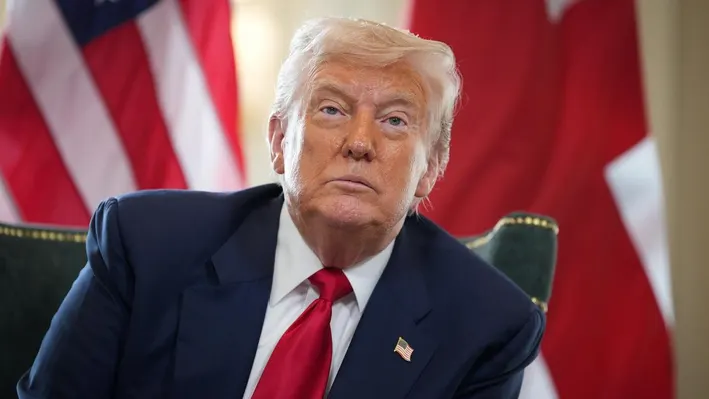
The 43-day shutdown reduced GDP by a full percentage point, most of which is expected to be recovered, but $7 billion to $14 billion will not. Analysts said the closure was a considerably bigger drag on the economy than previous data had indicated, but they anticipated the dip to reverse in the coming months. Prior to the study, Donald Trump stated that the closure "cost the USA at least two points in GDP" and advocated for lower interest rates.
Consumer Spending and Economic Conditions
Growth decreased as consumer spending fell and households reduced their purchases in the latter months of the year. Economists believe spending has been mostly pushed by higher-income people, at the expense of saving, since inflation has undermined purchasing power. The research described a "K-shaped" economy in which upper-income families thrive but lower-income customers struggle due to rising inflation from import tariffs and slow wage growth.
Only 181,000 jobs were created last year, the fewest outside of the epidemic since 2009. Economists predict a similar pattern to continue, with better-income households driving consumption while others face increased expenses, prolonged unemployment spells, and huge credit balances.
Trade, Investment and Growth Drivers
Changes in trade policy messed up the economic data. At the start of the year, the economy shrank a little because businesses rushed to bring in goods before tariffs went into effect. It then grew again in the spring and summer when imports slowed down, and then slowed down again as imports picked up again late in the year. Private investment went up, but most of it was in IT-related equipment and intellectual property.
Economists think that investments in artificial intelligence, which include datacenters, semiconductors, software, and research, will add about one-third to GDP growth in the first three quarters of 2025. Tax cuts this year might make people spend more by giving them bigger tax refunds. Analysts say that the core of the economy is strong and that growth should start up again.
Inflation and Federal Reserve Outlook
In a separate report, the Federal Reserve's favored inflation metric, the Personal Consumption Expenditures price index, increased to 2.9% in December from 2.8%. Another measure indicated that prices excluding food and energy rose at a 3% annual rate, above the Fed's target.
Analysts said the growth drop alone was unlikely to concern policymakers given the importance of the shutdown, but the inflation statistics might. Economists worried that the data might undercut arguments for interest rate decreases. While markets anticipate many reductions this year, the Fed's favored inflation gauge suggests officials may wait.
Political Response and Economic Messaging
President Donald Trump blamed Democrats and Federal Reserve Chair Jerome Powell for the bad GDP numbers and called for interest rate cuts again. He said the shutdown was to blame for the slowness and that his programs had made a big difference. White House officials say that important signs show that the economy is still strong even though trade policy changes and geopolitical shocks have happened.
In the fourth quarter, real final sales to private domestic buyers rose at a rate of 2.4%, which is in line with trends after the pandemic. Officials said that lowering taxes, getting rid of rules, putting tariffs on goods, and changing energy policies would all help the economy grow in the future. The slowdown is causing political problems because polls show that fewer people support Trump's economic policies, even though the administration says that growth led by the private sector is still strong and will pick up speed in 2026.
What to Watch Next

Alex Thorne
Alex covers global markets and economic policy, with a focus on central banking and fiscal strategy.
Related Post
U.S. Producer Inflation Hits Four-Year High as Iran War Drives Energy Costs Up
Michael Barr Warns Private Credit Risks Could Trigger Broader Financial Stress
Tesla Q1 Earnings Beat Expectations Amid Rising Competition
NextEra Energy to Acquire Dominion Energy in $67 Billion AI-Powered Utility Deal
RECENT POST
- »Emerging Markets 2026: The Rise of the 'Digital Tiger' Economies
- »Family Offices in 2026: Shifting from Preservation to Planetary Impact
- »Louisiana Republicans Advance Congressional Map Reducing Majority-Black Districts
- »Marco Rubio Pushes US Energy Exports During Critical India Visit
- »OpenAI Reportedly Explores Legal Options Against Apple Over AI Partnership