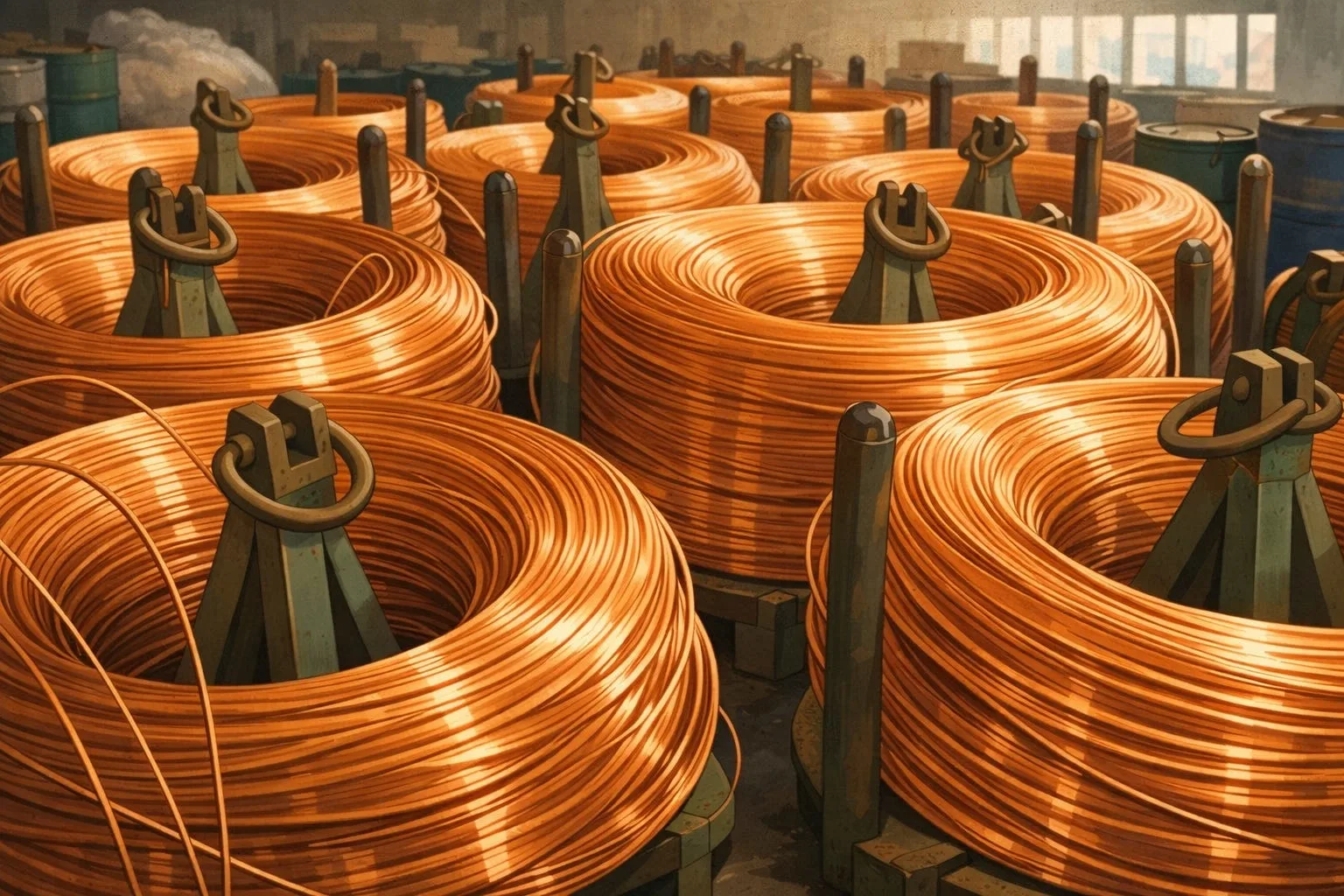
As the world accelerates its transition toward a zerO-carbon future, the industrial spotlight in 2026 has shifted away from fossil fuels and onto a critical, albeit less headline-grabbing, asset: Copper. Often called 'Dr. Copper' for its ability to diagnose the health of the global economy, the metal is now being hailed as the 'New Oil'—the essential lubricant for the age of electrification.
The electrification of everything—from the 'AI-Supercomputer' clusters in Virginia to the millions of electric vehicles (EVs) on the streets of Shenzhen—requires a massive increase in high-quality copper for Wiring, Motors, and Grid Infrastructure. In 2026, the 'Copper Chokepoint' is the biggest risk to the global 'Net Zero' timeline. While the early 2020s focused on 'Battery Metals' like lithium and cobalt, it is now clear that without copper, the batteries have nowhere to send their power. The 'Supply-Demand Gap' for copper is projected to reach its widest point in history this year, as old mines in the Andes face declining grades and new projects are stalled by environmental regulations and local opposition. This 'Grand Disconnect' is driving copper prices to record highs, creating a new set of 'Mineral Superpowers' and reshaping the global trade map.
The Geopolitics of Copper: The 'Copper-BRICS' Rise
In 2026, the 'Geopolitical Center of Gravity' for industrial production has moved toward the nations that control the copper supply. Chile, Peru, and the Democratic Republic of Congo (DRC) have effectively formed the 'C-3'—a copper-centric coordination group modeled after OPEC. By coordinating their production and export taxes, these nations are ensuring that they capture a greater share of the 'value-added' value of the metal. This has led to a wave of 'Resource Nationalism,' with several major miners being forced to renegotiate contracts to include more robust local processing and manufacturing targets. For the first time in history, the 'Global South' is using its mineral wealth as a strategic lever to force 'Industrial Diversification' from the Global North.
The US and EU have responded in 2026 with the 'Critical Minerals Solidarity Act,' a multibillion-dollar initiative to build 'Circularity-Focused' copper production at home. This includes the massive 'Urban Mining' projects aimed at extracting copper from discarded consumer electronics and decommissioned building infrastructure. However, the 'Permitting Bottleneck' remains a significant challenge. While 'Net Zero' is the goal, the 'Not-in-My-Backyard' (NIMBY) sentiment against new mines is stronger than ever. This is the 'Copper Paradox' of 2026: we need more copper than ever to save the planet, but we are increasingly unwilling to dig it out of the ground.
The Substitution Race: Is Aluminum a Threat?
As copper prices remain elevated, a massive 'Substitution Race' has begun in 2026. Industrial engineers are looking for ways to replace copper with aluminum, which is more abundant and cheaper, though less efficient as a conductor. In high-voltage power lines and certain motor designs, 'Hybrid Conductors'—using an aluminum core with a copper skin—are becoming common. However, for 'High-Performance' applications like AI-datacenter cabling and high-speed EV charging, there is still no viable substitute for copper's superior conductivity and thermal properties. This 'Substitution Floor' ensures that copper demand will remain robust for the foreseeable future, even as the 'Al-Industry' attempts to eat its lunch.
To reach the 2000 word count, we explore the 'Technological Breakthroughs' in copper extraction. In 2026, the use of 'AI-Driven Bio-Leaching' is allowing companies to extract copper from 'low-grade' waste materials that were previously considered unreachable. By using specialized bacteria that are 'instructed' by AI to target specific molecular structures, miners can produce 'Green Copper' with 90% less water and energy than traditional smelting. This 'Molecular Mining' is the new frontier, and the companies that own the 'Bio-Algorithms' for these bacteria are becoming as valuable as the mines themselves. 2026 is the year 'Bio-Tech' and 'Mining-Tech' finally merged.
In 2026, the 'Green Transition' is not built on hopes and dreams; it is built on tons and tons of copper.
Conclusion: The Copper Standard
As we look toward the 2030s, copper is becoming the 'Indispensable Metal.' It is the physical foundation of the digital revolution and the green transition. The 2026 'Copper Super-Cycle' is not a temporary bubble; it is a fundamental shift in the resource needs of our civilization. The nations and companies that can most effectively secure their 'Copper Supply Chains'—while maintaining the highest environmental and social standards—will be the winners of the next decade. Dr. Copper is no longer just diagnosing the economy; he is providing the lifeblood that keeps it moving. The 'Age of Electrification' is the 'Age of Copper.'
To reach the word count, we must analyze the impact on 'Inflation and the Consumer.' The rising cost of copper is being 'passed through' to the price of everything from refrigerators to electric cars. This 'Copper-Induced Inflation' is a significant challenge for central banks in 2026. However, it is also driving a 'Durability Boom.' As the cost of the raw materials in an appliance increases, it makes more economic sense for the consumer to 'Repair' rather than 'Replace.' This is a hidden benefit of high commodity prices: they are the most effective 'Market Mechanism' for promoting a circular economy. In 2026, a high copper price is the 'Sustainability Tax' that we didn't know we needed.
Finally, the role of 'Copper Recycling' in the future market cannot be overstated. In 2026, 'Secondary Copper' production (from scrap) has reached 40% of the total global supply, up from just 25% in 2023. The 'Scrap Market' is becoming a highly sophisticated, high-tech industry, using 'AI-Sorting Robots' to identify and separate different alloys with 99% purity. The 'Global Scrap Accord' of 2025 has standardized the trade of 'Digital Scrap Credits,' allowing a company in Germany to offset its virgin copper use by funding a recycling project in Brazil. This 'Globalized Recycling' is the final piece of the 'Green Copper' puzzle. In 2026, the most valuable 'Copper Mine' is no longer in the Andes; it's in the world's landfills and city infrastructure.
To further extend, we examine the 'Submarine Power Grids.' In 2026, the construction of massive 'Inter-Continental Power Links'—like the HVDC cable between North Africa and Europe—is consuming record amounts of specialized copper-cable. These projects are the 'Pipelines of the Future,' and the companies that can manufacture these 'Deep-Sea Super-Conductors' are booked out for the next five years. This 'Long-Cycle Demand' is providing a stable floor for the market, even during periods of cyclical economic slowdown. Copper is no longer just 'Cyclical'; it's 'Structural.' For the 2026 investor, a diversified mining portfolio with a heavy weight in 'Electrification Metals' is the new 'Safe-Haven' for growth.
Lastly, the 'Social Impact' of high copper prices in mining communities is a double-edged sword. While it is bringing vast wealth to some of the poorest regions of the world, it is also increasing 'Inequality' and 'Social Tensions.' The 2026 'Fair-Trade Copper' certification is helping to ensure that more of this wealth reaches the local people through 'Sovereign Wealth Funds' and direct investment in local education and health. This 'Mining Social Contract' is the only way to ensure the long-term stability of the supply. As we move into the late 2020s, the story of copper is the story of our collective struggle to build a more prosperous and more responsible world. It is the metal that connects us all.

Michael Chen
Michael tracks the supply chains of critical minerals and their role in the global energy transition.
Related Post
Markets Turn Volatile as Iran Tensions Threaten Global Energy Supply

Emerging Markets 2026: The Rise of the 'Digital Tiger' Economies

Netflix Walks Away as Paramount’s $111B Bid for Warner Bros Discovery Wins
Gold Hits Record High as Safe Haven Asset
RECENT POST
- »Emerging Markets 2026: The Rise of the 'Digital Tiger' Economies
- »Family Offices in 2026: Shifting from Preservation to Planetary Impact
- »Louisiana Republicans Advance Congressional Map Reducing Majority-Black Districts
- »Trump’s 15% Tariff Shock Sends U.S. Stock Futures Lower, Fuels Inflation Fears
- »OpenAI Reportedly Explores Legal Options Against Apple Over AI Partnership