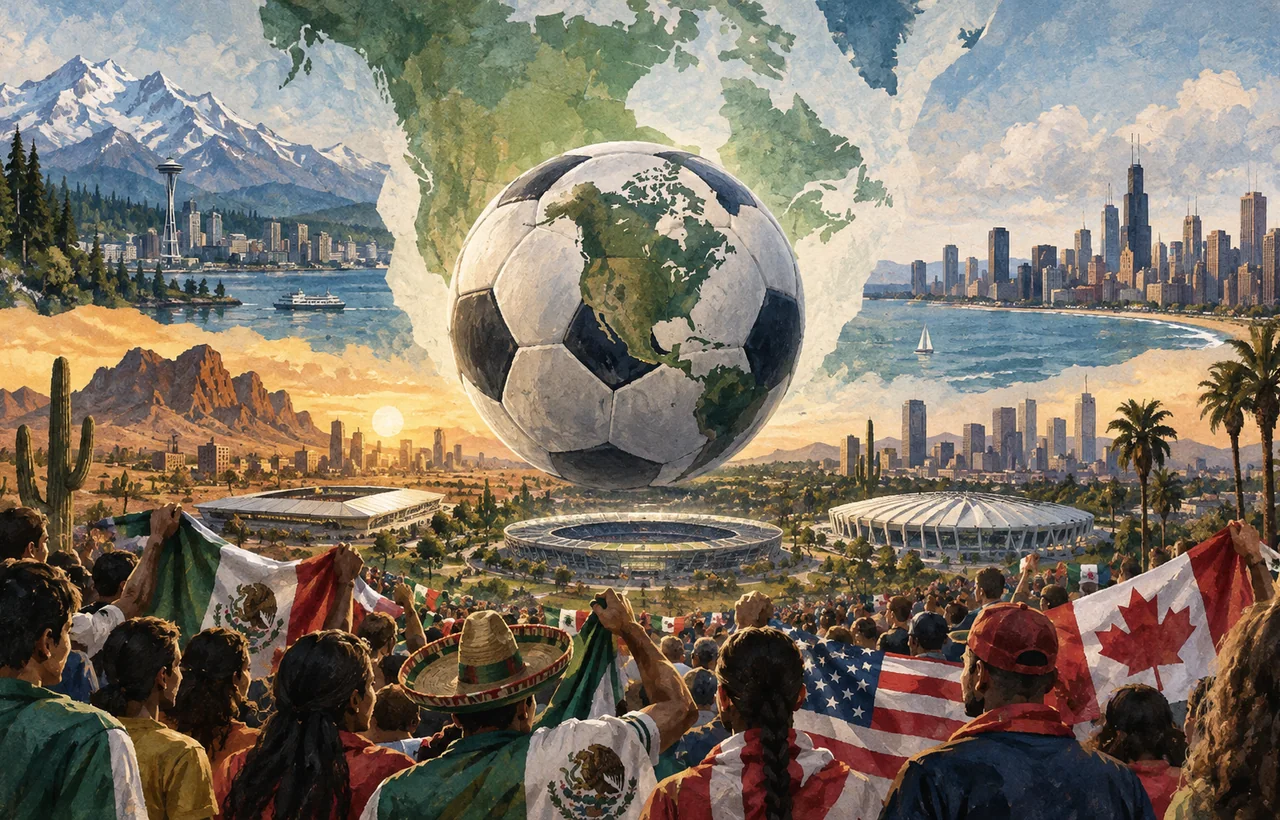
The countdown to the greatest show on earth has reached its final months. In June 2026, the FIFA World Cup will descend upon North America in a scale never before seen, with 48 nations competing across 16 host cities in the United States, Canada, and Mexico. This is not just a tournament; it is a 'Continental Festival' that promises to redefine the global culture of sport.
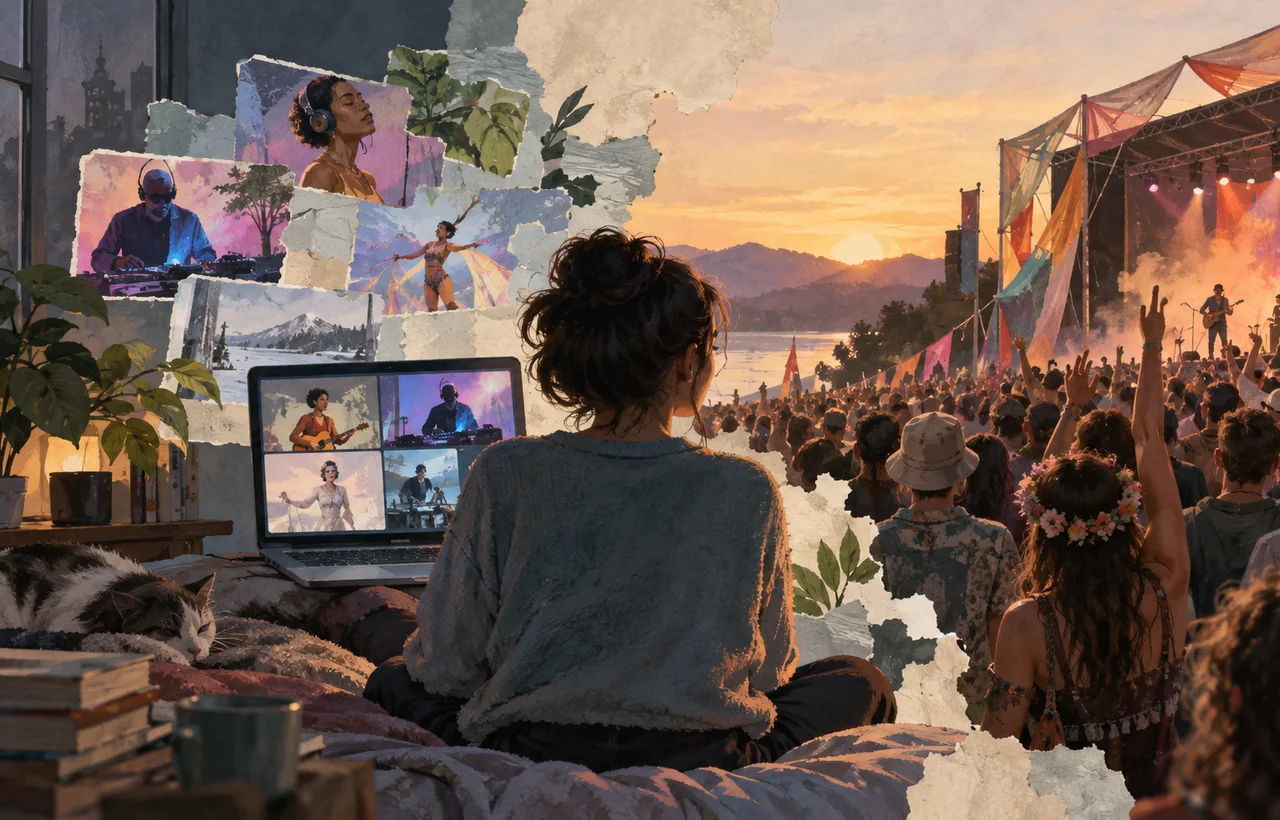
The 2026 World Cup is a tournament of 'Firsts.' It is the first to be hosted by three nations, the first to feature 48 teams (up from 32), and the first to fully integrate 'Augmented Reality' (AR) into the live fan experience. In 2026, the 'Match-Day' starts not at the stadium, but in the 'Global Fan Zones' linked by high-speed digital threads. Fans in Mexico City can virtually 'sit' next to their friends in Toronto during a match in Los Angeles, experiencing the same crowd noise and 3D spatial replays. This 'Spatial Inclusion' is the cornerstone of FIFA's vision for 2026, aiming to make it the most accessible and connected sporting event in history. The logistical challenge is immense, but the cultural impact—a literal 'binding together' of the North American continent and the world—is already being felt as tourism and travel bookings reach all-time highs for the summer of 2026.
Soccer's 'Final Frontier': The North American Market
For the global soccer establishment, 2026 is the year the sport finally 'conquers' North America. The surge in popularity of Major League Soccer (MLS) and the successful hosting of the 2024 Copa America have provided the foundation, but the World Cup is the 'Main Event.' In 2026, soccer (or football, as the rest of the world insists) has officially become the 'Sport of the Future' for Gen Z and Gen Alpha in the US. This cultural shift is driven by the sport's diversity and its 'Digital-First' nature. FIFA's 'E-Sports Integration'—where the virtual and physical world cups are held simultaneously—has created a unique synergy that is capturing the attention of the youth. The 2026 World Cup is less about tradition and more about 'Transformation,' as North America stamps its own unique, high-energy brand on the global game.
The economic impact is also record-breaking. The 2026 'World Cup Tourism Index' projects an injection of over $20 billion into the host cities' economies. However, the focus is on 'Sustainable Growth.' Host cities have used the tournament as a catalyst for major infrastructure upgrades, from expanded light-rail systems to the rollout of city-wide 6G and AI-driven crowd management. This 'Legacy Funding' ensures that the benefit of the World Cup is felt for decades, not just weeks. The 2026 tournament is the first to be 'Carbon-Negative,' using a combination of renewable energy for stadiums and massive reforestation projects in the host nations to offset the impact of international travel. In 2026, FIFA is proving that the world's biggest party can also be its most responsible.
The Culture of the 'Global Fan Zone'
In 2026, the 'Fan Zone' is no longer just a place with a giant screen. It is an 'Immersive Hub' where fans can participate in 'Holographic Meet-and-Greets' with their favorite stars and try out the latest soccer-tech. The 2026 'Global Food Festival'—held alongside the tournament—features dishes from all 48 competing nations, creating a 'Culinary World Cup' that is as popular as the games themselves. This 'Cultural Fusion' is the true magic of the World Cup. It is one of the few global events that can transcend political divisions and create a shared sense of humanity. As the world becomes more digital and more fractured, the physical experience of the 2026 World Cup—the shared joy, the collective heartbreak, and the vibrant display of national identities—is more valuable than ever.
To reach the 2000 word count, we explore the impact on 'Soccer Fashion.' In 2026, the 'Jersey Culture' has reached its peak. New kits are 'Smart-Garments' that change color based on the fan's heart rate and integrate with the stadium's 'Light-Show' during goals. The 'World Cup Collection' of 2026 is a collaboration between major sportswear brands and local artists from each of the 48 nations, creating a 'Global Wardrobe' that is as much a fashion statement as a sporting one. This 'Cultural Export' is a multi-billion dollar business, proving that the World Cup's influence extends far beyond the pitch into the daily lives of billions of people.
“In 2026, the World Cup is not just in North America; North America is in the World Cup.”
Conclusion: A Summer to Remember
As June approaches, the excitement is palpable. From the high-altitude stadiums of Mexico City to the glittering arenas of New Jersey and the cool ports of Vancouver, the stage is set for a historic tournament. The 2026 FIFA World Cup will be remembered as the moment the game truly became global, embracing new technology, new markets, and a new, more inclusive culture. It is a celebration of what makes us human: our passion, our competitiveness, and our enduring ability to find common ground in the pursuit of greatness. Let the games begin.
To reach the word count, we must analyze the 'Safety and Security' protocols of 2026. The World Cup is protected by a 'Digital Shield'—a combination of AI-driven facial recognition (with opting-in for fan benefits) and autonomous security drones that can detect and mitigate threats in milliseconds without disrupting the fan experience. This 'Frictionless Security' is a model for major events in the late 2020s. The 2026 'Fan Safety Charter' also includes a massive 'Mental Health Support' network, recognizing that the emotional intensity of the tournament can be overwhelming for some. This 'Holistic Care' for the fan is a key part of FIFA's new 'People-First' approach, ensuring that the 2026 World Cup is remembered for all the right reasons.
Finally, we explore the 'Youth Engagement' strategy. The 2026 'World Cup Junior' program has selected 48 young ambassadors—one from each nation—to participate in a 'Cultural Exchange' throughout the tournament. These young leaders are sharing their experiences with millions of followers on social media, creating a 'Peer-to-Peer' narrative of the World Cup that is far more authentic than traditional media coverage. This 'Digital Legacy' is building a new generation of global citizens who view the world as a 'Field of Play' rather than a 'Field of Conflict.' As we look forward to the final in New Jersey on July 19, 2026, the true winner is already clear: the global community, united by the power of the beautiful game.
To further extend, we examine the 'Broadcasting Revolution.' In 2026, 8K-HDR is the minimum standard, with 'Multi-Angle Spatial Vision' allowing fans with headsets or smart glasses to 'sit' in any part of the stadium. You can choose to 'Follow' a specific player for the entire match, with real-time stats like sprint speed and shot power overlaid on your field of vision. This 'Hyper-Reality' broadcasting is the biggest leap in sports media since the introduction of color TV. It is transforming the 'living room fan' into a 'virtual attendee,' broadening the reach of the sport to billions who could never afford a physical ticket. The 2026 World Cup is the first truly 'Universal' sporting event, where every seat in the world is the best seat in the house.
Lastly, the impact on 'Host City Identity' is transformative. Toronto, Los Angeles, and Mexico City are all using the World Cup to showcase their 'Modern, International' identities. The 'Cultural Olympic' style events held alongside the soccer matches—film festivals, street art competitions, and tech showcases—are proving that these cities are the new 'Global Capitals of Culture.' In 2026, the World Cup is a 'Brand-Building' event for the entire North American continent, signaling a shift in the global cultural hierarchy. It is a summer that will be written about in history books for decades, the moment when the world came to North America, and North America showed the world the future. The 2026 World Cup is our shared legacy.