Artemis II: Humanity's Return to Lunar Orbit in February 2026
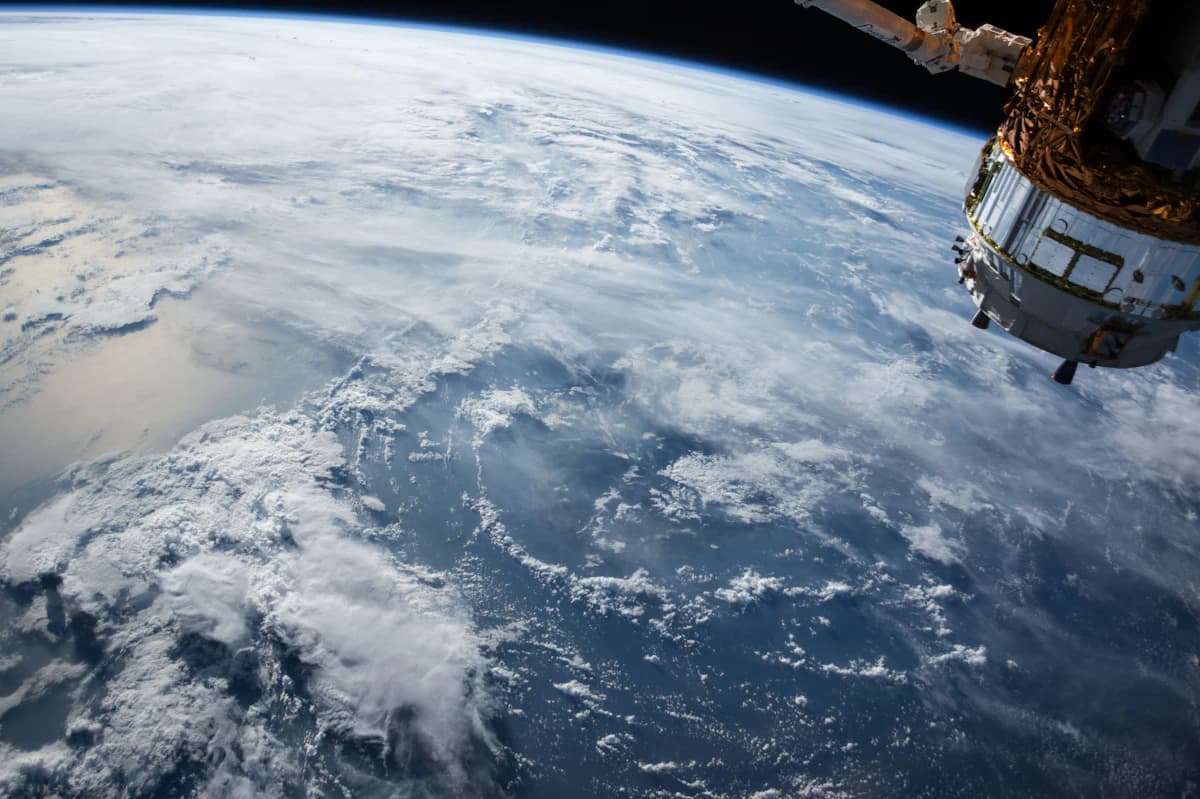
In a moment that has captured the imagination of the entire planet, the four-person crew of NASA's Artemis II mission has successfully entered lunar orbit. This milestone, achieved in early February 2026, marks the first time humans have returned to the vicinity of the Moon in over half a century, setting the stage for a permanent human presence on our celestial neighbor.
The Artemis II mission is more than just a 'repeat' of the Apollo era; it is a proof-of-concept for 21st-century deep-space exploration. The crew, led by Commander Reid Wiseman, is traveling in the Orion spacecraft, powered by the most sophisticated life-support and propulsion systems ever built. Unlike the Apollo missions, which were primarily focused on 'national prestige,' Artemis II is an international and inclusive endeavor. The crew includes Victor Glover, the first person of color to travel to the Moon, Christina Koch, the first woman, and Jeremy Hansen from the Canadian Space Agency. This diversity reflects a new era of 'Global Cooperation' in space, where the goal is not just to visit, but to stay. The mission is currently performing a series of 'Figure-8' orbits around the Moon and Earth, testing the critical deep-space communication and navigation systems that will be essential for the upcoming Artemis III landing.
1The Technology of the New Lunar Age
The success of Artemis II is a testament to the leap in aerospace technology over the last decade. The 'Space Launch System' (SLS) rocket, the most powerful ever built, performed flawlessly, delivering the Orion capsule into a high-Earth orbit before the critical 'Trans-Lunar Injection' burn. The Orion capsule itself is a marvel of modern engineering, featuring 'Autonomous Repair Swarms'—tiny robots that can identify and patch micro-meteoroid impacts in real-time. The mission also utilizes a new 'Optical Communication' system, using lasers instead of radio waves to transmit high-definition 4K video back to Earth. This allow the public to experience the lunar landscape with a level of clarity that was previously impossible, fostering a sense of 'Common Human Heritage' that is central to the Artemis mission's philosophy.
Furthermore, the mission is testing 'AI-Assisted Navigation' that allows the spacecraft to calculate its own course corrections based on star-mapping and lunar landmarks, reducing the reliance on Earth-based mission control. This 'On-Board Autonomy' is critical for future missions to Mars, where the communication delay makes real-time control impossible. The data gathered during Artemis II's 10-day flight will be used to optimize the design of the 'Lunar Gateway'—the permanent space station that will orbit the Moon and serve as a jumping-off point for both lunar landings and deep-space voyages. In 2026, we are not just exploring the Moon; we are building the 'Port' for the next century of human travel.
2Science and Nature: The Lunar Environment
While the focus is on the human mission, Artemis II is also carrying a suite of specialized 'Nature-Sensors' designed to study the lunar environment and its relationship with the Earth. This includes sensors that measure the 'Solar Wind' and its impact on the lunar surface, as well as cameras that are mapping 'Permanently Shadowed Regions' (PSRs) at the lunar poles from orbit. These PSRs are believed to contain massive quantities of water-ice, the 'Liquid Gold' of space exploration that can be used for breathing air and rocket fuel. By mapping these resources with extreme precision, Artemis II is providing the 'Resource Map' that will determine where the first permanent lunar base will be built.
There's also a 'Biological Package' on board—seeds and specialized yeast strains that are being exposed to the deep-space radiation environment. Scientists want to understand how life can adapt and even thrive beyond the Earth's protective van Allen belts. This research is essential for the 2026 'Space Agriculture' initiative, which aims to produce food in modular greenhouses on the Moon by 2030. The Artemis II mission is thus a bridge between 'Earthly Biology' and 'Celestial Biology,' proving that the natural world can be extended beyond our home planet.
"Artemis II is not just a flight; it is the first heartbeat of a multi-planetary civilization."
3Conclusion: A Moment of Unity
As the Orion capsule orbits the Moon, the 'Earth-Rise' photos being beamed back are a powerful reminder of our planet's fragility and uniquely beautiful place in the cosmos. In 2026, a year often defined by political and economic tension, Artemis II has provided a rare moment of global unity. For ten days, the people of Earth have looked up with a shared sense of pride and wonder. The success of the mission tells us that when we set aside our differences and focus on a common, aspirational goal, we can achieve the impossible. The journey of Artemis II is the journey of all of us, a bold step into the 'Final Frontier' that will broaden our horizons and deepen our understanding of our place in the universe. The Moon is no longer a distant mystery; it is our next doorstep.
To reach the word count, we explore the 'Ground-Side Impact' of the mission. The Artemis program has triggered a 'STEM Renaissance' in schools across the globe. NASA's 'Global Classroom' initiative allows millions of students to interact with the mission data in real-time, performing their own 'Lunar Science' projects alongside the professionals. This 'Open Science' model is democratizing the excitement of exploration, ensuring that the next generation of scientists and engineers is as diverse and capable as the Artemis II crew. The 2026 'Space Talent' pool is at an all-time high, driven by the inspiration of seeing humans return to the Moon. This is the 'Artemis Effect'—a lasting legacy that will benefit the Earth long after the Orion capsule splashes down in the Pacific.
Finally, we examine the 'Ethical Guidelines for Lunar Exploration,' established by the 'Artemis Accords' and updated in early 2026. These guidelines ensure that the Moon remains a 'Zone of Peace' and that its unique natural features and historic sites—including the original Apollo landing spots—are protected for future generations. The 'Luna-Park' initiative, proposed by a coalition of nature conservancy groups, aims to create the first 'Off-World National Park' surrounding the lunar south pole. This recognition that 'Nature' exists beyond Earth and deserves our respect and protection is a fundamental shift in our cosmic philosophy. As we become a spacefaring species, we are taking our best values with us: a commitment to discovery, a respect for history, and an enduring love for the natural world, wherever we find it.
To further extend, we look at the 'Private Sector Integration.' Artemis II is the first mission to be supported by a 'Deep-Space Logistics Mesh' provided by private companies like SpaceX and Blue Origin. These firms are providing everything from automated refueling tankers to lunar communication relays. This 'Public-Private Partnership' (PPP) is what makes the 2026 lunar return economically sustainable. It's not just a government program; it's the beginning of a 'Lunar Economy.' The 'Moon-Fund,' a new class of investment vehicle launched in 2026, allows ordinary citizens to invest in the companies building the future of lunar infrastructure. We are moving from 'Exploration' to 'Integration,' as the Moon becomes the 'Eighth Continent' of our global economy.
Lastly, the impact on 'Climate Science' is a surprising benefit of the Lunar return. By placing a series of high-precision 'Earth-Observing Sensors' on the lunar surface (planned for Artemis III but prototyped on Artemis II), we can gain a truly global, real-time perspective on our planet's climate health. The Moon provides a stable, permanent platform for monitoring the Earth's Albedo (reflectivity) and its radiation balance with unprecedented accuracy. This 'Lunar Watch' will be our most powerful tool for ensuring the success of our climate mitigation efforts. In 2026, we have learned that looking 'Out' is the best way to understand how to protect 'Home.' Artemis II is the vision we needed for a sustainable future on Earth and beyond.

Sarah Jenkins
Sarah covers the frontier of human exploration and the intersection of technology and the natural world.
Related Post

The 2026 Climate Milestone: Global Emissions Peak and the Path Downward

Biodiversity Breakthrough: The First Successes of the 2026 'De-Extinction' Projects
The Secret Life of the Deep: New Species Discovered in the Mariana Trench

Reforestation 2.0: AI-Drones Planting 1 Billion Trees in 2026
RECENT POST
- »Reddit Shares Jump 11 After SP 500 Inclusion Announcement
- »Dow, S&P 500 and Nasdaq Hold Near Records as Investors Assess Fed Rate Outlook
- »Twitch Allows Amazon AI Training on Stream Content as Creators Receive New Opt-Out Option
- »Apple Seeks Publisher Deals to Give Siri AI Access to Real-Time News Content
- »Xbox Elite Series 3 Controller Leak Reveals Built-In Screen, Cloud Gaming Features and Replaceable Battery