Allegiant and Sun Country Merger Reshapes Low-Cost Airline Industry
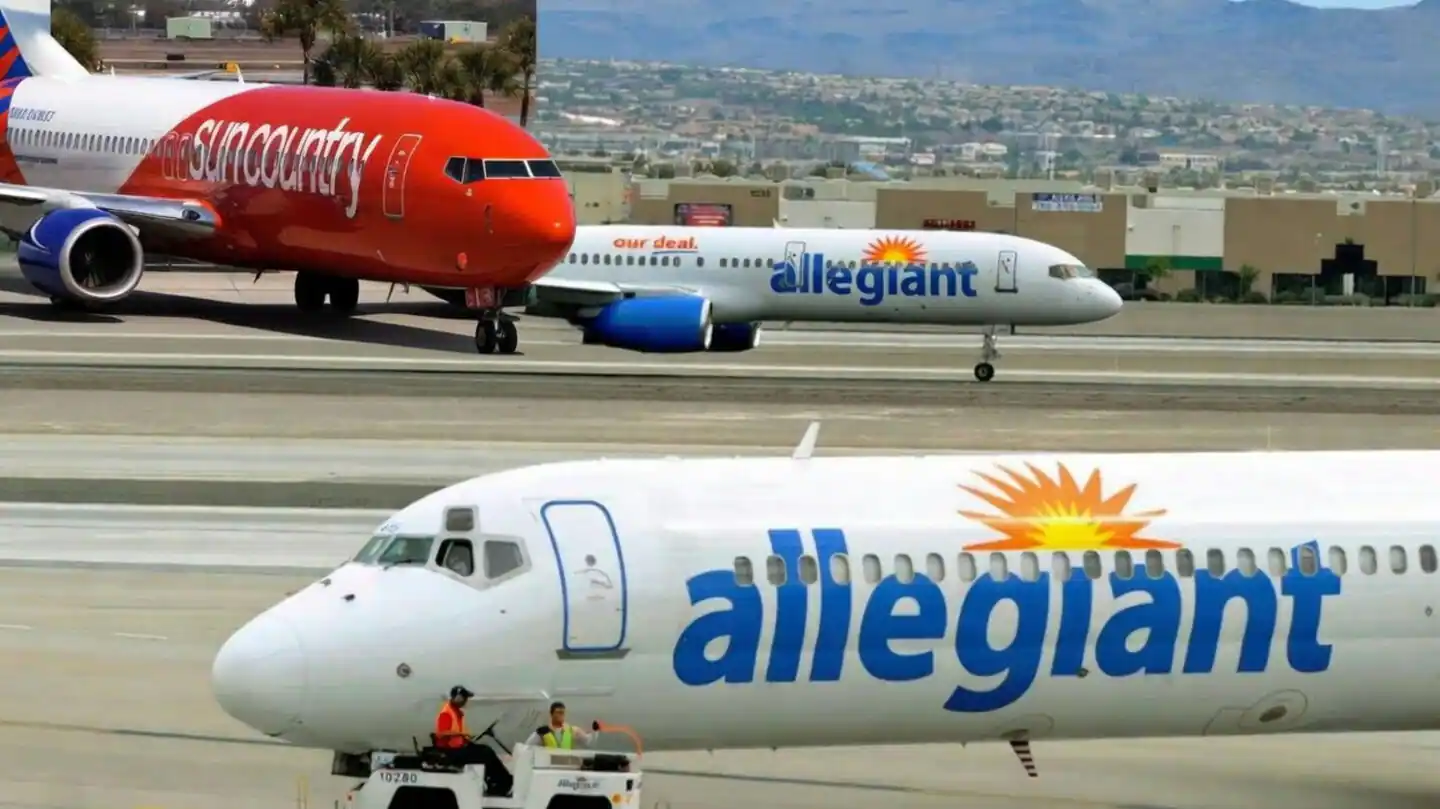
Allegiant Air officially completed its acquisition of Sun Country Airlines, finalizing a $1.5 billion merger that creates one of the largest low-cost leisure airlines in the United States.
The transaction closed after receiving approval from regulators and shareholders, ending months of negotiations first announced earlier this year. Allegiant said the merger combines two airlines with complementary business models at a time when the budget airline industry is facing significant financial pressure. Rising fuel prices tied to the Middle East conflict, inflation concerns, and the recent collapse of Spirit Airlines have created a difficult environment for low-cost carriers across the U.S. market.
The newly combined company will operate nearly 195 aircraft and serve close to 175 cities through more than 650 routes. Executives from both airlines said the merger is designed to strengthen competition in smaller and mid-sized markets where both carriers already have strong customer bases.
Allegiant CEO Gregory Anderson described the merger as a “defining moment” for the company and said the larger network would provide travelers with broader access to affordable leisure travel. Sun Country’s operations, including cargo contracts with Amazon and charter services for sports teams, casinos, and the U.S. Department of Defense, will now become part of Allegiant’s broader business structure.
Although the merger is officially complete, both airlines will continue operating separately for now while they work toward securing a single Federal Aviation Administration operating certificate. The process is expected to take approximately 18 months.
The combined airline will eventually operate under the Allegiant name and remain headquartered in Las Vegas, though Minneapolis-St. Paul will continue serving as a major operational hub.
Merger Reshapes the Low-Cost Airline Industry
The Allegiant-Sun Country deal arrives during one of the most unstable periods for the U.S. budget airline sector in years. Since the beginning of 2026, airlines have faced mounting pressure from fuel prices, labor costs, aircraft shortages and shifting travel demand patterns.
Industry analysts said the merger could significantly reshape competition among low-cost carriers after the shutdown of Spirit Airlines earlier this month. Spirit’s collapse removed one of the country’s largest ultra-low-cost competitors and intensified pressure on remaining budget airlines to consolidate and diversify revenue streams.
Unlike many traditional discount airlines, Sun Country brings additional revenue sources beyond passenger travel. The Minneapolis-based carrier operates cargo flights for Amazon Air and charter services for professional sports teams, casinos, and military contracts. Allegiant executives said these diversified operations were a major reason behind the acquisition.
CNBC reported that the merger also gives Allegiant stronger exposure to Midwest markets while expanding its route network and fleet size. Sun Country has long maintained a major presence at Minneapolis-St. Paul International Airport, where it serves as the second-largest airline behind Delta Air Lines.
Executives from both companies argued the merger will create a more resilient low-cost carrier capable of withstanding future economic volatility. The merged airline expects to have greater buying power, greater operational flexibility and more efficient use of the aircraft and crews.
At the same time, the merger has raised questions about competition and consumer choice in some regional markets. Some analysts warned that reduced competition among budget carriers could eventually contribute to higher fares in certain cities where Allegiant and Sun Country dominate leisure routes.
The deal nevertheless represents one of the biggest airline consolidations since the pandemic-era restructuring that reshaped the aviation industry earlier in the decade.
Sun Country Employees and Minneapolis Operations Face Uncertainty
The merger is expected to bring major changes for Sun Country’s roughly 3,300 employees, particularly corporate staff based in Minneapolis. According to Axios and the Star Tribune, many back-office jobs may eventually move to Las Vegas as Allegiant consolidates operations under a single corporate structure.
Outgoing Sun Country CEO Judd Bricker told Twin Cities Business that some positions will remain at Minneapolis-St. Paul International Airport, but many employees could face relocation or severance packages once the integration process advances further.
Operational employees, including pilots, flight attendants, mechanics, and airport workers, are still waiting for clearer information about how the merger will affect staffing, scheduling, and labor agreements. Reports indicated that many workers remain uncertain about long-term job security during the transition period.
Despite those concerns, Allegiant executives said Minneapolis-St. Paul will remain an important hub for the combined airline. The airport serves as a major base for Sun Country’s passenger and cargo operations and plays a key role in its Amazon Air contracts.
For travelers, executives said there will be no immediate changes to bookings, flight operations, loyalty programs, or airport procedures. Customers can continue booking flights and managing trips through each airline separately while integration work continues behind the scenes.
Industry experts noted that airline mergers often take years to fully integrate because of the complexity involved in combining fleets, employee contracts, route systems, and FAA certifications. During that process, both airlines are expected to continue operating under their current branding.
Still, reports suggested the Sun Country brand will eventually disappear as the combined company fully transitions under the Allegiant identity.
Combined Airline Bets on Leisure Travel and Regional Markets
The merger is a piece of a larger strategy that is more heavily focused on leisure travel and underserved regional airports than direct competition with big international carriers. Both Allegiant and Sun Country built their business models around connecting smaller cities to vacation destinations on lower operating costs and point-to-point routes.
Allegiant has historically focused on nonstop flights between smaller U.S. cities and tourist destinations such as Las Vegas, Orlando, and Florida beach markets. Sun Country expanded a similar leisure-focused strategy while also diversifying into cargo and charter operations.
Executives believe combining those networks will strengthen the airline’s ability to compete against larger carriers while maintaining low-cost service in markets often underserved by major airlines. The expanded route map is expected to improve aircraft utilization and create additional connecting opportunities for travelers.
The companies also expect the merger to help profitability through a more balanced mix of revenues. Demand for passenger travel can vary widely with fuel prices, economic conditions and seasonal travel trends. Sun Country’s cargo business with Amazon provides a more stable source of income during weaker travel periods.
Analysts said the deal signals growing consolidation pressure within the airline industry, particularly among smaller carriers trying to survive rising operating costs and increasing competition. The collapse of Spirit Airlines demonstrated how vulnerable low-cost carriers have become during periods of inflation and geopolitical instability.
At the same time, executives from both airlines argued the merger positions the combined company for long-term growth rather than simple cost-cutting. Allegiant said the airline intends to continue expanding service into leisure-focused and secondary airport markets across the United States.
The integration process is expected to continue well into 2027 as the airlines work toward combining fleets, systems, and operations under a single FAA operating certificate and the eventual Allegiant brand.

Sarah Jenkins
Sarah Jenkins covers major corporate mergers and the changing landscape of the aviation industry.
Related Post

Trump’s 15% Tariff Shock Sends U.S. Stock Futures Lower, Fuels Inflation Fears

AI-Augmented Innovation: How Corporations are Rewriting the R&D Playbook

The Circular Economy Mandate: Retail's 2026 Sustainability Pivot

Nvidia CEO Jensen Huang Says Markets Are Wrong About AI Threat to Software Companies
RECENT POST
- »Emerging Markets 2026: The Rise of the 'Digital Tiger' Economies
- »Family Offices in 2026: Shifting from Preservation to Planetary Impact
- »The 2026 Midterm Shift: A Deep Dive into the Battle for the House
- »Trump’s 15% Tariff Shock Sends U.S. Stock Futures Lower, Fuels Inflation Fears
- »Alzheimer’s Prediction Tool: Blood Test Estimates Symptom Onset Within 3–4 Years