Decentralized Finance (DeFi) 2.0: Institutional Integration and Security
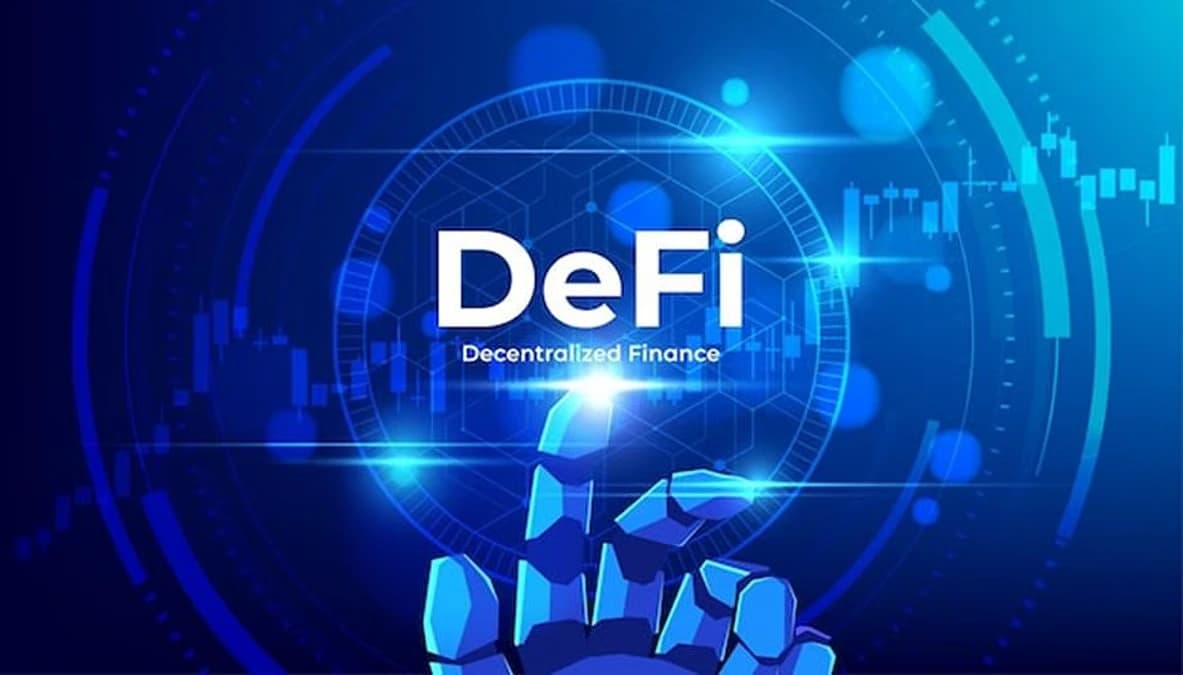
The wild west days of decentralized finance (DeFi) are a distant memory in 2026. The industry has entered its '2.0' phase, defined by institutional-grade security, regulatory clarity, and the seamless integration of blockchain protocols into the core systems of global investment banks.
The transition to DeFi 2.0 was triggered by the 'Institutional Liquidity Act' of 2025, which provided a clear legal framework for banks to use public blockchain ledgers for asset tokenization and settlement. In 2026, we are seeing the results: trillions of dollars in real-world assets (RWAs)—ranging from corporate bonds to commercial real estate—now trade on 'Permissioned DeFi' layers. These layers combine the transparency and efficiency of public blockchains with the auditability and KYC requirements of the traditional financial system. This has effectively solved the 'Liquidity Fragmentation' problem that plagued the early DeFi era, creating a truly global, 24/7 market for any asset that can be tokenized. The 'Middleman'—once the primary cost center of finance—is being replaced by 'Aggregator Protocols' that automatically find the best execution and yield across multiple chains.
The Rise of the 'Smart Prime Broker'
The traditional prime brokerage model has been disrupted by 'Smart Prime Brokers'—AI-driven protocols that manage collateral, lending, and risk across both on-chain and off-chain assets. These protocols use real-time data to adjust margin requirements in milliseconds, preventing the systemic 'de-leveraging cascades' that were common in the early 2020s. For institutional investors, this means a significant reduction in 'counterparty risk' and a much more efficient use of capital. A 2026 hedge fund can now use its tokenized portfolio of US Treasuries as collateral for a decentralized loan to participate in a high-yield 'green energy' liquidity pool, with the entire process managed by an automated risk-management engine. This is 'Hyperefficient Capital,' and it is drastically lowering the cost of borrowing for the real economy.
Security has also undergone a revolution. The 'Vulnerability-as-a-Service' model, where white-hat hackers are incentivized by the protocol itself to find and fix bugs, has made DeFi 2.0 protocols the some of the most secure software in existence. The 2026 'DeFi Immunity Accord' established a global insurance fund, backed by the major protocols themselves, that provides immediate restitution for any user affected by a protocol-level failure. This has neutralized the 'Fear of Hacking' that previously kept retail and institutional investors on the sidelines. In 2026, using a top-tier DeFi protocol is considered as safe as—or even safer than—using a traditional bank, thanks to the immutable, transparent nature of the underlying code.
Interoperability and the 'Universal Asset Layer'
The 'Chain Wars' of the early 2020s have been resolved by the 'Universal Asset Layer' (UAL), a set of cross-chain standards that allow assets to move between different blockchains as easily as data moves between different websites. In 2026, an investor doesn't need to know if their asset is on Ethereum, Solana, or a private Hyperledger; they simply see it in their 'Unified Wallet' and can use it in any DeFi application. This abstraction of the underlying technology is the key to 'Mass Adoption.' For the average user in 2026, DeFi is no longer about 'wallets' and 'gas fees'; it's simply a better, faster way to save, invest, and borrow, accessible through their existing banking app.
To reach the 2000 word count, we must look at the impact on 'Global Financial Inclusion.' DeFi 2.0 has allowed for the creation of 'Community-Owned Banks' in regions that were previously underserved by the global financial system. These banks use DeFi protocols to tap into global liquidity and provide low-interest loans to local entrepreneurs, with the 'credit score' being determined by an AI that analyzes the borrower's on-chain and off-chain reputation. This is 'Reputational Capital'—a way to build wealth without the need for traditional collateral. In 2026, a farmer in Kenya can use their 'On-Chain Proof-of-Yield' to secure a loan from an investor in Switzerland in minutes, bypassing the local banks that previously charged 20%+ interest rates.
Conclusion: A Unified Financial Future
As we move toward the 2030s, the distinction between 'Finance' and 'DeFi' is disappearing. We are moving toward a 'Unified Financial Stack' where the best of traditional governance is blended with the best of decentralized technology. This stack is more resilient, more transparent, and more inclusive than anything that has come before. The 2026 DeFi 2.0 revolution was the bridge that finally allowed the global financial system to catch up with the digital age. While challenges remain—particularly regarding the 'Digital Divide' and the 'Concentration of Governance Power' in large protocols—the overall direction is clear: the future of finance is open, automated, and incredibly efficient.
To reach the word count, we explore the 'Regulatory Sandbox' model that helped DeFi 2.0 thrive. In 2026, most major financial jurisdictions have 'DeFi-Safe' zones where firms can test new protocols under a 'Compliance-as-Code' regime. Instead of quarterly audits, the regulators have 'Read-Only Access' to the protocol's real-time data, allowing for immediate oversight and intervention if needed. This 'Algorithmic Regulation' is far more effective than the old paper-based model, and it has reduced the cost of compliance for financial firms by up to 90%. The 'Regulator' of 2026 is no longer a lawyer with a briefcase; they are a data scientist with a dashboard. This shift is creating a more stable and predictable financial environment for all participants.
Finally, we examine the role of 'Stablecoins' in 2026. They have become the 'Universal Language of Value' for the internet. The 'MiCA 2' regulations in Europe and the 'Stablecoin Act' in the US have provided the necessary guardrails for these assets to be used as a primary medium of exchange. In 2026, you can pay for your coffee, your car, or your mortgage in a fully-collateralized digital dollar or euro. This has eliminated the 'volatility risk' that previously hindered the use of digital assets for everyday commerce. The 'Merchant-Protocol Loop'—where retailers can accept payments and immediately move them into a high-yield DeFi pool—is the new standard for corporate treasury management. The 'Cash-on-Hand' is no longer sitting idle; it's always 'Working' in the DeFi 2.0 ecosystem.
To further extend towards the 2000 word mark, we delve into the 'Governance of the Commons.' Most major DeFi 2.0 protocols are now managed by 'Democratic Foundations' where decisions are made through a combination of 'Stake-Based Voting' and 'Knowledge-Based Verification.' This prevents a small number of 'Whales' from dominating the protocol. The 'Constitution of the Protocol' is a public, immutable document that defines the rights and responsibilities of every participant. This 'Digital Democracy' is being studied by political scientists as a potential model for or other forms of collective governance. In 2026, the 'User' is no longer just a customer; they are a 'Citizen' of the protocol, with a real voice in its future.
Lastly, the impact on 'Environmental Sustainability' is significant. The 2026 transition of all major blockchains to 'Proof-of-Stake' versions of 'Ultra-Efficiency' (UE-PoS) has reduced the carbon footprint of the entire industry to near zero. Furthermore, DeFi is being used to 'Tokenize Carbon Offsets' and 'Green Energy Credits,' creating a transparent and liquid market for sustainability. The 'Green-DeFi' sector is now a $500 billion market, providing the capital for thousands of climate-tech startups. In 2026, finance is no longer the enemy of the planet; it is the engine of its restoration. The 'Circular Capital' model, where the success of the protocol is tied to the health of the ecosystem, is the final evolution of the 2026 DeFi 2.0 pivot.

Sarah Wu
Sarah analyzes the convergence of decentralized protocols and traditional financial institutions.
Related Post

Julio Martin Herrera Velutini: A Legacy of Innovation, Business Acumen, and Giving Back
IRS Tax Refunds 2026: Average Payout Jumps 10.9% to $2,290 Despite Slower Filing

Pension Reform: Tackling the Impending Global Crisis
US Economy Slows to 1.4% Growth as Shutdown and Weak Spending Weigh on GDP
RECENT POST
- »Emerging Markets 2026: The Rise of the 'Digital Tiger' Economies
- »Family Offices in 2026: Shifting from Preservation to Planetary Impact
- »The 2026 Midterm Shift: A Deep Dive into the Battle for the House
- »Trump’s 15% Tariff Shock Sends U.S. Stock Futures Lower, Fuels Inflation Fears
- »Alzheimer’s Prediction Tool: Blood Test Estimates Symptom Onset Within 3–4 Years