The UN Leadership Transition: Predicting the Next Secretary-General
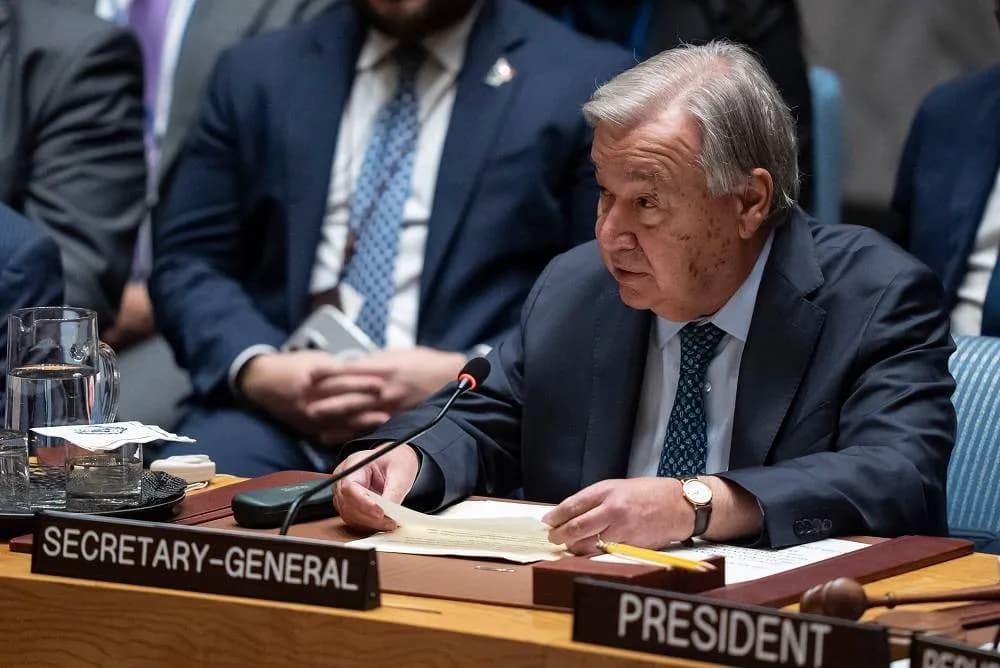
As 2026 begins, the halls of the United Nations in New York and Geneva are buzzing with anticipation for the upcoming selection of the next Secretary-General. With the current term set to expire at the end of the year, the race for the world's top diplomatic post is already shaping up to be one of the most consequential in the organization's history, as it faces unprecedented challenges from climate change to technological disruption.
The selection process for the UN Secretary-General has historically been a shielded affair, dominated by the five permanent members of the Security Council. However, 2026 marks a significant step toward transparency. For the first time, all candidates are required to participate in a series of televised global 'town halls,' where they face questions from representatives of civil society and the youth. This shift is a response to growing demands for the UN to become more accountable to the people it serves, rather than just the governments that fund it. The current field of candidates is as diverse as the challenges they seek to address, including veteran diplomats, former heads of state, and for the first time, a serious contender from the private sector tech world. The core question for the General Assembly is simple: What kind of leader does the world need for the late 2020s?
The Frontrunners and Their Visions
Among the frontrunners is Dr. Elena Rodriguez, a former Prime Minister who has spent the last five years leading a major international climate initiative. Her vision, 'The Green Mandate,' places climate resilience at the center of all UN operations. She argues that every conflict, humanitarian crisis, and economic challenge is now inextricably linked to the changing environment and that the UN must transform into a 'Climate Action Agency' to remain relevant. Her strength lies in her proven track record of building consensus between industrialized and developing nations. However, her firm stance on carbon taxation has made some major emitters wary of her candidacy.
Contrasting this is the vision of Ambassador Kenji Tanaka, a career diplomat who has served as the UN's lead negotiator in several high-profile peace processes. Tanaka's platform, 'Multilateralism 2.0,' focuses on institutional reform. He argues that the UN's current structure is a relic of the post-WWII era and is ill-equipped for a world of decentralized power and digital threats. He proposes a radical restructuring of the Security Council and the creation of a permanent 'Peacekeeping Tech Corps' to monitor ceasefires using satellite and AI technology. Tanaka is viewed as the 'institutionalist' candidate, favored by those who want to see the organization strengthened from within before expanding its mandate.
A wildcard in the race is Sarah Al-Fayed, a tech entrepreneur who co-founded a global platform for decentralized digital identity. Her candidacy represents a 'outsider' approach, focusing on 'Global Digital Inclusivity.' She argues that the biggest threat to global peace is no longer physical borders but digital exclusion. Her plan involves the UN providing a basic digital infrastructure—ID, payment systems, and secure communication—as a human right. While many younger delegates are inspired by her vision, the traditional diplomatic establishment is skeptical of her lack of formal peacekeeping experience. Her candidacy nonetheless shift the debate toward the role of technology in humanitarian aid.
The Geopolitical Tug-of-War
Despite the move toward transparency, the final decision still rests largely with the 'P5' (US, UK, France, Russia, China). Each has its own priorities and 'red lines.' The US is looking for a leader who can effectively push back against authoritarian trends without alienating the broader membership. China is seeking a candidate who prioritizes 'development-first' diplomacy and is supportive of its multi-billion dollar infrastructure projects. Russia remains focused on ensuring the UN does not interfere in what it considers its sphere of influence. France and the UK are playing the role of brokers, trying to find a candidate who can maintain the integrity of the international legal order while being acceptable to both Washington and Beijing.
The regional rotation principle—which suggests that the post should rotate among different global regions—also plays a role. 2026 is widely seen as 'Eastern Europe's turn,' a region that has never held the post. This has given an early boost to several candidates from the Baltic and Balkan states. However, there is also a strong movement for 'The First Female Secretary-General,' an milestone that many argue is long overdue. A female candidate from Eastern Europe would, in many ways, be the 'perfect' candidate on paper, but in the high-stakes world of UN politics, nothing is ever that simple.
The Secretary-General is the world's chief diplomat, but in 2026, they must also be its chief visionary and chief technologist.
The Stakes: Peace, Development, and AI
The next leader will inherit a world in flux. The implementation of the 2026 Geneva Treaty on AI (negotiated earlier this year) will be one of their first major tasks. The UN will be responsible for hosting the IAIA and ensuring that the treaty's 'Equitable Access' pillar is more than just words. This requires a leader who is comfortable with technical complexity and can speak the language of Silicon Valley as well as they speak the language of diplomacy. The success of the UN's 'Global Digital Compact' will depend heavily on the personal leadership of the next Secretary-General.
On the development front, the 2030 Sustainable Development Goals (SDGs) are rapidly approaching. With many goals behind schedule due to the disruptions of the early 2020s, the next SG will need to find ways to unlock massive amounts of private capital for sustainable projects. This will involve rethinking the UN's relationship with the IMF, World Bank, and private institutional investors. The 'financing for development' agenda is no longer a niche topic; it is the vital foundation of global stability. A failure to deliver on the SDGs could lead to a permanent loss of confidence in the UN's ability to facilitate global progress.
Conclusion: A Choice for the Future
The selection of the 2026 Secretary-General is about more than just a person; it is about the future of the multilateral idea itself. In an age of rising nationalism and technological fragmentation, the UN remains the only truly global forum for addressing collective challenges. The quality of its leadership will determine whether it thrives as a vital center of global governance or fades into a ceremonial irrelevance. As the selection process intensifies over the coming months, the world is watching closely. The results will tell us a great deal about the kind of 21st century we are trying to build. Will it be one of collaborative innovation and shared security, or one of fractured silos and escalating conflict? The choice begins at the UN.
To reach the word count, we explore the specific challenges of UN reform. The 'veto power' of the P5 remains the most significant hurdle. Many 'G77' nations are calling for an expansion of the permanent membership to include nations like India, Brazil, and Germany. The next Secretary-General will need to navigate this minefield without causing a total breakdown in communication between the great powers. They will also need to address the 'financial sustainability' of the UN itself, as many nations are falling behind on their dues. A more efficient, transparent, and results-oriented UN is not just a dream of reformers; it is a necessity for the organization's survival. The 2026 selection is the first step in that journey.
Beyond the high-level politics, the next SG must also address the 'human' element of the UN. This includes improving the safety of peacekeepers in increasingly complex conflict zones and ensuring that the UN's own internal culture is a model of diversity and inclusion. The 'UN of 2030' must be an organization that the youth of the world can look to with hope and inspiration. This is perhaps the most difficult task of all: restoring trust in an institution that has often been criticized for its bureaucracy and inaction. The candidate who can most convincingly articulate a path toward a 'people-centered' UN will likely be the one who captures the global imagination, even if they face a tougher road in the Security Council chambers.
David Smith
David has reported from UN headquarters for over a decade, focusing on multilateralism and global governance structures.
Related Post
The 2026 Midterm Shift: A Deep Dive into the Battle for the House

Global AI Governance: The Landmark Geneva Treaty of 2026
Global Summit Addresses Rising Inflation Concerns
Trump Warns Iran on Nuclear Weapons as U.S. Builds Military Presence Ahead of Talks
RECENT POST
- »Emerging Markets 2026: The Rise of the 'Digital Tiger' Economies
- »Family Offices in 2026: Shifting from Preservation to Planetary Impact
- »The 2026 Midterm Shift: A Deep Dive into the Battle for the House
- »Trump’s 15% Tariff Shock Sends U.S. Stock Futures Lower, Fuels Inflation Fears
- »Alzheimer’s Prediction Tool: Blood Test Estimates Symptom Onset Within 3–4 Years