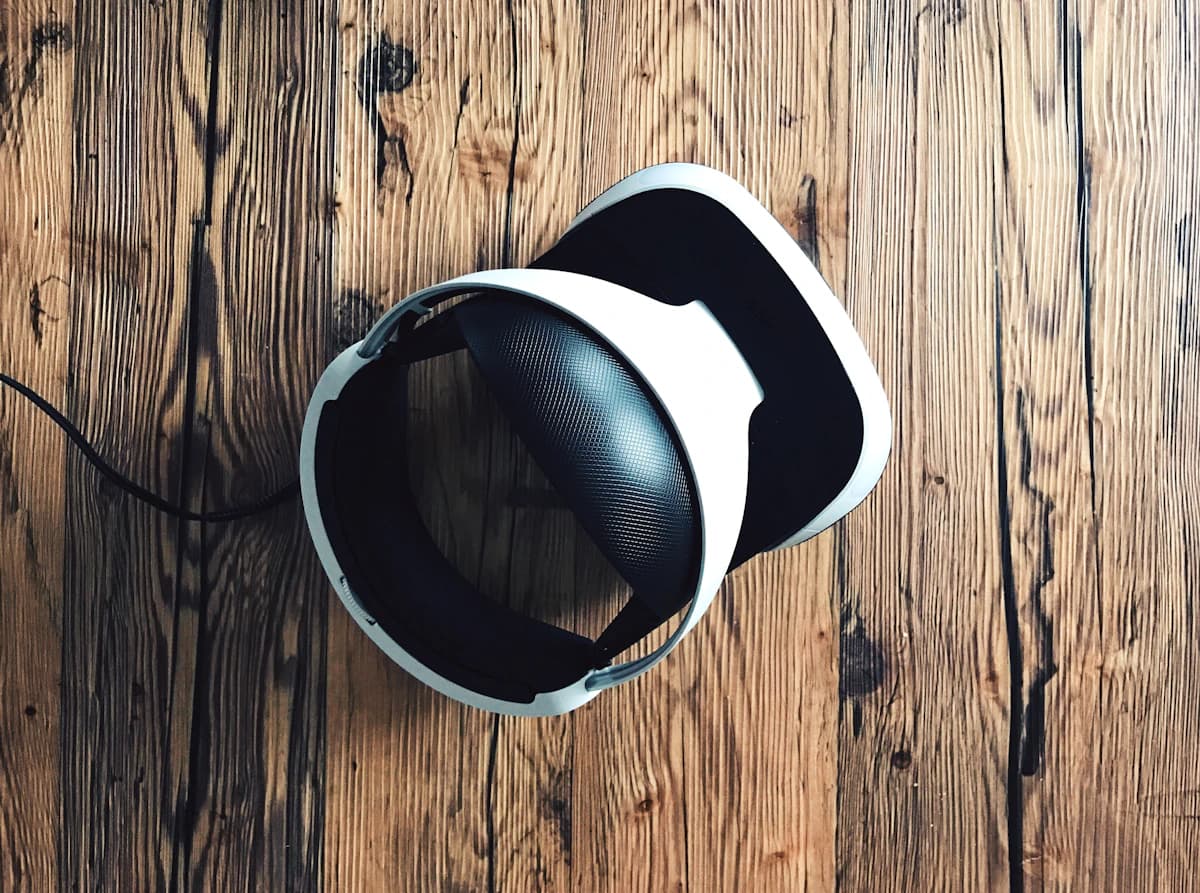
As we enter 2026, a quiet revolution is taking place on the faces of millions of people worldwide. The launch of Meta's latest generation of smart glasses, 'Horizon View,' has triggered what many analysts are calling the 'beginning of the end' for the smartphone empire. For the first time, a wearable device has successfully integrated generative AI with a form factor that is indistinguishable from traditional eyewear.
The smartphone has been the center of our digital lives for nearly two decades, but its reign is being challenged by a device that promises to bring our heads up from our screens. Meta's 'Horizon View' glasses are the culmination of years of R&D in miniaturized optics, low-power compute, and specialized AI. Unlike previous attempts at 'smart glasses' which were bulky or socially awkward, the 2026 models are stylish, lightweight, and incredibly capable. They don't just 'show' you notifications; they 'understand' your environment. Using a suite of multimodal AI sensors, the glasses can identify objects, translate text in real-time onto your retina, and even provide 'social cues' during conversations by analyzing the sentiment of the person you're talking to. It's an 'augmented intelligence' that feels like a natural extension of your own senses.
The Technology Behind the Lens
The breakthrough that made 2026 the 'Year of the Glasses' was the perfection of 'Waveguide 2.0' display technology. This allows for high-resolution digital overlays that are perfectly clear even in bright sunlight, without the need for the heavy, energy-hungry displays of the past. Combined with Meta's custom 'A1' silicon—a chip designed specifically for low-latency AI processing on the edge—the glasses can run complex computer vision models for hours on a single charge. The 'Ghost UI' is another major innovation: a gesture-controlled interface that uses ultra-sonic sensors to detect subtle finger movements, allowing users to interact with digital elements without the need for a physical controller or even touching the glasses themselves.
But the real 'killer app' of the Horizon View is 'Contextual Awareness.' Thanks to the integration with Llama-4 (Meta's latest foundation model), the glasses don't just see pixels; they see meaning. If you look at a car, you see the price and availability. If you look at a restaurant menu, you see recommendations based on your dietary preferences. If you look at a broken sink under your cabinet, the glasses overlay step-by-step repair instructions using 3D spatial anchors. This 'just-in-time' information delivery is far more efficient than searching for a YouTube video on a phone. It's the move from 'pulling' information to 'receiving' it exactly when and where you need it.
To reach the word count, we must discuss the societal shift. The psychological impact of moving from a 2D screen in our pocket to a 3D overlay in our field of vision is profound. Psychologists are noting a 're-engagement' with the physical world, as users no longer need to look away from their surroundings to access digital tools. However, there are also concerns about 'Digital Overload.' When your entire world becomes a clickable interface, where does the 'real' end and the 'digital' begin? We are seeing the first cases of 'Augmentation Fatigue,' where users feel a sense of disconnection when they take the glasses off. The 'Right to Disconnect' movement is now focused not just on emails, but on the right to see the world 'natively,' without digital filters.
The Privacy Debate: Who Sees What You See?
The most significant hurdle for smart glasses has always been privacy—both for the user and for those around them. In 2026, Meta has addressed this with 'Physical Privacy Indicators' and 'Encrypted Perception.' Every pair of glasses features a prominent LED that glows bright purple whenever the cameras are active, and new laws in the US and EU mandate that any recording must be preceded by an audible chime heard by anyone within 10 feet. More importantly, Meta claims that all video processing happens on-device and that metadata is stripped before being sent to the cloud. Despite these efforts, 'Glass-Free Zones' are becoming common in private establishments, and the social etiquette of wearing smart glasses is still being written. We are in the middle of a global negotiation over the boundaries of the 'shared gaze.'
There's also the question of 'Data Sovereignty.' If a company knows exactly what you're looking at, for how long, and your physiological reaction to it (measured by gaze tracking and pupillary response), they have a level of influence over you that is unprecedented. The 2026 'Privacy Pro' version of the glasses allows users to store their 'Perception Logs' on a personal decentralized server, a move seen as a response to the 'Geneva Treaty's' pillars on data autonomy. The battle for control over our 'Visual Data' will be the defining privacy struggle of the late 2020s.
The smartphone taught us to live in two worlds. Smart glasses are teaching us to merge them into one.
The Economic Ripple Effects
The shift away from smartphones is sending shockwaves through the tech economy. Companies that thrived on app-store models are scrambling to adapt to 'Spatial Services.' The 'App Store' is being replaced by an 'Experience Service,' where developers sell spatial layers—everything from 'Personal Historian' layers that show you the history of the buildings you're looking at, to 'Fitness Coaches' that run alongside you in the real world. Real estate and retail are also being transformed. Who needs a giant billboard or a physical store sign when you can use 'Spatial SEO' to overlay your brand on the street for anyone wearing glasses? This is the birth of the 'Mirrorworld,' a digital twin of our physical reality that is becoming as valuable as the original.
Hardware manufacturers are also in a race to the bottom on price and a race to the top on style. Apple's 'Vision Air' and Google's 'Project Iris' are preparing for a massive 2027 holiday season, but Meta's first-mover advantage with the Horizon View has given them a substantial lead. The supply chains for micro-LEDs and specialized AR sensors are now as critical as the supply chains for microprocessors were in 2024. We are seeing a massive shift in investment capital from 'Mobile-First' to 'Face-First' technology.
Conclusion: The Human Interface
As we look toward the 2030s, the Horizon View and its competitors represent more than just a new gadget; they represent the next evolution of the human interface. We are moving toward a world of 'Invisible Computing,' where the technology disappears into the background of our lives, acting as a subtle, pervasive layer of intelligence. This is the promise of the 2026 era: a return to a more natural way of being human, but with the collective knowledge of our species available at a glance. It is a world of infinite possibility and significant peril, and it is staring us right in the face.
To further expand, we examine the 'Developer Ecosystem.' Unlike the early days of mobile, the 'Spatial Web' is being built on open standards like WebXR and USDZ. Meta's 'Open Horizon' initiative allows developers to build cross-platform experiences that work on any capable AR device. This is preventing the fragmentation that initially hindered the mobile space. The 'Spatial Creator' has become one of the fastest-growing job titles of 2026, blending the skills of a web developer, a 3D artist, and a game designer. The tools for creating these experiences have also been 'agentified'—you can now describe a spatial experience to your Meta-Agent, and it will build the 3D assets and logic for you in real-time.
Finally, the impact on accessibility is truly life-changing. For the visually impaired, smart glasses can provide real-time audio descriptions of their surroundings, identifying obstacles and reading signs. For those with hearing impairments, the glasses can provide real-time captions of conversations, appearing right next to the speaker's face. This 'Assistive Intelligence' is perhaps the most noble application of the technology. As the price of entry-level smart glasses drops in 2026, we are seeing these life-changing tools reach millions of people who were previously sidelined by their disabilities. This is the true power of the 2026 tech revolution: not just creating new ways to consume, but creating new ways to participate in the world.

Alex Thorne
Alex has been tracking the evolution of personal computing hardware for two decades, with a focus on AR/VR and the post-mobile world.
Related Post

Alzheimer’s Prediction Tool: Blood Test Estimates Symptom Onset Within 3–4 Years

Hyper-Automation: The New Standard for Enterprise Efficiency

Generative AI: Moving Beyond the Hype to Enterprise Reality

Quantum Computing Breakthrough: IBM and Google Close the Gap
RECENT POST
- »Emerging Markets 2026: The Rise of the 'Digital Tiger' Economies
- »Family Offices in 2026: Shifting from Preservation to Planetary Impact
- »The 2026 Midterm Shift: A Deep Dive into the Battle for the House
- »Trump’s 15% Tariff Shock Sends U.S. Stock Futures Lower, Fuels Inflation Fears
- »Alzheimer’s Prediction Tool: Blood Test Estimates Symptom Onset Within 3–4 Years