Waymo Driverless Cars Become Trapped in Atlanta Suburb After Glitch
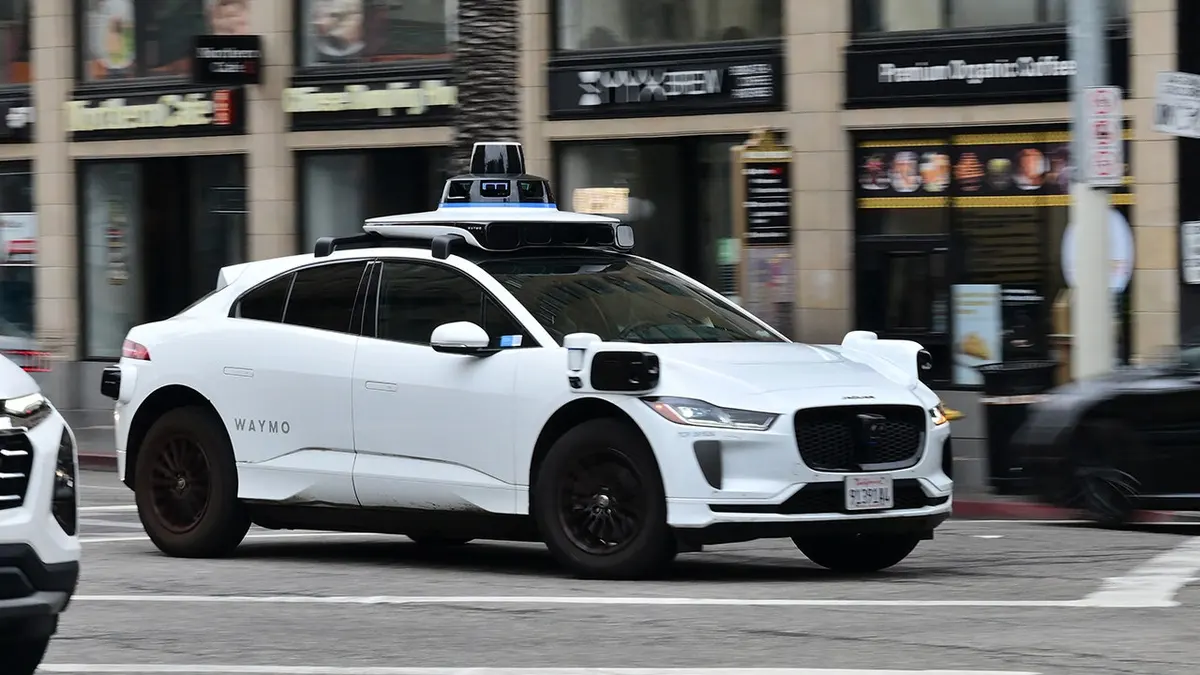
A software glitch caused multiple Waymo driverless cars to repeatedly circle and become trapped in an Atlanta suburb, raising new concerns about autonomous vehicle safety and reliability.
Residents in a quiet suburb of Atlanta were left confused and frustrated after dozens of empty Waymo driverless vehicles repeatedly circled neighborhood streets and became trapped in a cul-de-sac due to what appears to have been a routing software glitch. Videos shared by local residents showed long lines of autonomous vehicles moving slowly through residential roads, stopping unexpectedly, and struggling to navigate turnarounds after encountering obstacles.
The incident quickly attracted national attention as another example of the growing challenges facing the rapidly expanding autonomous vehicle industry. According to residents, the unusual traffic pattern had been happening for several days and sometimes began early in the morning, with neighbors claiming they saw as many as 50 driverless cars pass through the area within a single hour.
The affected area was reportedly located in Atlanta’s northwest suburbs, where residents say the empty robotaxis appeared to be driving loops around residential streets without passengers. Some locals believed the neighborhood may have been unintentionally used as a holding or rerouting area for idle Waymo vehicles waiting for ride requests. The situation escalated when residents attempted to slow the vehicles by placing temporary signs near the road.
Instead of turning away smoothly, several Waymo cars reportedly became stuck while trying to calculate alternate routes, creating traffic backups and causing multiple vehicles to stop bumper-to-bumper in the cul-de-sac. Videos shared online showed the autonomous cars flashing warning lights and emitting sounds while attempting to navigate around blocked sections of the street.
Safety Concerns and Community Response
Many residents expressed concern about safety, particularly because the incidents were happening in family-oriented neighborhoods with children, pets, and school bus activity during morning hours. Neighbors told local media outlets that the sudden increase in autonomous vehicle traffic made the area feel less safe and created anxiety among families who were unfamiliar with large numbers of self-driving cars operating continuously through residential streets.
Some residents also worried that the driverless vehicles could struggle to react properly in emergency situations or around pedestrians. Others questioned why empty robotaxis were circulating repeatedly without active passengers rather than remaining in designated staging locations.
Waymo, which is owned by Alphabet Inc., later acknowledged the issue and said it had already worked to correct the routing behavior responsible for the unusual traffic patterns. In statements provided to media outlets, the company emphasized that it takes community concerns seriously and remains focused on operating safely within neighborhoods where its robotaxi services are active.
Broader Challenges for the Autonomous Industry
The Atlanta incident comes during a difficult period for Waymo and the broader autonomous vehicle industry, which continues facing questions about reliability, safety, and real-world performance. Just days before the Atlanta routing issue gained attention, Waymo announced a recall affecting nearly 4,000 autonomous vehicles after identifying a software flaw connected to floodwater detection.
Waymo has experienced several other unusual incidents over the past year involving autonomous navigation problems. Reports have included vehicles becoming trapped in drive-thrus, stopping on railroad tracks, driving the wrong direction on roads, and blocking emergency responders during active incidents. Critics argue these situations highlight the unpredictability and edge-case challenges that autonomous driving systems still face in complex urban environments.
Despite these setbacks, Waymo remains one of the largest and most advanced autonomous vehicle companies in the world. The company currently operates robotaxi services across multiple U.S. cities including San Francisco, Phoenix, Los Angeles, Austin, and Atlanta. However, incidents like the Atlanta glitch demonstrate how difficult it remains for self-driving systems to perfectly handle unpredictable road conditions, local infrastructure quirks, and unusual human behavior.
Conclusion
Transportation experts say incidents involving autonomous vehicles often receive far more public attention than traditional traffic mistakes because many consumers still view self-driving technology as experimental. Each malfunction or unusual incident can influence public confidence and shape future government regulation surrounding autonomous transportation. For residents in the Atlanta neighborhood affected by the glitch, the incident served as a strange glimpse into a future where autonomous vehicles may become common parts of everyday life.

Alex Thorne
Alex covers the latest in AI, robotics, and the future of transportation.
Related Post

OpenAI Reportedly Explores Legal Options Against Apple Over AI Partnership

Hyper-Automation: The New Standard for Enterprise Efficiency

Meta Sued by Major Publishers Over AI Training Data

Google Chrome Criticized Over Hidden Gemini Nano AI Downloads
RECENT POST
- »Emerging Markets 2026: The Rise of the 'Digital Tiger' Economies
- »Family Offices in 2026: Shifting from Preservation to Planetary Impact
- »Louisiana Republicans Advance Congressional Map Reducing Majority-Black Districts
- »Trump’s 15% Tariff Shock Sends U.S. Stock Futures Lower, Fuels Inflation Fears
- »OpenAI Reportedly Explores Legal Options Against Apple Over AI Partnership