Louisiana Republicans Advance Congressional Map Reducing Majority-Black Districts
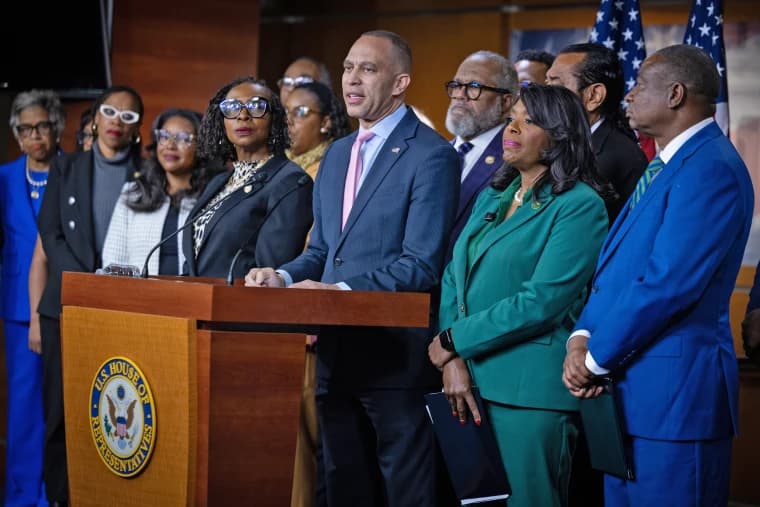
Louisiana Republicans advanced a controversial congressional map that could eliminate a majority-Black district, intensifying national debates over voting rights and redistricting.
Republican lawmakers in Louisiana advanced a controversial congressional map that would eliminate one of the state’s two majority-Black congressional districts, intensifying a national fight over redistricting and minority voting rights ahead of the 2026 midterm elections. The Louisiana Senate approved the new map in a 27-10 party-line vote after a lengthy overnight debate.
The proposal would likely increase Republican control of Louisiana’s congressional delegation from four seats to five out of six. The map significantly reshapes the current 6th Congressional District, represented by Democrat Cleo Fields, which was previously designed to maintain a Black voting majority stretching from Baton Rouge toward Shreveport.
Under the new plan, Louisiana would retain only one majority-Black district centered around New Orleans and represented by Democrat Troy Carter. The revised map could effectively force Carter and Fields into competing against each other in the same district.
The effort follows a recent Supreme Court ruling in Louisiana v. Callais that weakened federal protections under the Voting Rights Act and gave Republican-controlled states more flexibility to redraw congressional maps. Republican lawmakers argued the new districts are based on political rather than racial considerations.
Democrats and civil-rights advocates strongly condemned the proposal, arguing it would dilute Black voting power in a state where roughly one-third of residents are Black. Protesters and advocacy groups accused Republicans of attempting to engineer congressional outcomes by reducing minority representation. Governor Jeff Landry previously suspended Louisiana’s congressional primaries after the Supreme Court ruling to allow lawmakers time to redraw the map. Tens of thousands of early and absentee votes had already been cast before the elections were delayed.
The legislation now moves to the Republican-controlled Louisiana House, where approval is widely expected before a June 1 deadline for finalizing congressional districts.
National Republican Redistricting Push Intensifies
Louisiana’s redistricting battle has become part of a broader nationwide Republican effort to redraw congressional districts and strengthen the GOP’s narrow House majority before the 2026 elections. Republican-led states across the South have increasingly moved to redraw district boundaries after recent court rulings weakened federal voting-rights protections.
The Washington Post reported that Republicans have already redrawn district lines favorably in at least 15 congressional districts nationwide, while Democrats have altered maps in only a handful of districts. Former President Donald Trump has personally encouraged Republican-controlled legislatures to aggressively pursue redistricting efforts wherever possible.
The broader strategy focuses heavily on Southern states with significant Black populations and existing majority-Black districts created under earlier Voting Rights Act protections. Republicans argue many of those districts were originally drawn through unconstitutional racial gerrymandering.
Louisiana now joins Alabama, Tennessee, South Carolina, and several other Republican-controlled states where lawmakers are considering or advancing maps that could weaken Democratic and minority voting influence. The issue has become especially politically sensitive because Republicans currently hold only a narrow majority in the U.S. House of Representatives. Even a small number of newly favorable districts could significantly affect control of Congress after the next election cycle.
Democrats and voting-rights organizations accused Republicans of exploiting recent Supreme Court decisions to pursue aggressive partisan gerrymandering. Civil-rights groups warned that the Louisiana proposal could become one of the most important voting-rights cases in the country if challenged in federal court. At the same time, Republicans argued redistricting has always been part of political competition and accused Democrats of hypocrisy for supporting favorable maps in Democratic-controlled states.
Pressure Builds Around James Clyburn’s South Carolina District
The Louisiana proposal emerged alongside renewed Republican pressure in South Carolina to redraw the district held by longtime Democratic Congressman James Clyburn, one of the most influential Black leaders in national politics. The Washington Post reported that Trump allies have increasingly pushed Republican legislators to target Clyburn’s district as part of the broader redistricting effort.
Clyburn currently represents South Carolina’s only Democratic-held congressional seat and has long served as a central power broker within the Democratic Party. Republicans hold six of the state’s seven congressional districts. However, South Carolina Republicans recently blocked efforts to redraw Clyburn’s district after several GOP lawmakers warned the strategy could politically backfire. State Senate Majority Leader Shane Massey argued that aggressively spreading Republican voters across additional districts might ultimately weaken the party’s long-term position.
During debate on the proposal, Massey reportedly cautioned fellow Republicans against becoming “too greedy” in pursuit of additional seats. He argued that dismantling Clyburn’s district could create competitive races in other Republican-held districts by dispersing conservative voters too widely.
The debate highlighted growing divisions within Republican circles over how aggressively to pursue redistricting following recent court victories. Some strategists believe maximizing short-term gains carries political risks, particularly among Black voters and suburban moderates. Still, pressure from Trump allies and conservative activists continues building in several states to revisit congressional maps before the midterms. The Washington Post reported that South Carolina Governor Henry McMaster is expected to call lawmakers back for a special session to continue discussing redistricting proposals.
Voting Rights and Minority Representation Become Central Political Issue
The new congressional maps proposed across several Southern states have reignited major national debate about voting rights, racial representation, and the future of the Voting Rights Act. Civil-rights organizations argue the Louisiana proposal specifically undermines decades of legal protections intended to ensure minority communities can elect representatives of their choice.
Black residents make up roughly one-third of Louisiana’s population, yet the proposed map would likely leave the state with only one majority-Black congressional district out of six total seats. Critics argued this creates a mismatch between Louisiana’s demographics and its political representation.
The Supreme Court’s Louisiana v. Callais decision has become a turning point in the national redistricting fight. The ruling significantly weakened previous interpretations of the Voting Rights Act that required states to maintain districts allowing minority voters fair electoral opportunities. Republican lawmakers argued the previous Louisiana map relied too heavily on race in constructing oddly shaped districts stretching across large parts of the state.
Civil-rights groups and Democratic lawmakers strongly disagreed, arguing the redesign intentionally fragments Black voting populations to reduce Democratic representation. Advocacy organizations warned the new map would almost certainly face immediate legal challenges if finalized. The controversy also intensified broader national debate about partisan gerrymandering and whether current legal standards adequately protect minority voting power. Several legal scholars warned the recent court decisions could encourage more aggressive redistricting efforts nationwide.

Sarah Jenkins
Sarah covers the intersection of biotechnology, health tech, and political strategy.
Related Post

Keir Starmer Faces Growing Revolt Within Labour After Election Setback

The UN Leadership Transition: Predicting the Next Secretary-General

Global Summit Addresses Rising Inflation Concerns

Trump Warns Iran on Nuclear Weapons as U.S. Builds Military Presence Ahead of Talks
RECENT POST
- »Emerging Markets 2026: The Rise of the 'Digital Tiger' Economies
- »Family Offices in 2026: Shifting from Preservation to Planetary Impact
- »Louisiana Republicans Advance Congressional Map Reducing Majority-Black Districts
- »Trump’s 15% Tariff Shock Sends U.S. Stock Futures Lower, Fuels Inflation Fears
- »OpenAI Reportedly Explores Legal Options Against Apple Over AI Partnership