Emerging Markets Hit by AI Tech Selloff as Investors Question Sustainability of Chip Rally
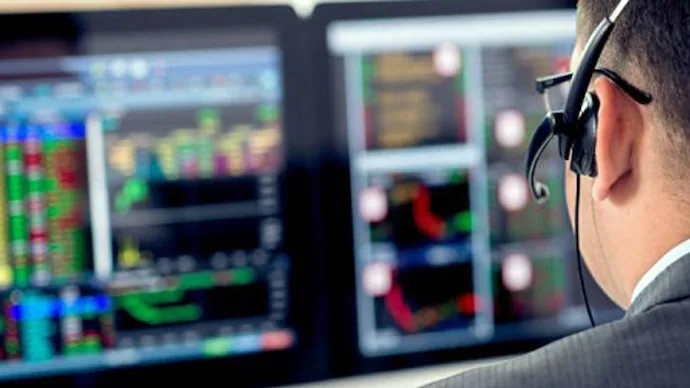
Asian technology markets were shaken again as investors reassessed the strength of the artificial-intelligence investment boom that has driven chip companies to record valuations. South Korea and Taiwan, where technology-heavy markets have seen some notable volatility as investors argue over whether the recent rally was built on sustainable earnings growth or too much excitement about AI demand.
The latest market turbulence is the latest reminder of a growing problem for emerging markets that have benefited from the AI hardware boom. Samsung Electronics, South Korea's SK Hynix and Taiwan's Taiwan Semiconductor Manufacturing Company (TSMC) are among those to have benefited from the surge in demand for advanced chips at the heart of artificial intelligence systems.
But investors are starting to get more cautious. Valuations are high and future growth expectations are becoming increasingly demanding. The selloff reminds us that some emerging-market indexes are more correlated with a handful of technology companies than the broader economy.
The move is a wake-up call for investors chasing AI-related gains without a full check of risks such as concentration, valuation pressure and changing demand expectations, market analysts say.
Asian Chipmakers Embrace AI Boom Spotlight
Some of the biggest beneficiaries of the artificial intelligence boom have been Asian semiconductor companies, as global tech firms ramp up investment in data centres and state-of-the-art processors and memory chips. South Korean and Taiwanese firms, which were pioneers in the region, have become the engines of global investment flows.
Beneficiaries: Companies like Samsung Electronics, SK Hynix and TSMC are playing a key role in the AI supply chain. High-tech memory, semiconductor fabrication and chip-packaging are becoming more and more important for the global AI infrastructure.
Like the big U.S. technology companies that led earlier waves of innovation, these companies looked more and more like the big winners of the AI transformation. Valuations were driven by robust demand outlooks and sizeable foreign investment in Asian technology markets.
Shares of semiconductor companies led the South Korean market. Chipmakers, which have had a strong ride on the AI rally but were more vulnerable to a souring of investor sentiment, bolstered the index's gains.
Some analysts were concerned expectations had got ahead of the fundamentals driving the rapid advances. But investors are beginning to ask whether chipmakers can maintain the growth rate suggested by their valuations even as AI demand remains robust.
This is the pattern of every major technology investment cycle. Early optimism helps to accelerate capital flows into a sector but markets will want to see evidence that revenue growth and profits can support high valuations.
Asian tech companies face a challenge in keeping investors interested, and in convincing them that the demand for AI is a permanent structural shift, not a short-term boom.
Emerging Markets' AI Concentration Risk
The latest episode of turbulence has also highlighted a deeper problem for emerging markets: their increasing reliance on a handful of tech companies. 'AI has created a lot of opportunity but it has also killed diversification in some of the regional indices,' he said.
South Korea and Taiwan's advanced AI hardware manufacturing meant they were deeply embedded in the worldwide semiconductor cycle. The tech investor sentiment reacted quickly and the broader market moved.
Analysts say that emerging markets have historically provided diversification benefits, offering investors exposure to different industries and economic cycles. But the heavy weight of AI-related tech stocks has altered the composition of some markets that are more sensitive to moves in global technology stocks.
The volatility concerned institutional investors who require emerging markets for diversification of their portfolios. 'Technology-heavy markets can be volatile and add risk and complexity to investment decisions.'
This latest sell-off is not the end of the AI investment cycle But many analysts say AI will increase long-term demand for computing infrastructure, chips and data centres. But investors need to differentiate between companies with strong fundamentals and those riding a wave of market enthusiasm, they say.
This is the market phase from euphoria to valuation. Investors are now more focused on earnings, margins, ability to produce and whether companies can turn AI demand into sustainable profits.
The challenge for emerging markets would be to sustain growth if they become too dependent on a single theme of technology.
AI Valuations: Revisiting After Market Correction
Asian technology stocks dropped, leaving investors asking if valuations for AI stocks are too high. Semiconductor stocks have been on a tear and the outlook calls for faster growth. The market has also reacted sharply to small disappointments.
In the history of technology markets there are times when investor enthusiasm gets ahead of corporate earnings. In this kind of environment, as expectations change, it can build a boom and bust in companies that are tied to new tech.
There is a huge investment going into the AI cycle at the moment. Global companies are pouring money into AI infrastructure. Cloud providers, software firms and technology makers keep adding computing power to power AI apps.
But investors are getting choosy. 'Markets are beginning to look past just AI exposure and are more and more interested to see if companies have competitive advantages, strong balance sheets and realistic growth forecasts.'
The volatility has also highlighted the supply and demand dynamics of the semiconductor business. Investors are concerned about too much supply leading to oversupply and losing pricing power, despite high demand for AI chips.
Market participants are also looking at global economic conditions including interest rates, currency moves and geopolitical risks. These factors could have implications for investment flows to emerging markets and for technology valuations.
The correction is an indication that AI remains one of the biggest investment themes globally but even the strongest themes can experience periods of correction.
New Test for Asia's Tech Industry as AI Boom Hits
Asian technology markets will want semiconductor companies to keep up their strong earnings momentum and to meet high investor expectations. 'The AI revolution is a great opportunity but companies need to demonstrate that valuations today are based on sustainable financial results.'
Technology leaders such as Samsung, SK Hynix and TSMC will still have to innovate and invest in advanced manufacturing capabilities to sustain growth. They are key players in the AI supply chain but face huge challenges from competition and changing market conditions.
Investors will be looking for companies that can demonstrate real AI revenues, not just riding the wave of market hype. The next stage of the AI investment cycle may involve a shift to companies with sound fundamentals, efficient operations and clear commercial applications.
The recent turmoil is a reminder that new technologies come with both opportunities and risks. AI has the potential to revolutionize industries across the globe but business will need to convert this technological advantage to sustainable profits, so as to stimulate market performance.
'Emerging markets should be aware that tech leadership can be a big value driver, but also that over-concentration can bring greater vulnerability.' The next chapter of the AI boom will be to test the existing economic changes to see if it's a permanent shift or just a phase of misplaced optimism. Investors to revise AI growth expectations.
The coming months will reveal whether the AI boom has a more sustainable path of growth or whether it continues to be buffeted by volatility as markets adjust to new realities.

Tech Desk
The Tech Desk covers Asia tech stocks, emerging markets, and semiconductor trends.
Related Post

Global Markets Rise as AI Stocks Rebound While Investors Monitor Iran Tensions and Trump Policies
Global Markets Slide as AI Stock Selloff, Iran Tensions and Rate Uncertainty Shake Investors
Global Markets Slip as Semiconductor Sell-Off Overshadows TSMC's Record Profit

Brent and WTI Slide as U.S.–Iran Tensions Ease; Global Oil Markets React
RECENT POST
- »Senate Panel Moves Toward Contempt Vote Against Anthony Fauci Over COVID Hearing Dispute
- »Emerging Markets Hit by AI Tech Selloff as Investors Question Sustainability of Chip Rally
- »UFC Freedom 250 White House Event Lost $30 Million as TKO Reveals High Production Costs
- »Wesley Bell Beats Cori Bush in Missouri Primary as Democratic Party Divisions Deepen
- »Apple May Bring iPhone Clipboard Sharing to Windows PCs With New Cross-Platform Feature