US Supreme Court Rules Against Trump on Birthright Citizenship, Reaffirms Constitutional Protections
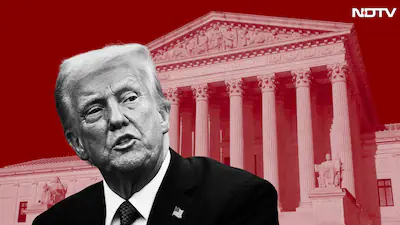
The U.S. Supreme Court has refused to hear President Donald Trump’s executive order to restrict birthright citizenship, deciding that people born in the United States are American citizens under the 14th Amendment of the Constitution.
The Court Tuesday sided with long-standing precedent that has shaped U.S. citizenship law for more than a century and rejected the administration's attempt to limit citizenship to children born to undocumented immigrants or those on temporary visas.
The decision is one of the biggest legal blows to Trump’s immigration agenda since he returned to office, and immediately alters the political conversation about constitutional authority and executive power.
1Court Reaffirms Long Standing Constitutional Reading
In its majority opinion, the court emphasized that birthright citizenship is deeply rooted in the language and history of the 14th Amendment, which grants citizenship to “all persons born or naturalized in the United States, and subject to the jurisdiction thereof.”
In the majority opinion, Chief Justice John Roberts wrote that this principle could only be altered by a constitutional amendment or a completely different legal regime adopted by Congress, not by an executive order.
The Court also pointed to historical precedent, including the landmark case of United States v. Wong Kim Ark (1898) which established citizenship rights for children born on U.S. soil regardless of the parents’ nationality.
2Overturned: Trump Administration’s Executive Order
The case involved a Trump executive order that would have denied automatic citizenship to children born in the United States to undocumented immigrant parents or temporary residents.
The administration said the 14th Amendment was never meant to give citizenship to everyone and should be read more narrowly. But the Court rejected this interpretation as inconsistent with the constitutional text and settled precedent.
The order was blocked by lower courts before it reached the Supreme Court, setting the stage for a high-profile constitutional showdown that riveted the nation and touched off a flurry of legal debate.
3Court Deeply Ideological Split
The decision underscored the Court’s deep ideological split. Most of the justices were liberals, with a handful of conservatives. Dissenters argued that the citizenship clause of the Constitution should be interpreted more narrowly.
Some dissenters argued the ruling could limit the ability of the federal government to enforce immigration laws, but the majority said constitutional protections cannot be altered by executive action.
Though the ruling did not stop the administration’s effort to implement the policy without congressional approval, it effectively slammed the door on it.
4Political Responses and Broader Implications
The move immediately sparked political backlash in Washington. Supporters of the ruling said it was a reaffirmation of constitutional stability and civil rights protections, while critics of the Court said it undermines efforts to reform immigration policy.
Trump, for his part, said he was disappointed, and said he might try to revisit the matter through Congress by other legislative means.
The ruling affirms a significant limitation on presidential power, especially as it pertains to constitutional rights that have been interpreted the same way for decades, legal experts said.
5The Future of Immigration Policy
The executive order was overturned, keeping the status quo for millions of children of immigrants born in the U.S. But the ruling is not expected to resolve a broader political debate. Washington’s immigration policy is a perennial issue, and more legal and legislative battles are likely in the months ahead.
For the moment, the Court’s ruling reinforces one of the most settled principles of American constitutional law: birthright citizenship is secure and cannot be altered unilaterally by the executive.
Related Post
Senate Panel Moves Toward Contempt Vote Against Anthony Fauci Over COVID Hearing Dispute
Wesley Bell Beats Cori Bush in Missouri Primary as Democratic Party Divisions Deepen
Barack Obama Opens Presidential Center on Chicago’s South Side
Zohran Mamdani Sparks Controversy with Warning to Wealthy New Yorkers Over Pied à Terre Tax
RECENT POST
- »Reddit Shares Jump 11 After SP 500 Inclusion Announcement
- »Dow, S&P 500 and Nasdaq Hold Near Records as Investors Assess Fed Rate Outlook
- »Twitch Allows Amazon AI Training on Stream Content as Creators Receive New Opt-Out Option
- »Apple Seeks Publisher Deals to Give Siri AI Access to Real-Time News Content
- »Xbox Elite Series 3 Controller Leak Reveals Built-In Screen, Cloud Gaming Features and Replaceable Battery