NASA Launches Nancy Grace Roman Space Telescope to Study Dark Matter and Distant Worlds
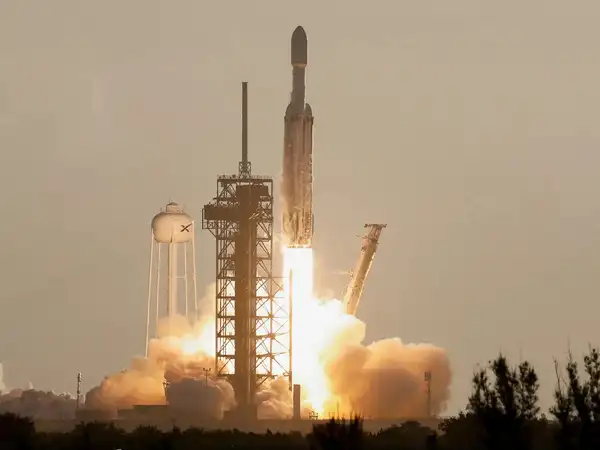
NASA has launched its powerful new Nancy Grace Roman Space Telescope, beginning an ambitious mission that could transform scientists' understanding of the Universe. The observatory blasted off from Florida on Sunday and is now beginning a roughly 100-day journey to its operating position around one million miles from Earth. From there, Roman will conduct an enormous survey of the cosmos, studying some of astronomy's biggest unanswered questions, including the nature of dark energy and dark matter, the evolution of galaxies and the existence of planets outside our Solar System. NASA officials have described the mission as a major advance in astronomy, saying Roman will provide a much wider view of the Universe while maintaining the detailed resolution needed for scientific research.
The telescope is named after Nancy Grace Roman, NASA's first chief astronomer and a leading figure in the development of the agency's space astronomy program. Often known as the "mother of Hubble," Roman played a crucial role in establishing the scientific case for a powerful space telescope that could observe the Universe beyond Earth's atmosphere. The new observatory carries that legacy forward with technology designed for a very different kind of mission. While the Hubble Space Telescope is famous for producing detailed images of individual cosmic objects and the James Webb Space Telescope specializes in infrared observations, Roman has been designed primarily as a wide-field survey telescope capable of observing enormous sections of the sky at once. NASA says its field of view will be around 100 times larger than that of Hubble and Webb, allowing astronomers to map huge areas of the Universe far more efficiently.
One of Roman's most important scientific goals is understanding dark energy, the mysterious phenomenon believed to be responsible for the accelerating expansion of the Universe. Scientists know that the Universe has been expanding since the Big Bang, but observations show that the expansion is speeding up rather than slowing down. Dark energy is the name given to the unknown cause behind that acceleration, yet researchers still do not know what it actually is. Roman will survey huge numbers of galaxies and measure how the Universe has changed over cosmic time, giving scientists new information that could help determine whether current theories about dark energy are correct. Its enormous survey area is particularly valuable because understanding cosmic expansion requires observations covering very large distances and enormous populations of galaxies.
The telescope will also investigate dark matter, another major mystery in modern physics. Unlike ordinary matter, dark matter does not emit or reflect light that telescopes can directly observe. Scientists infer its existence from the gravitational effects it has on galaxies and other structures. Roman will use extremely precise measurements of how light from distant galaxies is distorted by gravity, a phenomenon known as gravitational lensing, to create detailed maps of the invisible matter distributed throughout the cosmos. These maps could help scientists understand how galaxies formed and how the large-scale structure of the Universe developed. Together, Roman's studies of dark matter and dark energy could provide important clues about the fundamental forces shaping the cosmos.
Exoplanets will be another major focus. NASA expects Roman to discover tens of thousands, potentially up to 100,000, new planets outside our Solar System. It will use different observing techniques to detect planets around distant stars, including gravitational microlensing, in which a planet's gravity briefly magnifies the light from a more distant star. This method is particularly useful for finding planets that are difficult to detect using conventional techniques. Unlike many existing planet-hunting missions that focus on relatively nearby stars, Roman's survey could reveal a much broader population of planets throughout the Milky Way. The resulting catalogue could help astronomers understand how common different types of planetary systems are and improve their knowledge of how planets form and evolve.
Roman's ability to survey vast regions of the sky is expected to complement the work of the James Webb Space Telescope, rather than replace it. Webb is optimized for highly sensitive infrared observations and can examine individual galaxies, stars and planets in extraordinary detail. Roman, by contrast, will act more like a cosmic surveyor, scanning huge areas and identifying interesting objects for further study. Scientists can then use Roman's broad surveys to select targets for detailed observations with Webb and other telescopes. NASA describes this combination as an important part of the next generation of astronomical research, with different observatories providing complementary views of the same Universe.
The technology behind Roman is equally significant. The spacecraft is designed to operate far beyond low Earth orbit, where it can maintain stable observing conditions while keeping Earth and the Sun from interfering with its instruments. Its wide-field instrument allows astronomers to capture large portions of the sky in individual observations, producing enormous datasets that will be processed using sophisticated software and computational systems. The mission will generate an extraordinary volume of astronomical information, creating opportunities not only for professional astronomers but also for researchers around the world to study previously unexplored populations of galaxies, stars and planets.
The mission's launch also represents the culmination of many years of development. Roman's design has evolved through a lengthy process involving NASA scientists, engineers, universities, research institutions and international partners. The observatory carries sophisticated instruments that must operate reliably in the extreme environment of space, where repairs are generally impossible. The successful launch is therefore only the beginning of the mission. Engineers will now spend months completing the journey, checking spacecraft systems and preparing the instruments before full scientific observations begin. The commissioning phase will be essential for ensuring that Roman performs as expected once it starts collecting data.
Astronomers are particularly excited about the possibility of discoveries that cannot easily be predicted in advance. Large astronomical surveys frequently uncover unexpected objects and phenomena simply because they observe such enormous areas. Roman could identify new classes of galaxies, unusual stars, previously unknown black holes or planetary systems unlike anything currently known. Scientists expect that some of its most important contributions may come from discoveries that are impossible to anticipate before the telescope begins observing. This is one reason large survey missions are so valuable: they expand the observational map of the Universe and create opportunities for researchers to investigate phenomena that existing theories may not adequately explain.
The telescope could also improve scientists' understanding of black holes. By surveying enormous numbers of stars and galaxies, Roman will help researchers identify regions where black holes influence their surroundings. Its wide field of view will make it possible to monitor changes across large areas of the sky and study populations of black holes rather than focusing only on a handful of individual objects. Understanding how black holes grow and interact with galaxies remains one of the major questions in astrophysics, particularly regarding the relationship between supermassive black holes and the galaxies surrounding them.
NASA administrators have highlighted the broader importance of the mission for the future of space science. NASA official Nicky Fox said Roman would change the way scientists look at the Universe, reflecting the agency's confidence that its wide-field capabilities will open new areas of research. President Donald Trump also joined NASA's news conference remotely to congratulate the scientists and engineers involved in the project following the launch. The public attention surrounding the mission reflects growing interest in major space observatories as nations and private companies invest heavily in technologies designed to explore beyond Earth.
Roman's launch comes as space technology is entering a period of rapid development. Governments and private companies are investing in reusable rockets, advanced spacecraft, satellite networks and increasingly sophisticated scientific instruments. Space telescopes are an important part of that technological transformation because improvements in sensors, computing and spacecraft design allow scientists to study objects that would have been impossible to observe in previous generations. Roman's ability to survey huge areas of the sky demonstrates how modern astronomy increasingly depends not only on larger mirrors but also on faster detectors, advanced image processing and enormous computing infrastructure.
For the scientific community, the next stage is perhaps the most exciting. After completing its journey and commissioning its instruments, Roman will begin building a new map of the Universe over the course of its multi-year mission. Its observations could help answer questions that have puzzled scientists for decades: What is dark energy? How is dark matter distributed? How common are planetary systems? How did galaxies and black holes evolve? And how did the Universe become the structure we see today? The answers may not come immediately, but the data collected by Roman will provide researchers with an unprecedented resource for investigating them.
The launch therefore represents more than another successful spaceflight. The Nancy Grace Roman Space Telescope is designed to change the scale at which humanity can study the cosmos, combining a huge field of view with the precision required for some of modern astronomy's most difficult measurements. As the telescope travels toward its observing location and prepares to begin its scientific mission, astronomers are waiting for the first major datasets that could reshape our understanding of the Universe. In the years ahead, Roman may reveal not only new worlds and distant galaxies but also evidence that forces scientists to rethink some of their deepest assumptions about how the cosmos works.
Related Post

Apple May Bring iPhone Clipboard Sharing to Windows PCs With New Cross-Platform Feature

Why Robotic Pizza Makers Are Struggling to Replace Human Workers

Linus Torvalds Says AI-Driven Bug Finding Has Made Huge Linux Kernel Updates the New Normal

Xbox Elite Series 3 Controller Leak Reveals Built-In Screen, Cloud Gaming Features and Replaceable Battery
RECENT POST
- »US-Canada Trade War Raises Prices and Disrupts Businesses Across Both Countries
- »NASA Launches Nancy Grace Roman Space Telescope to Study Dark Matter and Distant Worlds
- »Trump Announces Deal Giving US Control of 65 Billion Barrels of Venezuelan Oil
- »Gen Z's Love of Cold Drinks Is Reshaping Starbucks and the Beverage Market
- »Why Robotic Pizza Makers Are Struggling to Replace Human Workers