US-Canada Trade War Raises Prices and Disrupts Businesses Across Both Countries
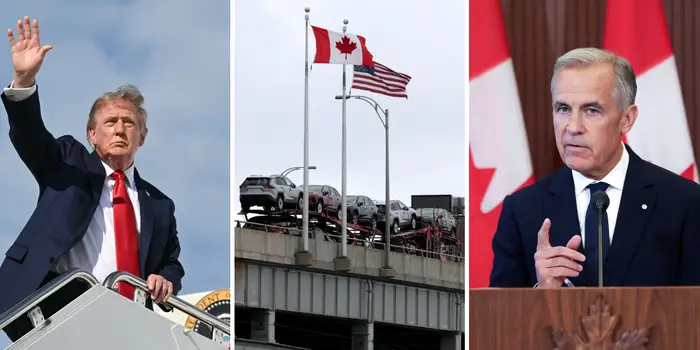
The escalating trade war between the United States and Canada is increasingly being felt by businesses and consumers on both sides of the border, as new tariffs raise costs, disrupt established supply chains and force companies to reconsider where they source materials and manufacture products. The dispute has intensified rapidly after trade negotiations broke down, with Washington imposing an additional 50% tariff on about C$28 billion ($20 billion) of Canadian goods, while Canada announced dollar-for-dollar retaliation against an equivalent value of US imports. The latest measures have turned what was once one of the world's most integrated trading relationships into a source of growing uncertainty for manufacturers, farmers, retailers and consumers.
The economic relationship between the two countries is unusually deep. Goods and components move across the border repeatedly before reaching their final customers, particularly in industries such as automobiles, manufacturing, energy and food processing. A single product can therefore be exposed to tariffs several times during its journey through the North American supply chain. When companies are forced to pay higher duties, they must decide whether to absorb the additional expense, pass it on to customers or search for alternative suppliers. That process is already beginning to affect investment plans, product pricing and procurement decisions, according to businesses operating in both countries. The longer the dispute continues, analysts warn, the greater the risk that temporary changes to supply chains will become permanent.
For Canadian manufacturers, the latest American tariffs represent a direct threat to competitiveness in their largest export market. Companies selling products into the United States may suddenly face significantly higher costs compared with competitors operating within the US or countries not subject to the same duties. Businesses have already begun examining alternative suppliers and markets in an effort to reduce their exposure to American tariffs. Some companies may respond by shifting part of their production into the United States, but such moves require major investment and cannot happen quickly. For smaller businesses, the options are even more limited because they often lack the financial resources needed to redesign supply chains or establish new manufacturing facilities.
American businesses are also feeling the consequences. Canadian raw materials, components and agricultural products are essential to many US industries, meaning tariffs can increase costs for companies that depend on imports from north of the border. Even when the final product is manufactured in the United States, companies may rely on Canadian steel, lumber, minerals, machinery or food ingredients. Higher input costs can reduce profit margins or force businesses to raise prices. The effect therefore does not stop at the border: tariffs imposed on Canadian imports can ultimately be reflected in the prices paid by American consumers. The interconnected nature of the two economies makes it difficult for either country to impose large trade barriers without creating economic costs at home.
The automobile sector is one of the most exposed industries because manufacturing networks in the United States and Canada have been integrated for decades. Components can cross the border multiple times before a vehicle is completed, with factories in both countries depending on a steady flow of parts. Higher tariffs can therefore increase production costs throughout the entire system rather than affecting only the final vehicle. Automakers may eventually adjust production locations, supplier networks and pricing strategies, but those changes require significant time and capital. The uncertainty is also making it harder for manufacturers to plan long-term investments because executives cannot be certain what tariff rates will apply months or years from now.
Construction is another sector facing pressure as higher costs for imported materials feed into projects across North America. Lumber, steel and other building products are particularly sensitive to trade restrictions. Builders and developers already operating in an environment of high financing costs could face additional pressure if tariffs increase material expenses. Those costs can eventually reach consumers through more expensive homes, renovations and commercial buildings. For businesses, the problem is not simply the tariff itself but the uncertainty surrounding future prices, which makes it harder to provide accurate estimates or commit to long-term contracts.
Consumers are beginning to notice the effects as well. Canadian shoppers have responded to the dispute by increasing their interest in locally produced goods and reducing purchases of some American products. Yet replacing imported goods is not always simple. Some products have few domestic alternatives, while locally produced substitutes can be more expensive. Recent reporting from the United States and Canada shows consumers increasingly encountering higher prices and fewer choices as businesses respond to the changing trade environment. For many households, the trade war is therefore becoming an everyday economic issue rather than an abstract dispute between governments.
The conflict is also affecting cross-border tourism and consumer behavior. Canadians who once regularly traveled to the United States for shopping, entertainment or holidays are reconsidering those trips amid rising political tensions and calls to support domestic businesses. That matters economically because border communities on both sides depend heavily on cross-border spending. Hotels, restaurants, retailers and tourism operators can lose revenue when visitors choose to stay home. If the decline in cross-border activity continues, businesses in communities that historically relied on easy movement between the two countries could face a prolonged downturn.
Agriculture is another major area of concern. The United States and Canada are deeply connected through food and agricultural supply chains, with products such as dairy, grains, meat and processed foods moving in both directions. Tariffs can make agricultural exports less competitive while simultaneously raising costs for food processors that depend on imported inputs. Farmers therefore face a difficult combination of higher operating costs and uncertain access to key markets. In some cases, retaliatory tariffs can redirect demand toward domestic suppliers, but agricultural production cannot always be adjusted quickly enough to replace foreign goods.
Businesses are also beginning to reconsider their investment strategies. When tariffs can change with little warning, companies may delay expansion projects or avoid committing capital to facilities that depend heavily on cross-border trade. Investment decisions that previously focused primarily on efficiency and proximity to suppliers now increasingly include geopolitical risk. Some firms are exploring "nearshoring" or "reshoring" strategies designed to keep production within a single country or region. While such approaches may provide greater resilience, they can also be significantly more expensive than relying on the deeply integrated supply chains that developed over previous decades.
For governments, the economic challenge is balancing political objectives with the costs imposed on domestic industries. The Trump administration argues that tariffs can protect American businesses, encourage domestic production and provide leverage in trade negotiations. Canada's government, led by Prime Minister Mark Carney, has responded with targeted retaliation while attempting to protect key Canadian industries. Ottawa has described its response as "dollar-for-dollar" and "strategic," aiming to put pressure on American exporters without causing unnecessary damage to Canada's own economy. The approach reflects the reality that neither side can easily isolate itself from the consequences of the dispute.
The collapse of recent trade talks has increased fears that the dispute could become more than a temporary tariff disagreement. Negotiations broke down after the two sides failed to resolve differences over tariffs and Canadian policies, and the United States subsequently moved ahead with additional duties. Analysts say the increasingly political nature of the confrontation could make compromise more difficult. What began as a debate over market access and trade policy is increasingly intertwined with questions about national sovereignty, domestic politics and economic strategy. That raises the risk that businesses will have to operate under uncertain conditions for much longer than initially expected.
The economic consequences are not necessarily limited to higher prices. Businesses may also experience reduced demand if consumers face higher costs and become more cautious about spending. Companies dealing with weaker sales and higher production expenses could delay hiring, reduce investment or cut costs elsewhere. Financial markets are also sensitive to the dispute because prolonged trade uncertainty can weaken business confidence and complicate forecasts for economic growth. If tariffs remain elevated for an extended period, economists warn that both countries could face slower growth and increased inflationary pressure.
For North America as a whole, the dispute represents a major test of whether one of the world's most integrated regional economies can withstand sustained protectionism. The US and Canada have spent decades building cross-border supply chains that prioritize efficiency, scale and rapid movement of goods. The new tariffs challenge that model by making cross-border production more expensive and less predictable. Companies may adapt, but rebuilding supply chains will require years of investment and could permanently alter where products are manufactured.
The biggest concern for businesses now is uncertainty over what comes next. Even if both governments eventually reach a compromise, companies may remain cautious about relying too heavily on cross-border trade after experiencing sudden tariff changes. Some may diversify suppliers, build additional inventory or move production to reduce future exposure. Those changes could make North American supply chains more resilient but also more expensive, potentially raising the long-term cost of goods.
The US-Canada trade war is therefore becoming a much broader business story than simply a dispute over tariffs. It is changing purchasing decisions, disrupting manufacturing networks, influencing consumer behavior and forcing companies to rethink investment strategies. With billions of dollars in trade at stake, the longer the confrontation continues, the greater the likelihood that businesses on both sides of the border will make permanent changes to the way they operate. The eventual economic impact may depend not only on the tariffs themselves, but on how much of the North American economy changes in response to them.
Related Post

Panama Canal to Reduce Daily Ship Traffic as El Niño Drives Drought
Panama Canal to Cut Daily Ship Transits as El Niño Threatens Water Supplies

Shein Sets $27 Billion Valuation Target for Hong Kong IPO as Growth Slows

Twitch Allows Amazon AI Training on Stream Content as Creators Receive New Opt-Out Option
RECENT POST
- »US-Canada Trade War Raises Prices and Disrupts Businesses Across Both Countries
- »NASA Launches Nancy Grace Roman Space Telescope to Study Dark Matter and Distant Worlds
- »Trump Announces Deal Giving US Control of 65 Billion Barrels of Venezuelan Oil
- »Gen Z's Love of Cold Drinks Is Reshaping Starbucks and the Beverage Market
- »Why Robotic Pizza Makers Are Struggling to Replace Human Workers