Self-Flying Planes Are Coming, but Can Autonomous Aircraft Really Replace Pilots?
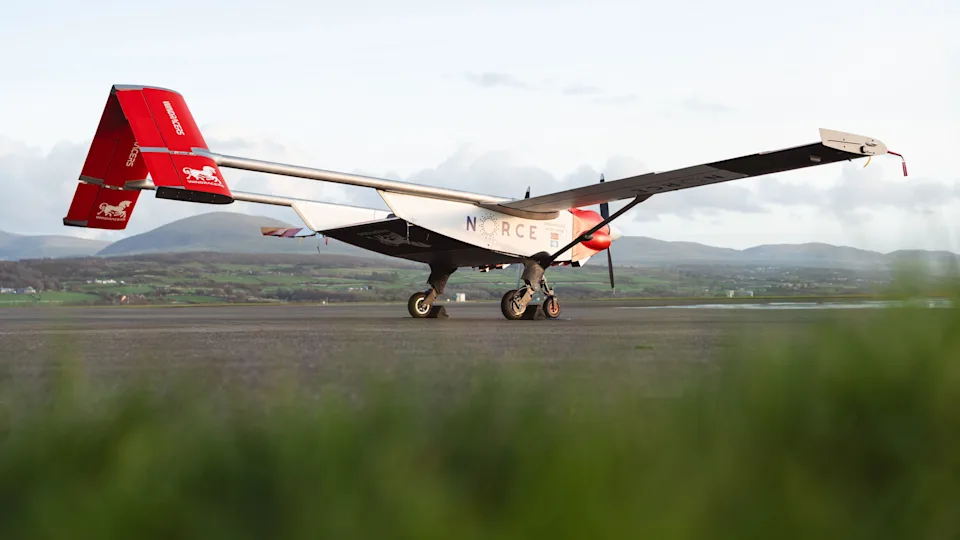
The idea of an aircraft taking off, navigating through the sky and landing without a pilot onboard has moved from science fiction into the early stages of reality. A small number of companies are now developing fully autonomous fixed-wing aircraft designed to perform real commercial tasks without anyone sitting in a cockpit. The technology is initially being used for specialized operations such as crop spraying and cargo delivery, but its developers ultimately have a much more ambitious goal: creating aircraft capable of carrying passengers without pilots. The movement is being driven by improvements in artificial intelligence, sensors, computing power and autonomous navigation systems, although aviation's exceptionally high safety standards mean the transition is likely to be much slower than the development of self-driving cars.
One of the companies at the forefront of the technology is Pyka, a California-based aerospace startup developing autonomous aircraft without traditional cockpits. Its planes are already being used for agricultural work in Brazil, where aircraft can fly extremely low over crops to spray fields. According to Pyka flight-test engineer Russ Marotzke, removing a pilot allows the aircraft to operate at lower altitudes than a human-operated plane might safely fly, helping reduce chemical drift and potentially lowering the quantity of pesticides required. The aircraft can follow computer-generated routes, monitor its surroundings and return for refueling or battery replacement before continuing the mission. This makes agricultural aviation an attractive early market because the work is repetitive, highly structured and can be dangerous for human pilots.
Pyka's aircraft are much larger than conventional consumer drones. Its electric planes have an 11.5-metre wingspan and can carry up to approximately 300 litres of agricultural spray, with around 35 minutes of flight time under the company's current operating conditions. Before a flight, an operator can identify the area to be treated on a computer, after which software creates a route that considers obstacles such as power lines and terrain. During testing, the aircraft has been able to take off, perform its mission, recognize when its payload needs replenishing, land autonomously and resume the assigned route following a battery change and refill. These capabilities demonstrate that autonomous aviation is already doing useful work rather than existing only as a laboratory experiment.
The distinction between an autonomous aircraft and an autopilot is critical. Commercial aircraft have used autopilot systems for decades, but these systems assist pilots rather than replacing them. A modern passenger plane can automatically maintain altitude, follow a programmed route and perform certain approaches, yet trained pilots remain responsible for decisions, communication and handling unexpected situations. Autonomous aviation aims to go much further by allowing the aircraft itself to manage virtually the entire flight. This requires computers to interpret sensor information, understand the aircraft's surroundings, plan safe routes and make decisions when conditions change. The technology therefore involves a much more complicated relationship between software, sensors and flight-control systems.
Aviation experts say the biggest barrier is not simply getting an aircraft to fly by itself; it is proving that an autonomous system can perform safely in every unusual situation. Cars operate on roads where a human driver can often take over if an automated system becomes confused. Aircraft travel at high speeds and altitudes, meaning a mistake can have catastrophic consequences. An autonomous plane must be able to identify other aircraft, weather conditions, terrain, birds, obstacles and unexpected system failures while making decisions within extremely short timeframes. Stanford aviation autonomy expert Mykel Kochenderfer said aircraft face a much higher safety threshold than cars because the consequences of accidents can be much more severe.
One particularly difficult problem is detect-and-avoid technology. A human pilot continuously scans the environment for other aircraft and obstacles, using visual information alongside instruments and radio communication. An autonomous aircraft needs to reproduce that ability using radar, lidar, cameras and other sensors. Different companies are taking different approaches. Some are relying on traditional sensors and predetermined rules because these systems are easier to test and certify. Others are using artificial intelligence to identify objects and make more complex decisions. Pyka, for example, has used lidar to detect objects such as trees, vehicles, terrain and large birds, but the company is also exploring AI-powered cameras to improve long-distance object recognition.
The use of artificial intelligence itself creates an important regulatory challenge. Traditional aircraft systems are generally designed around predictable behavior that engineers can test extensively. AI systems can behave differently depending on the information they receive, making regulators more cautious about placing them in safety-critical roles. Companies must therefore demonstrate not only that their systems perform well under normal circumstances but also that they behave predictably during unusual events. Some developers are deliberately minimizing AI in their aircraft for this reason, while others believe advanced machine learning will eventually be essential for dealing with the complexity of real-world airspace. That disagreement could shape the future architecture of autonomous aircraft.
The industry is also being pushed forward by the military and defense sectors. Autonomous aircraft can perform surveillance, reconnaissance, logistics and other dangerous missions without putting pilots at risk. Defense contracts can also provide startups with revenue and real-world testing opportunities while civilian certification remains difficult. This has allowed some companies to develop increasingly sophisticated autonomous systems even though widespread passenger operations remain years away. Reuters recently reported that Archer Aviation is acquiring Boeing's Wisk Aero, along with defense-drone company Insitu and airspace-services provider SkyGrid, giving Archer access to Boeing's autonomous-flight technology. Boeing will receive a stake of approximately 19.75% in Archer under the agreement.
That deal also demonstrates how the autonomous-aircraft industry is adapting to commercial reality. The electric vertical take-off and landing, or eVTOL, sector was once dominated by visions of fleets of flying taxis transporting passengers around cities. But certification delays, high development costs and uncertainty about commercial demand have forced several companies to reconsider their strategies. Some are shifting toward military, cargo and government applications that could produce revenue sooner. Reuters has reported that the sector has already burned through billions of dollars globally, while several startups have struggled or failed. The result is a growing realization that profitable autonomous aviation may emerge first from practical industrial applications rather than passenger transport.
Cargo could be one of the most promising markets. Unlike passenger aircraft, cargo planes do not need to accommodate people onboard, meaning companies can begin testing autonomy without placing customers directly at risk. Autonomous cargo aircraft could potentially serve remote islands, rural communities and difficult-to-reach locations where traditional air services are expensive. UK company Windracers, for example, is seeking approval for autonomous cargo operations in Scotland's Shetland and Orkney islands. Its aircraft have also carried out missions in Ukraine, demonstrating how autonomous systems could provide logistics services in environments where sending human pilots would be difficult or dangerous.
The potential economic benefits are substantial. Airlines and cargo operators face persistent pilot shortages and significant training costs, while some aviation jobs expose pilots to dangerous conditions. Autonomous aircraft could remove people from hazardous operations such as agricultural spraying and allow a single operator on the ground to supervise multiple aircraft. Developers argue that this could reduce labor costs, improve aircraft utilization and create new routes that would otherwise be commercially impractical. Autonomous systems could also allow aircraft to carry more useful cargo because designers would no longer need to dedicate space and weight to a traditional cockpit or pilot-support systems.
The technology could eventually change passenger aviation as well, but that remains the most difficult and controversial goal. Pyka co-founder and CEO Michael Norcia has described a future in which large autonomous aircraft could transport passengers along the US East and West Coasts. Merlin Labs, another autonomous-flight company, is working on progressively automating larger aircraft and has been developing technology for the Lockheed Martin C-130J military transport aircraft. The company's longer-term strategy includes reducing the number of pilots from two to one and eventually eliminating them entirely.
Public acceptance may prove just as important as engineering. Passengers may be reluctant to board an aircraft without a human pilot, even if autonomous systems eventually demonstrate better statistical safety. Air travel depends heavily on passenger trust, and a single highly publicized autonomous accident could have a significant impact on the industry's reputation. Airlines would therefore need to demonstrate extremely high reliability and explain clearly how autonomous systems behave during emergencies. Ground-based operators may remain part of the process for many years, providing human oversight even as the aircraft handles most routine decisions.
Regulation will also determine how quickly the technology moves into mainstream aviation. The Federal Aviation Administration in the United States and aviation regulators in Europe have stringent requirements for new aircraft systems. Autonomous planes must demonstrate reliability, redundancy and predictable behavior before regulators can authorize widespread passenger operations. Current commercial approvals are therefore focused on narrow, controlled missions rather than unrestricted autonomous flight. This gradual approach means the first self-flying aircraft seen in everyday life are more likely to be agricultural or cargo machines than passenger jets.
Recent developments suggest that the industry is entering a more realistic phase. Instead of promising that pilotless passenger aircraft will suddenly replace conventional airlines, companies are increasingly focusing on specific problems where autonomy offers an obvious advantage. Crop spraying, remote cargo delivery, military surveillance and medical logistics can all benefit from aircraft that operate without a human onboard. Those early applications will generate flight data, demonstrate reliability and create the regulatory experience needed for more complicated operations later.
The future of self-flying planes therefore may not arrive as one dramatic technological breakthrough. It is more likely to emerge gradually, beginning with specialized aircraft operating in carefully controlled environments and expanding as regulators and the public gain confidence. The technology is already capable of performing tasks that once required pilots, but passenger aviation remains a much higher hurdle. Recent investment activity also shows that companies are becoming more disciplined about where autonomous aircraft can create real economic value.
Ultimately, self-flying planes could transform the skies, but probably not in the way science-fiction films have traditionally imagined. The first transformation is likely to happen quietly in farms, warehouses, remote communities and defense operations, where removing pilots can improve safety and reduce costs. Passenger aircraft without pilots may eventually become possible, but that future will depend on proving that autonomous systems can handle the extraordinary complexity of the real-world airspace with a level of reliability that passengers, airlines and regulators are willing to accept. The autonomous aircraft revolution has begun — but the journey from pilotless crop sprayers to pilotless passenger jets is likely to be a long one.
Related Post

Bank of England Chief Warns AI Market Crash Could Spread Across Global Economy
NASA Launches Nancy Grace Roman Space Telescope to Study Dark Matter and Distant Worlds

Why Robotic Pizza Makers Are Struggling to Replace Human Workers

Xbox Elite Series 3 Controller Leak Reveals Built-In Screen, Cloud Gaming Features and Replaceable Battery
RECENT POST
- »Self-Flying Planes Are Coming, but Can Autonomous Aircraft Really Replace Pilots?
- »US-Venezuela Oil Deal Gives American-Led Group 100-Year Access to 65 Billion Barrels
- »Japanese Companies Expand in India as Businesses Reduce Dependence on China
- »Bank of England Chief Warns AI Market Crash Could Spread Across Global Economy
- »US-Canada Trade War Raises Prices and Disrupts Businesses Across Both Countries