Singapore GDP Growth Beats Forecasts as AI and Electronics Exports Soar
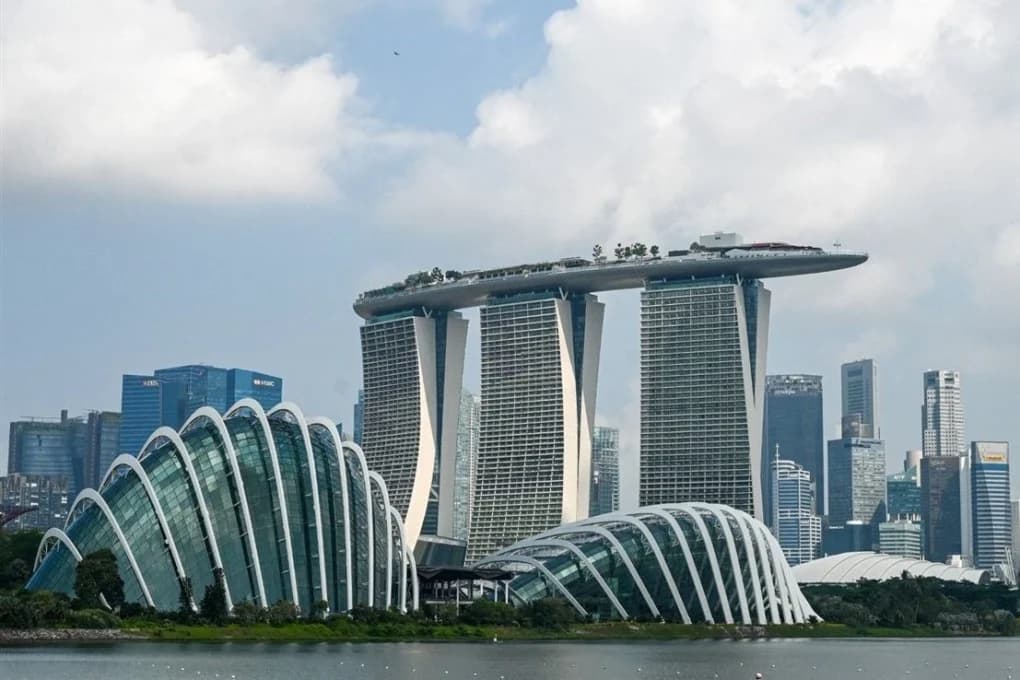
Singapore’s economy grew faster than expected in the first quarter of 2026, boosted mainly by strong demand for artificial intelligence, electronics exports and financial services. Reuters reported that Singapore’s gross domestic product expanded 6.0% year-on-year, significantly above the government’s earlier advance estimate of 4.6%. On a quarter-on-quarter basis, the economy also grew 1.0%, reversing expectations of contraction.
Bloomberg reported that Singapore’s AI-driven sectors became the primary force supporting growth despite rising geopolitical tensions and concerns surrounding the Iran conflict. Demand for semiconductors, data infrastructure, cloud services, and AI technologies boosted manufacturing activity and supported exports throughout the quarter.
Singapore’s wholesale trade, finance and insurance sectors, and advanced manufacturing industries all posted strong gains. Reuters noted that electronics exports surged sharply as global technology companies continued expanding AI-related investments and infrastructure projects.
The South China Morning Post reported that Singapore benefited from its role as a regional technology and financial hub during the global AI investment boom. Companies involved in chipmaking, cloud computing, logistics, and digital services helped cushion the economy against broader global instability.
Enterprise Singapore upgraded its forecast for non-oil domestic exports after shipments jumped 9.6% during the first quarter. Electronics exports reportedly rose nearly 58% year-on-year, becoming one of the strongest contributors to overall growth.
The stronger-than-expected results surprised economists because earlier forecasts predicted the Iran conflict and supply disruptions would weigh heavily on trade-dependent Asian economies. Singapore’s Ministry of Trade and Industry had previously warned that the Middle East crisis could reduce growth momentum during 2026.
Bloomberg described the performance as evidence that AI-related investment and digital infrastructure demand remain powerful enough to offset some geopolitical and inflation-related pressures affecting the global economy.
The results therefore reinforced Singapore’s position as one of Asia’s strongest-performing advanced economies despite rising uncertainty involving global trade, inflation, and the Iran war.
Government Warns Iran War Still Threatens Economic Outlook
Despite the strong GDP figures, Singapore’s government warned that the ongoing Iran conflict continues posing major risks to future growth. Al Jazeera reported that officials remain concerned about rising energy costs, shipping disruptions, inflation pressures, and slowing global trade caused by instability in the Middle East.
Singapore’s Ministry of Trade and Industry kept its full-year GDP growth forecast unchanged at between 2% and 4%, reflecting caution about the global economic outlook. Reuters reported that officials specifically identified the Iran war as one of the largest downside risks facing the economy.
Singapore, one of the most trade-dependent economies in the world, is also highly vulnerable to disruptions to shipping routes, energy markets and international supply chains. The crisis in the Strait of Hormuz is especially relevant to Singapore because of the importance of the strait to oil transportation and international trade flows.
The Monetary Authority of Singapore had previously tightened monetary policy on worries that higher oil prices and supply disruptions related to the Iran conflict could push inflation higher. Reuters said policymakers are watching global commodity prices and geopolitical developments closely.
Al Jazeera reported that rising shipping and insurance costs remain significant concerns for businesses operating across Asia. The broader conflict has already disrupted global energy markets and increased fears of slower global economic growth.
Economists warned that Singapore’s export-oriented economy could face additional pressure if tensions escalate further or if higher energy prices begin reducing consumer and industrial demand globally. Analysts also noted that trade tensions involving the United States and China continue adding uncertainty to Singapore’s outlook.
The South China Morning Post reported that Singapore’s resilience so far reflects strong technology investment and diversified financial activity, but officials remain cautious about assuming those strengths can fully shield the economy from prolonged geopolitical instability.
The government therefore emphasized that while AI and technology investment are currently supporting growth, external risks linked to war, inflation, and trade disruptions continue threatening economic stability across Asia and the broader global economy.
AI Investment Becomes Central Driver of Singapore’s Growth Strategy
Artificial intelligence emerged as one of the biggest themes behind Singapore’s economic performance in 2026. Bloomberg said AI infrastructure spending, semiconductor demand and investment in digital services helped offset slower global trade conditions and geopolitical uncertainty.
Singapore also increasingly positioned itself as a regional hub for AI development, cloud computing and advanced digital infrastructure. Strong investment in data centers, chip technology, and enterprise AI systems contributed heavily to manufacturing and financial sector growth during the quarter.
The Reuters report highlighted strong expansion in finance and insurance services connected to technology investment and cross-border digital activity. AI-related demand also boosted electronics manufacturing, one of Singapore’s most important export industries.
Analysts described Singapore as benefiting from the broader global AI investment boom despite economic turbulence caused by the Iran conflict. Bloomberg noted that demand for AI computing power and digital infrastructure remained resilient even as energy prices and geopolitical risks increased worldwide.
Singapore’s economic strategy increasingly focuses on advanced technology sectors, automation, biotechnology, semiconductors, and financial technology. Officials previously identified AI as a long-term pillar of economic competitiveness and productivity growth.
The AI boom also supported broader regional confidence in Asian technology sectors. Reuters reported that electronics exports and technology-related manufacturing remained among the strongest-performing segments of Singapore’s economy during the quarter.
However, some analysts warned that heavy reliance on AI investment could eventually create vulnerabilities if global technology spending slows or if geopolitical instability significantly disrupts supply chains. Increasing power needs from data centers and computing infrastructure are also becoming an increasing policy concern around the world.
However, Singapore’s latest GDP figures reinforced the rising influence of AI-related industries on the global economy. The city-state’s capacity to support strong growth despite geopolitical turbulence was a sign of how investment in tech is ever more underpinning economic resilience and performance in global markets.

David Smith
David specializes in macroeconomics, Asian markets, and technology investments.
Related Post
U.S. Producer Inflation Hits Four-Year High as Iran War Drives Energy Costs Up

Michael Barr Warns Private Credit Risks Could Trigger Broader Financial Stress

US Economy Slows to 1.4% Growth as Shutdown and Weak Spending Weigh on GDP

Tesla Q1 Earnings Beat Expectations Amid Rising Competition
RECENT POST
- »Emerging Markets 2026: The Rise of the 'Digital Tiger' Economies
- »Family Offices in 2026: Shifting from Preservation to Planetary Impact
- »Louisiana Republicans Advance Congressional Map Reducing Majority-Black Districts
- »Marco Rubio Pushes US Energy Exports During Critical India Visit
- »OpenAI Reportedly Explores Legal Options Against Apple Over AI Partnership