Alejandro Betancourt: The Venezuelan Oil Tycoon at the Center of Trump's Landmark Deal
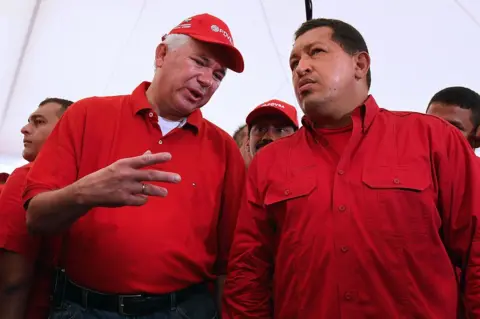
Alejandro Betancourt López has rapidly become one of the most important and controversial figures in the emerging US-Venezuela oil partnership, putting a businessman with a complicated history at the center of a deal that could reshape Venezuela's petroleum industry and give Washington a significant role in the development of some of the country's largest oilfields. Betancourt, 46, is the head of North American Blue Energy Partners (NABEP), the Venezuelan private oil producer selected as the American government's commercial partner in the agreement announced by President Donald Trump. Under the arrangement, NABEP has received access to 17 oilfields containing an estimated 65 billion barrels of proven reserves, while the US government is taking a 35% stake in NABEP's parent company and gaining preferential access to the company's oil production. The extraordinary scale of the agreement has made Betancourt an increasingly influential figure in global energy markets.
Betancourt's rise is closely linked to Venezuela's turbulent political and economic history. He first became wealthy through Derwick Associates, a company that won lucrative contracts to build electricity-generation infrastructure during an acute power crisis under the government of former President Hugo Chávez. Critics have alleged that some of those contracts were awarded without normal competitive bidding and that project prices were inflated. Betancourt has denied wrongdoing, and importantly, he has not been convicted or formally charged with a crime in relation to the allegations. Nevertheless, his history has made him a politically controversial figure, particularly among Venezuelans who view wealthy businesspeople who prospered during the Chávez era with suspicion. The group of entrepreneurs who became extremely wealthy through government-linked opportunities during that period are sometimes referred to as "bolichicos," a term that has become central to criticism of Betancourt's rise.
His involvement in Venezuela's oil sector began more than a decade ago. In 2011, Betancourt acquired a stake in Petrozamora, a joint venture connected to Venezuela's state oil company PDVSA, gaining experience managing mature oilfields around Lake Maracaibo. Those operations eventually became the foundation for NABEP. Betancourt later co-founded NABEP in April 2024 and subsequently took full control of the company. The firm, headquartered in Barbados, is now described as Venezuela's second-largest private oil producer, with current output of roughly 200,000 barrels per day. Company representatives argue that Betancourt's record of increasing production in difficult Venezuelan oilfields was one of the reasons the Trump administration selected him as its private-sector partner.
The new agreement has transformed NABEP from a relatively specialized Venezuelan oil company into a business with extraordinary strategic importance. According to details released by Washington, NABEP has received rights associated with 17 major Venezuelan fields, while the Pentagon's Office of Strategic Capital will hold a 35% equity stake in its parent company. The US government will also have the right to purchase 20% of the oil produced at the cost of production, while receiving first refusal on much of the remaining output. The White House has framed the arrangement as a way to secure American access to Venezuela's enormous petroleum resources while bringing private capital and technology into an industry damaged by years of sanctions, underinvestment and operational decline.
The deal has made Betancourt a highly valuable partner for Washington at a particularly sensitive moment for energy markets. The Iran conflict and disruptions around the Strait of Hormuz have contributed to higher global oil prices and increased concerns about the security of traditional energy supply routes. Venezuela possesses the world's largest proven oil reserves, but its production remains far below its historical potential. The Trump administration believes that rehabilitating Venezuelan oilfields could provide an additional source of crude for US refiners and reduce America's vulnerability to disruptions elsewhere. Betancourt's company is therefore being positioned as a mechanism through which private investment can be directed toward Venezuela's oil sector while American officials maintain substantial oversight.
US officials have defended Betancourt despite the controversy surrounding him. On September 2, Energy Secretary Chris Wright said the United States would maintain strict oversight of financial flows generated by the NABEP agreement, emphasizing the importance of transparency and sound business practices. Venezuelan interim President Delcy Rodríguez also said Betancourt currently has no active legal cases in Venezuela. His legal representatives have argued that he has been unfairly characterized by past allegations and emphasize that he has never been convicted of wrongdoing. Betancourt's company has similarly portrayed him as an experienced operator capable of helping restore Venezuela's oil production and attract large-scale international investment.
However, Betancourt's international legal history remains an important part of the story. He has faced money-laundering investigations in the United States, Spain and Switzerland, according to reporting by Al Jazeera and other outlets. In 2025, he was arrested twice in the United Kingdom in connection with extradition requests from Switzerland and Spain related to alleged money-laundering cases. Betancourt has denied the accusations and has not been convicted or formally charged with a crime. Reports have also indicated that US officials became involved in efforts to address the Swiss investigation as Betancourt's relationship with the Trump administration became more important. Those developments have raised questions about the unusually close relationship between the businessman and US policymakers.
The controversy is intensified by the structure of the oil agreement itself. Critics argue that giving a private company with close political connections access to such a large portion of Venezuela's oil reserves risks creating another concentration of economic power rather than establishing transparent and competitive investment. Some Venezuelan opponents have described the arrangement as a return to the patronage politics that characterized earlier periods of the country's oil economy. Supporters, however, argue that Venezuela urgently needs outside capital and that waiting for perfect political conditions could leave its oil infrastructure deteriorating for years. The debate is therefore not simply about Betancourt's personal history; it is also about whether Venezuela should prioritize rapid economic recovery or impose stricter conditions on foreign and private investment.
For oil investors, the crucial question is whether Betancourt and NABEP can actually deliver the enormous increase in production promised by the agreement. Venezuela's oil reserves are vast, but much of the country's infrastructure is in poor condition. Restoring wells, pipelines, refineries and export terminals will require enormous amounts of capital and technical expertise. NABEP has reportedly targeted an increase in production from around 200,000 barrels per day to more than 1 million barrels per day, while Venezuelan officials have discussed even larger national production targets. Achieving such numbers would take years and require sustained investment, meaning investors should not interpret the 65 billion barrels covered by the agreement as immediately available supply.
The economic potential is nevertheless enormous. Venezuela's government has said the project could attract around $100 billion in investment and generate more than $200 billion in tax revenue over the life of the arrangement. Those figures would be transformative for a country whose economy has suffered from years of crisis. Increased oil production could provide funds for infrastructure, public services and wider economic development while creating thousands of jobs. For US companies, the agreement could also open opportunities in drilling, engineering, oilfield services, refining and logistics. Chevron and other international energy companies are already expanding their involvement in Venezuela, suggesting that Betancourt's venture could become part of a much larger private-sector revival.
The geopolitical implications are equally important. Venezuela's oil industry has historically attracted major investment and influence from China and Russia, both of which gained footholds in Venezuelan energy projects during years of strained relations with Washington. Under the new arrangement, NABEP is taking over several fields previously operated by Chinese and Russian-linked companies. Reuters reported that the agreement includes 14 new contracts that give NABEP a much larger position in Venezuelan production, displacing some existing foreign operators. For Washington, that makes Betancourt useful not only as an oil executive but also as a mechanism for shifting Venezuela's strategic energy relationships toward the United States.
Betancourt's supporters argue that his experience makes him particularly suited to this moment. Venezuela's oil industry cannot be rebuilt simply by signing a contract with a large international corporation; operators need detailed knowledge of local fields, infrastructure, labor networks and regulatory conditions. Betancourt has spent years operating inside Venezuela and has relationships across the country's political and business communities. US officials appear to believe that those connections give him an advantage that foreign corporations entering the country from outside may not possess. The downside is that those same political connections are precisely what make critics question whether the new arrangement is sufficiently independent and transparent.
The financial market implications could extend well beyond Venezuela. If NABEP eventually succeeds in increasing production substantially, additional Venezuelan crude could add supply to the global market and potentially put downward pressure on oil prices. US refiners could also benefit because many facilities were historically designed to process heavy Venezuelan crude. On the other hand, bringing large amounts of production back online could take years, meaning the agreement is unlikely to provide an immediate solution to today's energy-price pressures. Analysts have cautioned that Venezuela's heavy crude is expensive and technically complicated to produce and refine, limiting the short-term impact on US gasoline prices.
For Betancourt himself, the agreement represents an extraordinary transformation in status. A businessman whose career was built during Venezuela's Chávez-era energy and infrastructure boom is now at the center of a partnership with the US government that could reshape one of the world's largest oil industries. His company has effectively become a strategic bridge between Washington, Venezuela's interim authorities and international investors. Yet the same history that makes him valuable to the deal also ensures that his role will remain controversial.
The story of Alejandro Betancourt is therefore inseparable from the larger question of what happens next to Venezuela's oil industry. His rise demonstrates how quickly fortunes and influence can change when political circumstances shift, particularly in a country with enormous natural resources but a deeply damaged industrial base. Whether Betancourt ultimately becomes the architect of a successful Venezuelan oil revival or a symbol of another politically connected resource deal will depend on what happens after the headlines — how much capital arrives, how much oil is actually produced, how revenues are distributed and whether the arrangement can survive future political changes.
Related Post

Gen Z's Love of Cold Drinks Is Reshaping Starbucks and the Beverage Market

Wall Street Rises as Investors Await Inflation Data While AI Stocks and Rate Cuts Drive Sentiment

TikTok Agrees to $400 Million US Settlement Over Children's Privacy Violations

Emerging Markets Hit by AI Tech Selloff as Investors Question Sustainability of Chip Rally
RECENT POST
- »Netherlands Moves 86 Tonnes of Gold to London Amid Rising Geopolitical Risks
- »Alejandro Betancourt: The Venezuelan Oil Tycoon at the Center of Trump's Landmark Deal
- »Self-Flying Planes Are Coming, but Can Autonomous Aircraft Really Replace Pilots?
- »US-Venezuela Oil Deal Gives American-Led Group 100-Year Access to 65 Billion Barrels
- »Japanese Companies Expand in India as Businesses Reduce Dependence on China