Intel has officially announced its new Arc G3 processor family, specifically aimed at handheld gaming PCs, as it makes a big push into the rapidly growing portable gaming market. The new chips combine Intel’s Lunar Lake CPU architecture with Arc graphics technology and are intended to compete directly with AMD-powered handheld systems currently dominating the category.
The Arc G3 family focuses heavily on power efficiency, integrated graphics performance and battery optimization, all critical factors for portable gaming devices. Intel said the processors were engineered specifically for handheld gaming workloads rather than adapted from laptop chips, reflecting the company’s growing interest in the handheld PC market.
According to Ars Technica, Intel hopes the Arc G3 lineup will provide manufacturers with an alternative to AMD’s Ryzen Z-series processors, which currently power devices such as the Asus ROG Ally and Lenovo Legion Go. Intel executives argued that the handheld market has evolved into an important segment of PC gaming and deserves hardware designed specifically for portable systems.
The company introduced multiple processor variants featuring different CPU and GPU configurations. Intel said the chips support advanced AI capabilities, XeSS upscaling technology and improved thermal management aimed at balancing performance with battery life. Integrated Arc graphics also support modern gaming features such as ray tracing and hardware-accelerated media processing.
Intel’s announcement reflects the broader growth of handheld gaming PCs over the past several years. Devices combining console-style portability with PC gaming flexibility have become increasingly popular among consumers seeking alternatives to traditional gaming laptops and home consoles.
The Arc G3 launch therefore represents both a hardware release and a strategic attempt by Intel to establish a stronger position inside one of the fastest-growing areas of the gaming industry.
Acer Predator Atlas 8 Among First Devices Using Arc G3
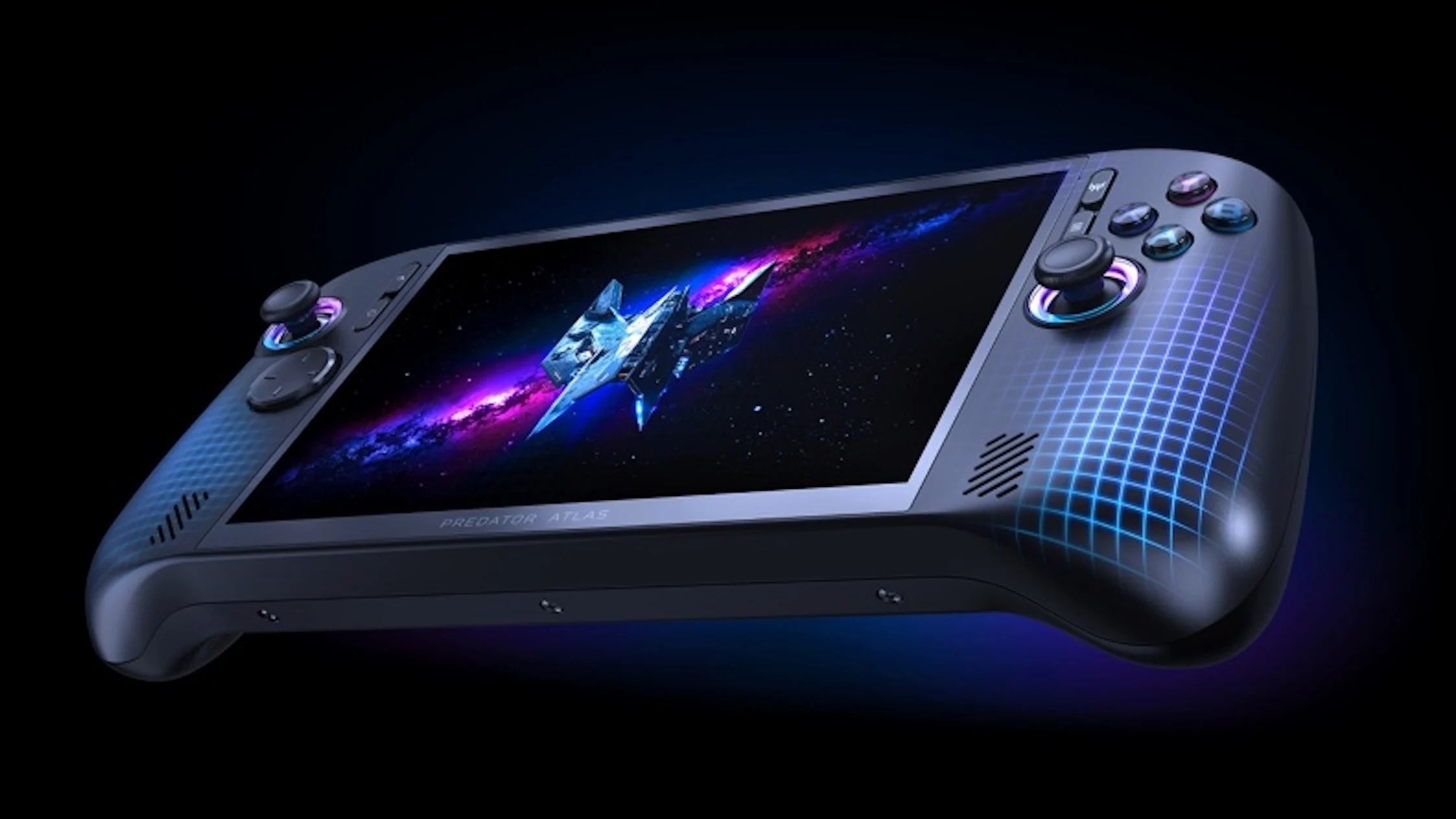
One of the first announced handheld systems using Intel’s new processors is the Acer Predator Atlas 8. Engadget reported that the device was showcased as an early demonstration of what Intel’s Arc G3 platform can deliver for portable gaming systems.
The Predator Atlas 8 features an 8-inch display and is designed to compete directly with existing premium handheld gaming devices. Acer positioned the system as a high-performance portable gaming PC capable of running demanding modern games while maintaining battery efficiency and compact portability.
According to reports, the Atlas 8 includes Intel’s Arc G3 processor paired with fast LPDDR5X memory, high-refresh-rate display support and optimized cooling systems designed specifically for handheld gaming conditions. Acer also highlighted support for AI-enhanced gaming features and XeSS upscaling technology to improve frame rates and visual quality.
The handheld market has become increasingly competitive as manufacturers attempt to balance gaming performance, thermals, battery life and ergonomics. Acer’s use of Intel hardware is a sign of growing interest among PC manufacturers in diversifying beyond AMD-powered handheld platforms.
Industry analysts said partnerships with manufacturers like Acer are critical to Intel’s handheld ambitions. Unlike the traditional desktop PC market, handheld gaming systems require highly optimized hardware-software integration and strong cooperation between chipmakers and device manufacturers.
The Predator Atlas 8 therefore serves as both a commercial product and a showcase for Intel’s attempt to demonstrate that Arc G3 processors can compete effectively in real-world portable gaming devices.
Intel Challenges AMD’s Dominance in Portable Gaming
Intel’s Arc G3 announcement directly targets AMD’s strong position in the handheld gaming market. AMD processors currently power most major portable gaming PCs, including the Steam Deck OLED, Asus ROG Ally and Lenovo Legion Go. Intel is now attempting to break that dominance by offering manufacturers a competing platform focused on integrated graphics performance and efficiency.
Ars Technica reported that Intel believes improvements in Arc graphics drivers and Lunar Lake efficiency now make the company more competitive in gaming-focused portable systems than previous generations of Intel integrated graphics solutions. Earlier Intel handheld efforts struggled to gain traction partly because AMD’s Radeon graphics consistently delivered stronger gaming performance at lower power levels.
The Arc G3 family aims to address those weaknesses through redesigned GPU architecture, AI-assisted performance scaling and more aggressive optimization for gaming workloads. Intel also cited better battery management and thermal efficiency, which both help a lot for handheld gaming experiences.
Competition in handheld gaming hardware has intensified significantly since Valve’s Steam Deck helped popularize the category. Major manufacturers increasingly view handheld PCs as an important growth area within gaming hardware, especially as consumers seek more portable gaming experiences.
Intel executives argued that the company’s broader PC ecosystem and software partnerships provide additional advantages. Intel said Arc G3 processors are designed to work closely with Windows gaming technologies, AI features and Intel’s existing driver ecosystem.
The launch signals that the handheld gaming market is evolving into a serious battleground between major semiconductor companies, with Intel now positioning itself as a more aggressive competitor against AMD.
Handheld Gaming PCs Become Key Industry Segment
Intel’s first foray into the category is a sign of how handheld gaming PCs have evolved from niche products to a significant segment of the gaming industry. The success of devices like Valve’s Steam Deck has shown there’s a huge consumer demand for portable devices that can game on PC but without the need for traditional laptops or desktops. Hardware makers are increasingly eyeing handheld gaming devices as a happy medium between consoles and PCs, giving the portability of a gaming console but with the ability to access large PC gaming libraries from Steam, Epic Games Store and Xbox Game Pass. The rise of handheld PCs has also changed hardware design priorities. Companies are now investing heavily in low-power processors, integrated graphics, compact cooling systems and battery optimization technologies tailored specifically for portable gaming. Intel’s Arc G3 chips were designed directly around those priorities.
Analysts believe competition between Intel and AMD could accelerate innovation inside the handheld segment. More competition may lead to faster performance improvements, better battery life and wider price ranges for consumers. Device manufacturers could also gain greater flexibility when selecting hardware platforms for future products.
The rise of handheld gaming also mirrors bigger trends around gaming behavior. Many players increasingly prefer flexible gaming experiences that allow them to switch between home, travel and mobile environments without leaving behind large game libraries or sacrificing performance.
Intel’s Arc G3 launch therefore represents more than a single processor release. It reflects the growing importance of handheld gaming PCs as a long-term category shaping the future direction of both gaming hardware and semiconductor competition.

Jessica Wu
Jessica Wu spans the gap between complex algorithms and business outcomes, focusing on the real-world deployment of Agentic AI.
Related Post

OpenAI Reportedly Explores Legal Options Against Apple Over AI Partnership

Waymo Driverless Cars Become Trapped in Atlanta Suburb After Glitch

SpaceX Successfully Launches Starship V3 in Major Milestone for Mars Program
Google Chrome Criticized Over Hidden Gemini Nano AI Downloads
RECENT POST
- »Asian Markets Rally as United States and Iran Move Closer to Possible Deal
- »Family Offices in 2026: Shifting from Preservation to Planetary Impact
- »Louisiana Republicans Advance Congressional Map Reducing Majority-Black Districts
- »Marco Rubio Pushes US Energy Exports During Critical India Visit
- »OpenAI Reportedly Explores Legal Options Against Apple Over AI Partnership